Saturday, September 26, 2015

Will Ferrell Has Not Hit the Ball Out of the Park in a Long Time


Will Ferrell stretches the limits of comedy just a little bit with Ferrell Takes the Field, currently airing on HBO. 
It's a mockumentary that succeeds on some levels but is not very good on most. The premise of Farrell taking his legendary comedic talents to the baseball field is pretty original, as he gets traded and plays for a bunch of different teams in the Arizona cactus league before the 2015 season. 
The tone, however, is off, with Farrell over-acting the supposed seriousness of his endeavor. He did the same thing recently in his role as disillusioned Eric Jonrosh in The Spoils of Babylon, which was equally bad (even if Ferrell's bit parts were the best thing about it). 
Farrell is no doubt slipping (ala Sandler) since his heyday with Saturday Night Live. In fact, he hasn't been in anything really compelling at all since his run of Blades of Glory, Semi-Pro, and Step Brothers back in 2007-2008. 
I'm not sure if he'll ever recover any past glory at this point. And even if Farrell Takes the Field is far from his worst work, it's just not worth wasting your time with when there's so much other great stuff out there to be watched these days. 
Even the fact that this is thankfully raising funds for cancer doesn't redeem it as entertainment worth watching. 
**1/2 out of ***** stars 
Bonus: In longing for better days, Ferrell's best movies are: 
6. Wedding Crashers
5. Elf
4. Zoolander
3. Old School
2. Anchorman: The Legend of Ron Burgundy
1. Austin Powers: International man of Mystery (even though it's Farrell's first move and he just plays a bit part in Mike Myers' masterpiece) 

Tuesday, September 8, 2015

Bicycling in Cleveland is Easy, Fun, and Something Everyone Should Try

What do General Motors, Samsung, and Duke and Ohio State universities all have in common?

They have each launched bikeshare systems in the past year brought to them by Zagster, a private, venture-funded startup that launched as CityRyde back in 2007 in Philadelphia.

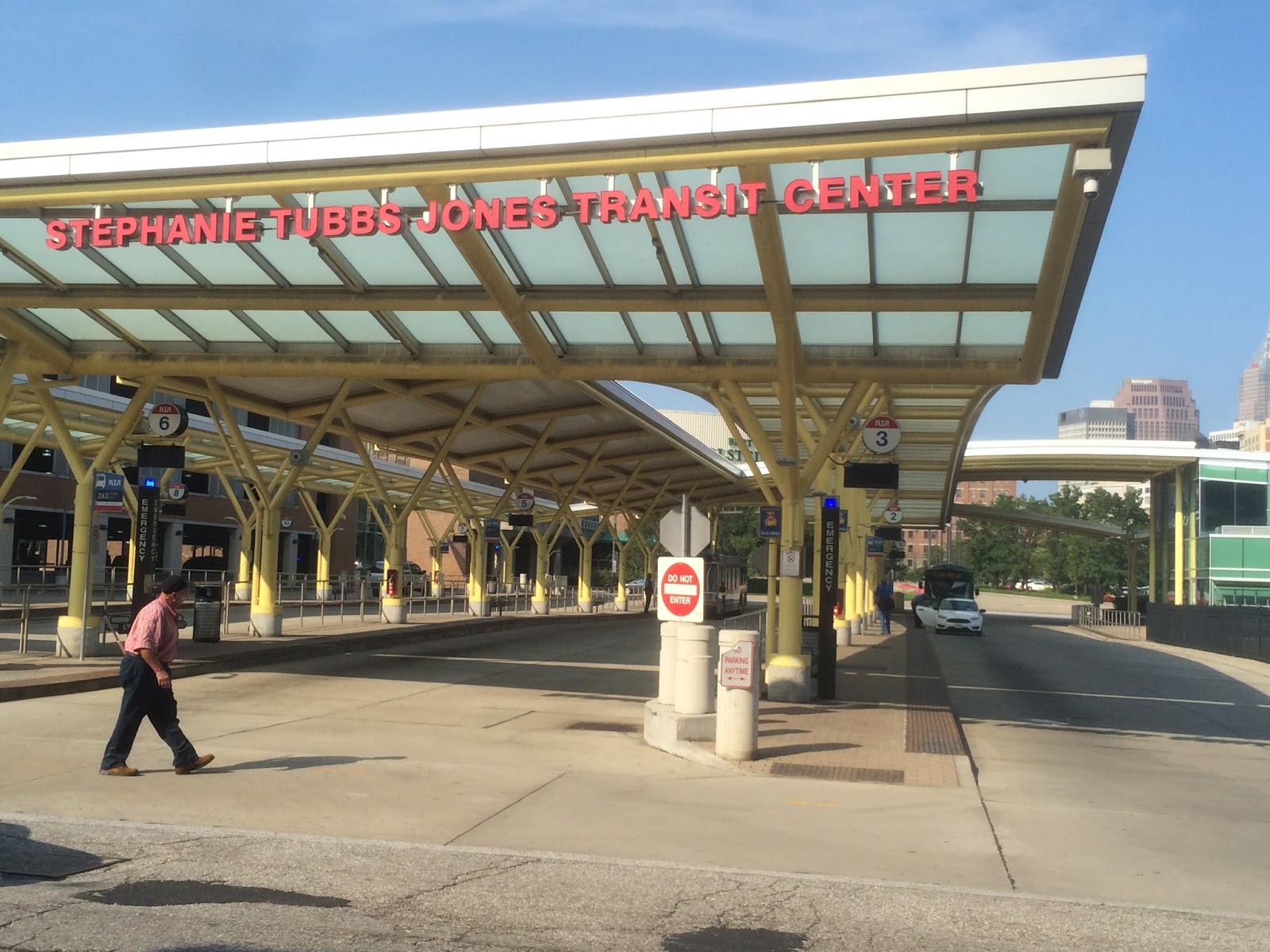
Visiting Cleveland, Ohio this week for the Content Marketing World conference, I got my first taste of Zagster, which opened last summer in the city. I knew nothing about this company or that Cleveland had a bikesharing network. I simply stumbled upon a small stand of white bikes as I wandered around the city’s Warehouse District to the west of downtown, where my hotel and the conference are happening.

It couldn’t have been easier to download the app and sign up for Zagster on my phone. I didn’t even know if there were any other stations than the one I had seen, but it seemed worth the minor effort.

(I had planned to rent from The Bike Rack, which is also a very cool effort from the Downtown Cleveland Alliance. It welcomes downtown bicycling “with the convenience of secure bicycle parking and fulfilling everyday commuting needs with individual shower/changing facilities, lockers, bicycle rentals, and minor bicycle repairs.” And the rental prices are great at $5 per hour or $25 per day. But frankly, it is tough to compete with Zagster’s price of $3 an hour.)

Turns out there aren’t that many stations yet in Cleveland (according to the app, it looks like there are eight total). In fact, I didn’t see any other ones on my two-hour ride, but I wasn’t actively looking for them.

I wanted to know whether Cleveland is a bikeable city. And what I found, which is what I find everywhere, is that people should get over their irrational fears of this amazing form of travel. Cleveland is highly bikeable, even though it lacks much of any kind of truly progressive bike infrastructure.


The wind was in my hair. The sun was on my arms and face. The roads and sidewalks are ridiculously large through most of downtown, which makes riding feel spacious and extremely safe. (On the other hand, more importantly, the spaciousness makes the over-paved city ripe for the construction of protected bike lanes, sharrows, cycle tracks, and other bike infrastructure.)


In two hours on a bike, I saw a handful of sites it would take two days for others to explore. My route out of the Warehouse District took me through Tower City-Public Square east along Euclid Avenue through the Playhouse Square theater district and Cleveland State University’s campus, then back west through Erie Street Cemetary and around the baseball Indians’ Progressive Field and basketball Cavaliers’ Quicken Loans Arena.


The Bob Hope Memorial Bridge has wide bike and walk access and beautiful views of the city and Cuyahoga River below. After biking through the Tremont neighborhood, I had lunch at Town Hall, a very popular and tasty restaurant on West 25th Street near the West Side Market.


In Washington D.C., there are so many Capital Bikeshare stations that riders always quickly return the bikes to a station before having lunch or going to their meetings. But here, I simply opened my Zagster’s lockbox to get the key for the U-lock that comes with each rental. I locked the bike to a parking meter in front of Town Hall and ate my lunch.

I finished my ride by biking north on 25th, which has the nicest bike lane (although not protected) that I witnessed anywhere in the city, and east across the Detroit-Superior Bridge back into the Warehouse District. Upon returning where I had started, there were only four bikes at the station. One had a bad flat tire and another was not locked.

Time will tell if Zagster will be a success in Cleveland. But there is no doubt that this system is about as easy as it gets for anyone to use. In the brave new world of on-demand-shared transportation, Cleveland and Zagster appear to be working out the kinks in what appears to be a major can’t-lose societal trend.

Monday, September 7, 2015

Cleveland Conference Week Begins With Rock Hall City

"In my waxed up hair and my painted shoes," in the words of The Replacements, who remain a major glaring omission from the Rock and Roll Hall of Fame and whom I proudly sported on my shirt, I was ready for my Labor Day visit to the museum here near my Westin hotel in Cleveland.

I knew the three-hour opening-night reception at Content Marketing World, the conference I'm here to attend (featuring John Cleese, Nick Offerman, and Barenaked Ladies, I might add), would not be enough time to tour what is pretty much my ultimate museum. And I was right. I spent six hours there, mostly on the bottom floor and also watching films about American Bandstand, the Hall's inductees, and how "video killed the radio star."

The tour begins with odds and ends like Joan Jett's first car (a sweet black Jaguar), the Fender bass of Mike Mills of R.E.M., and Alex Van Halen's ridiculous mega-bass drums.

I think I realized that music from the Midwest might actually be my favorite rock geography. I stood in awe viewing a collage of Replacements flyers, a contract to play CBGB's under the band name Gary and the Boners, a bill for damages they caused at a 1985 UC-Davis gig, and penned lyrics to "Bastards of Young" and "Here Comes a Regular."


The reason a case could be made for the Midwest (despite my obvious bias, being from St. Louis): along with the Mats in this exhibit are Soul Asylum, Husker Du, the Jayhawks, Prince, Uncle Tupelo, Wilco, Son Volt, Violent Femmes, Liz Phair, Smashing Pumpkins, Cheap Trick, Afghan Whigs, and Guided By Voices (criminally absent from even having a piece in the museum unlike all these bands that are not inducted but at least represented).

The facility gives plenty of space to Jimi Hendrix, the Rolling Stones, and the Beatles.

Run D.M.C.'s Adidas, Madonna's trend-setting jewelry, the school-boy suit of AC/DC's Angus Young, Elvis' military jacket, Stevie Wonder's sunglasses, Joey Ramone's leather jacket, Kurt Cobain's guitar, a piece of Pink Floyd's Wall, and Michael Jackson's glove are just some of the iconic artifacts not to be missed.


Also, I found the note from Charles Manson to Rolling Stone's Jann Wenner offering interview material in exchange for a jailhouse subscription to be charming.


If you love rock music as much as I do, buy yourself a ticket to Cleveland. I can't believe the place has been open here on the shore of Lake Erie since 1986 and this was my maiden landing.


Tuesday, August 25, 2015

Classic Reads: A Web of Strange Happiness From George Eliot

George Eliot, whose real name was Mary Ann Evans, loved rural society more than the urban areas of the time that she saw as pushed aside by the Industrial Revolution.

She wrote with a pen name because of fear of rejection. And she wrote the book Silas Marner in a flood of feelings from an unhappy childhood. It is still considered a radical vision of the world, and it teaches the values of honesty, kindness, and courage in an entertaining way.

Silas was a linen weaver who, 15 years earlier, had come to a rural area after being falsely convicted for stealing money back in the city where he was a respected elder in a small fundamentalist sect. His life grew more and more empty and he hated that no one cared for him or loved him.

Meanwhile, Squire Cass was known as the greatest man in town, although he went to parties every night and pubs every day. One of his sons, Dunstan, who was also a drunk, heard that Silas Marner collected gold and one night broke into the weaver's house and stole it.

Time passed, until on New Year's Eve, a little girl came to Silas's cottage. When Silas retraced her footsteps out into the night, she found the little girl's mother dead. Silas announced that he would keep the child as a replacement for his lost gold.

Godfrey, the Squire's other son, had known all along that the dead woman and her daughter were his child and wife. But he had been interested in potentially marrying another woman. Nevertheless, Godfrey grew more and more sullen because of this secret. He often left money at Silas's cottage to help support the growing girl. Godfrey and his wife could not have children and his wife would not hear of adoption, so he continued to spiral into disappointment and feeling he was being punished.

One day, Dunstan's skeleton is unearthed along with Silas's stolen coins from the bottom of a quarry. This inspires Godfrey to reveal the truth to his wife that the girl was his. She surprisingly expresses the desire to adopt her. Silas was thrilled that his lost gold was returned to him. Godfrey and his wife showed up at Silas's door proposing to take his daughter from Silas. But his daughter, named Eppie, would have none of it.

Despite the complications of the characters' webs, the story ends with Godfrey and his wife and Silas all living their lives out in acceptance and love. Godfrey supplied the funds to enlarge Silas's tiny cabin and also host Eppie's marriage feast. She ends the story by saying that nobody could've been happier than she and Silas.

Sunday, August 16, 2015

Revisiting D.C.'s Newseum After Several Years Away

Being a passionate journalist and communications professional, it's flat-out crazy that I don't visit the Newseum in Washington DC, where I live, as frequently as at least once a year.

It has probably been five years since I set foot in there, when I helped run a press conference for the World Resources Institute. Even though it's one of the only museums in D.C. that you have to pay for, and it's a fairly steep $25 entrance fee, it's well worth it.

Unless you read all the front-page spreads of many of the newspapers from around the world, it's actually a relatively quick museum to make your way through. There are so many interesting and diverse things to see, always told with an element of how journalism or journalists fit into the larger story.

The first thing on display right now when walking in is a piece of the Berlin Wall, and also a tower from near one of the Checkpoint Charlie sites.

Next up our displays of the funny pages, the counterculture of the 1960s, and Vietnam coverage from that same era. Those each could actually be much larger exhibits, or exhibits of their own filling the entire museum.

Also of note is a display from the civil rights era featuring a jail cell door that held Martin Luther King Jr. and a lunch counter from Nashville, Tennessee where protesters sat before fights and riots broke out. There's a long theater-seating area that displaying many screens of live TV news. When I walked through, Hillary Clinton was stumping in Iowa.

There is amazing display of the RCA tower that fell from one of the Twin Towers on September 11, 2001. Accompanying that is a spellbinding video of the one and only working journalist (amazingly) who died in the catastrophe, as he rushed towards the towers to take photos.

Joined by my dad and brother Tim, we didn't expect to sit in a room for nearly an hour watching a documentary, but that's exactly what we did, as the movie on the history of sports journalism was two fascinating to stop watching.

Finally, We stopped in to view the Washington Nationals baseball exhibit, which was quite a bit more interesting than actually watching the team on the field these days.
Final verdict: don't miss the Newseum when you visit Washington DC. It's a little bit of an under-looked gem.

Friday, August 14, 2015

Academy Award Losers That You Should Still See

Nebraska

It takes a while to finally see any good in Bruce Dern's character in Nebraska, but there sure are a lot of laughs before we get to that point.

Even though this little independent film had gotten rave reviews and Academy Award nominations, I wasn't really expecting that much from it. But it really is a lovable movie. And Will Forte really keeps his streak going alongside one of my favorite TV shows of the moment, The Last Man on Earth. His mother in Nebraska is an absolute hoot. She really tells it like it is, and Bob Odenkirk is also perfect for the role of the less-than-there brother.

It lost the Academy Award to 12 Years a Slave in 2014, but was indeed probably the second-best flick behind the winner for that year.

****1/2 out of ***** stars

Working Girl

The wild 1980s hair of the many women in the office pool wasn't the only influential part of Working Girl. It's main service to society was how it helped influence the breaking of the glass ceiling on Wall Street and throughout the U.S.

Melanie Griffith's character Tess McGill uses her ingenuity to plan a wise deal for a major conglomerate to acquire a radio network, if only the smoothly evil Sigourney Weaver doesn't sabotage her first. Good-guy Harrison Ford helps her out, while Alec Baldwin doesn't help much.

The views of New York City from the perspective of the Staten Island Ferry add to the power of the 1988 film, which was nominated for best picture, while Griffith was nominated for best actress, and Weaver and Joan Cusack for best supporting actress.

**** out of ***** stars

Horrible Bosses 2

Four years ago, I gave Horrible Bosses 3 out of 5 stars. If you liked that one enough, you'll like this one enough to at least watch it. Nothing great, but great comedic actors and a few laughs make it worthy enough.

Jason Bateman and the gang decide to get out from under the world of bosses and build an empire of their own with the Shower Buddy.

Umm, I don't think it was nominated for an Oscar.

**1/2 out of ***** stars

Wednesday, July 22, 2015

Thanks Again to Magnet Magazine For Giving Me All That Indie Rock

The music rag Magnet is my absolute favorite magazine in existence today. But one of its columnists, Andrew Earles, seems to have gone a bit off the deep end in recent years. I really don't like a lot of his "street team" writing. That's why I was skeptical going into reading his new book, Gimme Indie Rock.

It's a survey, or his opinion, of the 500 best indie rock albums since indie rock began, according to him, in the late 1970s. Or more accurately, Earles only includes albums between 1981 and 1996, no matter how much it pains him to leave out the one classic Feelies album. He rightly describes indie rock as a combination of pop hooks and sonic distortion. He also notes that the true heyday of indie rock was 1986 to 1996, also something I agree with largely.

The book is laid out alphabetically. And when I started reading and listening to the music Earles suggested, I was pleasantly surprised to find that he was suggesting a lot of indie bands I had not really listened to. And several of them are so good that I'm rushing out to buy this book. I love his writing style in Gimme Indie Rock. It's nothing at all like his column in Magnet, which is the only thing I skip in the magazine each month.

The first album Earles lists is by 100 Flowers, which he compares to Wire, the Mekons, and Alternative TV. I only really like Wire of those three, but this self-titled 1983 album is really good.

I am a huge fan of Slint, which Earles accurately compares A Minor Forest to. So it's really surprising that I never heard the album that he suggests. Moving on, the next band is Adickded, which is a noisy punk trio of Pacific Northwest women, also equally surprisingly good.

Shortly after these reviews, Earles gives multiple-album credit to some of my favorite bands, like Afghan Whigs and Archers of Loaf. So even though he says that some of the bands and albums included are not necessarily his favorites or the most influential, he's really done his research. It's really impressive, and I hope to find a couple of hundred albums out of the 500 selections he examines to add to my library.

Thanks again Magnet, as always.

Monday, July 13, 2015

Gravity is Surprisingly Good, Like a Better, Modern 2001: A Space Odyssey

The benefit of having a 103-degree fever this week was that I had the time while lying in bed to watch Gravity, which turned into an unexpected treat.

It's as if 2001: A Space Odyssey all of a sudden had interesting, deep characters in the form of the almost-always-great Sandra Bullock and George Clooney. They get caught up in a debris cloud that results from Russian missile strikes on a satellite and their NASA Explorer mission in space goes horribly wrong.

The film is absolutely captivating. It should have beat American Hustle for best picture of 2013. but at least Alfonso Cuoron claimed best director. (12 Years a Slave maybe should have been them both.)

****1/2 out of ***** stars

Going Clear: Scientology and the Prison of Belief and Sinatra: All or Nothing At All are also two HBO documentaries worth watching. The Scientology movie seems like it could have been a little better, but the weird cult-like sect remains riveting as always (**** out of ***** stars). The Sinatra flick is best when it covers the Reprise and Rat Pack years (**** out of ***** stars).

Monday, July 6, 2015

Classic Reads: Great Expectations May Be Unlikeable to Some, But It's My Favorite Dickens Novel

Great Expectations by Charles Dickens was one of the first great classic novels I remember reading.

While the book does have its problems ...
Facebook friend Rebecca Brown notes: "I disliked all the characters, so I didn't really care what happened to them. I can't remember why I even finished it, honestly."
I think the combination of mystery and moral values within the story contributed to turning me onto a life of being interested in literature. Also helping in this regard, I think the characters are great (even if mostly unlikeable). Pip, in particular, is memorable in building our compassion for him before he destroys that trust with his obsession of climbing the social ladder, which Dickens clearly finds to be a distasteful way to live one's life.

Seven-year-old Pip is brought up in his sister's home after his parents and five brothers have died. He gets hired by Miss Havisham to be a play partner for her adopted daughter Estella. Pip loves Estella from the beginning but finds Miss Havisham very eccentric. She had all of her clocks stopped, for one example.
Facebook friend Lynn Davis adds" "Miss Havisham is a hoot. I think of her when I see a lot of cobwebs (not in my house, of course :o). She fascinates me too."
Estella goes off to school and Pip's sister gets badly assaulted by a convict Pip has coincidentally once helped. Her new caretaker Biddy falls in love with Pip. These events cause him to increasingly become disenchanted with his status in life.

Four years later, a lawyer named Mr. Jaggers comes and buys Pip from his sister's house, noting that a secret benefactor claims he is a boy of "great expectations." He is taken to London to try to learn gentlemanly ways. His sister, his poor sister, is murdered and then, at age 21, Pip inherits a large amount of money. He is soon visited by a weather-beaten stranger and is horrified to learn that his longtime benefactor was not Miss Havisham but instead has all along been a convict named Abel Magwitch, whom he had encountered in the story as a child. Coincidentally again, his co-criminal had jolted Miss Havisham years earlier.

A series of characters and soap operas ensue, resulting in the death of many characters and the eventual maturity of Pip.

I would say that if there is one Dickens book to read, even more than A Tale of Two Cities, Great Expectations is the one to pick.

Friday, July 3, 2015

The Blueprint for Better Storytelling and Writing the Great American Novel

I was recently reading Secrets of Story: Well Told by screenwriter William C. Martell, and it relates to a talk I've been giving at conferences called Telling Better Stories About Public Transportation (PDF of my presentation). 

And since I'm often beginning writing books but almost never finishing them, Martell provides an excellent blueprint to complete before attempting to put pen to paper.

The story begins with an idea. Ideas are really important, but it takes a whole bunch of them to make a story and to create one great concept based off of all those ideas.

Many people have a hard time getting through Dan Brown's books, but his concepts are what keep others reading and buying those books. His religious conspiracies and puzzles make up for his terrible writing. Screenplays, novels, magazine articles, blogs, and any other forms of writing are all sold on their concept.

Also crucial is conflict. Without conflict, a story is dead on arrival. Little problems must be part of a larger problem otherwise the conflict is weak, unfocused, and makes for a bad story. There are two kinds of conflict, and the physical kind must connect with the emotional kind or else the story will leave readers on the sidelines along with the protagonists.

One of the most important decisions for a storyteller is determine which character's point of view the story will be told from. A story must create an emotional connection between the protagonist and the audience, and of course the protagonist will have a very limited point of view. The story should only detour from that point of view when an antagonist's view is presented, and that still must be related to the protagonist's problem. Movies and books must, simply put, always be about a person with a problem.

Writers don't often think enough about the all-important character. It doesn't matter what that character looks like, it only matters what's inside that character. You can't just plug a great character into a great concept, one will flow from the other.

Many writers confuse plot and story, but plot is what happens. It's an element of the story. Plotting is often a lost art in today's blockbuster films. Plot is how one scene logically leads to the next.

Place and time are also crucial to consider. By using distinctive locations and times, writers can take us to worlds we've never seen before and give us an unusual experience. Focusing on one time and one location is important. Bouncing back in time or place can happen, but it is something to be dealt with delicately or the audience will get confused.

Tone is also important. It must stay the same throughout the story. In Pulp Fiction, there was both violence and comedy, but they were mixed well consistently throughout. The violence was funny, not serious. When Marvin gets his head blown off in the backseat of the car when they hit a bump, that's funny. Gross and violent, but not taken seriously. You can have a comic-relief character in a serious film, but just establish him early enough so that the audience can know what to expect.

As for genre, know your genre. Make sure your story follows the rules of the genre or at least acknowledges those rules when you bend or break them. Clint Eastwood's True Crime was a box office failure because it wasn't what the audience paid to see.

Arena is another important element. Caddyshack takes place in the arena of golf caddies. Network takes place in the world of network news. The fastest way to turn an old concept into a fresh exciting idea is to drop it into a new arena.

Every story worth telling has a point. That is the theme, which is all of these pieces working together. Every story has a theme somewhere, the question is whether you will explore it or ignore it. In The Matrix, the theme is that Neo doesn't believe in himself. Neo eventually realizes he has to believe in himself to save Morpheus. That theme ties all of the movie's scenes together and makes them a story. Theme is the glue. It isn't necessarily the moral of the story, it can just be some element of the human condition that your story explores.

Jot down really good outlines for each of these elements and you may be well on your way to writing the Great American Novel.