It's amazing how little documented material has come out so far about the legendary college rock band the Replacements.
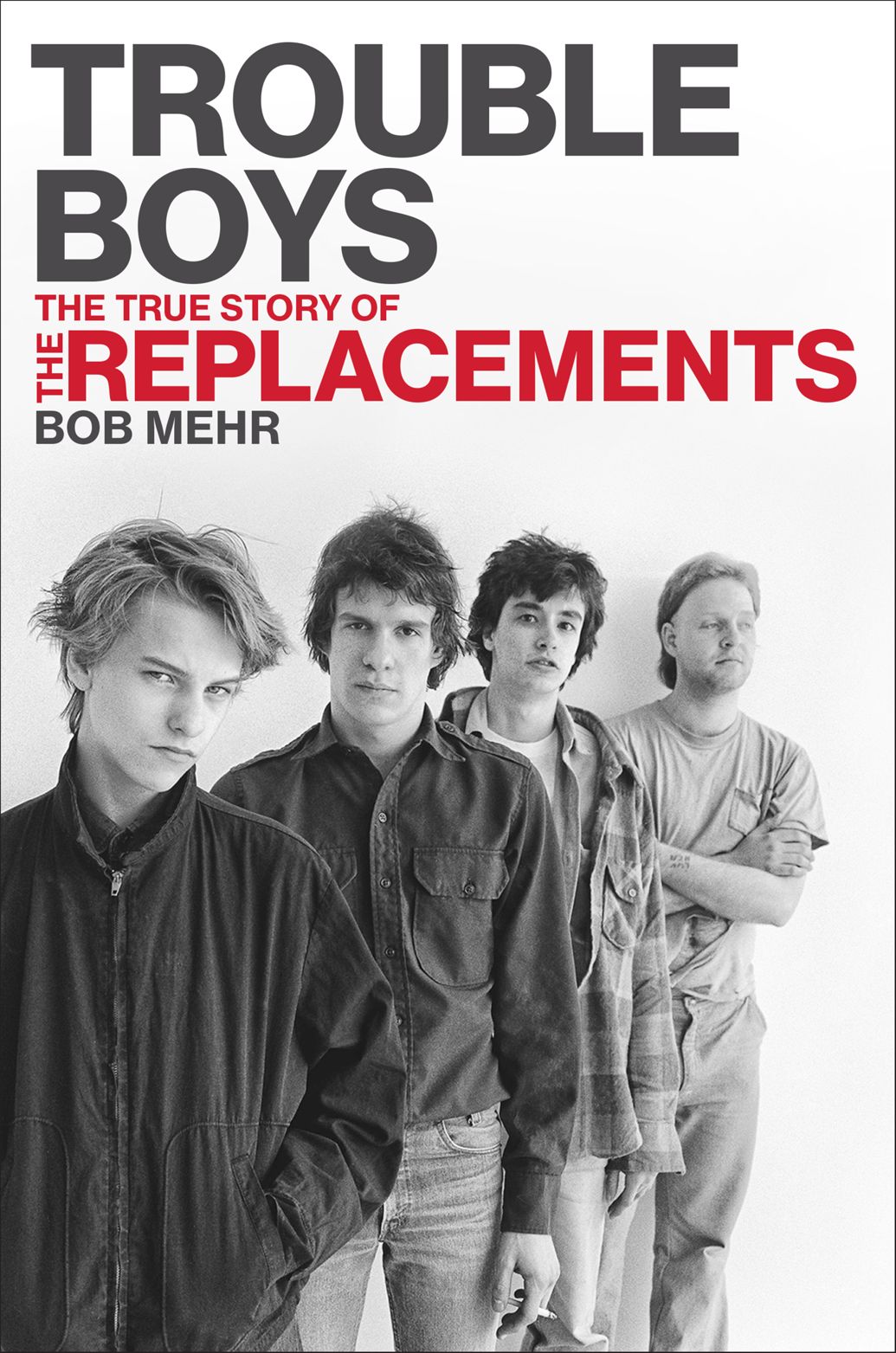
I'm excited to dive into Trouble Boys: The True Story of the Replacements, which was just released. If the emotionally detailed introduction is any indication, telling us the sad tale of the day all the Replacements got back together to attend founding guitarist Bob Stinson's funeral, then this looks like perhaps the best Replacements book yet.
Rather than predictably starting with leader Paul Westerberg's backstory, the book transitions nicely into Bob's childhood. His problems are directly attributed to his awful dad and stepdad, who molested him as early as age 7 and wouldn't let him in the house most of the time. I also never knew that Bob's younger brother Tommy, the Mats bassist, had different fathers, and Tommy is a Stinson only because his mother Anita never technically divorced Bob's father.
Chapter 2 switches over to Paul's childhood. He was born on December 31, 1959, making him a "child of the 50s" and helping on the "income tax deduction," as would later be noted in the classic song Bastards of Young. His father and grandfather had fought in the world wars and his dad, Hal, had been assigned to pick dog tags and wedding rings off soldiers blasted to bits on the beach at Normandy. He had always dreamed of becoming a professional golfer, but ended up working at a car dealership most of his career, with a healthy bit of business skepticism built in that was clearly passed along to Paul.
Paul's friend Scotty was a bad influence who got Paul trying out cigarettes in kindergarten. At 13, he had his first swig of vodka and it flushed all his anxieties away. Alcohol immediately became his go-to for the next many many years. And perhaps some of the great lyrics and music that he has invented over the years can be attributed to a couple of whacks to the head he took as a child. When he was 20 months old, his sister accidentally hit him in the head with a baseball bat, and when he was 9, he fell off a rope in a junk yard and gave himself a permanently Spock-like pointed ear.
Years later, before going into the studio, Paul would scream at the top of his lungs to get his voice to sound hoarse, like in the Rod Stewart album he had absorbed when he first started buying records around 1972. I can definitely hear that influence, in hindsight. Same messy hairdos too.
Returning to the Stinson story in Chapter 3, they had moved back to Minneapolis after stints in California and Florida, and Bob was not doing well. He wanted to return to Florida to kill his stepdad, he cut himself with razors, and social-work reports from the time show that he may have been suicidal. As his mom's new fiancée threatens to send him to a boys home, his sister Lonnie tells Anita about the molestation and abuse Bob suffered from his stepdad and that this is the source of all Bob's problems. Bob still ends up spending a chunk of his teen years away at boys homes before returning to Anita's house when he was 18 and ready to start rocking in bands.
And speaking of Rod Stewart and his band The Faces, Westerberg saw their last concert ever and it changed his life, solidifying his aim to become a full-time rock n' roller.
Can't wait to receive this book in the mail so I can read beyond Amazon's free sample.
For one, it's pretty crazy to think Star Wars: The Force Awakens won't even be considered the best sci-fi movie of 2015.
That much can be surmised by last week's bounty brought in by Mad Mad: Fury Road at the Academy Awards.
I wasn't excited to see Mad Max, but people kept talking it up so I watched it on the small screen. Even though it was billed as one long chase scene (and those are usually the least interesting parts of any movie too me, even if a bunch of cool stuff does happen), this is no doubt a stone-cold classic.
The cinematography from the deserts of Namibia, the amazing makeup of the unbelievably creative characters, and the action are all jaw droppingly entertaining. Even the story takes shape in what would seem like a lost cause of a film for plotting.
Mad Mad: Fury Road is like one of my favorite movies from the 1970s, The Warriors, in that the main gang tries to make it past a series of meaner and badder gangs on a path to survival. For a film that took Director George Miller (of Happy Feet fame, go figure) nearly a decade-and-a-half to complete, which is usually a very bad sign, this one defies all.
This article was originally published by Mobility Lab. People often consider the costs of owning or renting a home and getting to and from it as completely separate items in their budgets. They also likely consider these items as highly personal and local matters beyond the influence of the federal government.
But U.S. Transportation Secretary Anthony Foxx and Housing Secretary Julian Castro made the case last week at a Brookings Institution event that President Obama’s Cabinet is working across their respective fields to build creative tools that help local leaders improve their economies and communities based on this relationship.
An American household’s two biggest expenses are housing and transportation, yet transportation costs tend to be discounted when people are making decisions about where to live. As a result, transportation is often referred to as the “hidden cost” of housing.
To that end, the Departments of Transportation and Housing and Urban Development, in 2013, launched the Location Affordability Portal, which not only aggregates your total housing and transportation costs, but also creates an anonymous costs database for researchers and planners, who can now work to help improve transportation access for potentially millions of Americans.
With the new paradigm of considering housing and transportation costs together, the general rule is that the combined total should be no more than 45 percent of a household’s income. Mobility Lab’s Research Director Stephen Crim has noted that many areas of Arlington County, Va., for example, that are considered unaffordable following the old 30 percent housing rule in fact become affordable when applying the “housing and transportation” 45 percent rule. An otherwise expensive location, for example, may benefit from highly accessible rail and bus transit options, making car ownership (and its associated costs) unnecessary.
When many people think of the housing and transportation equation, they think it only directly affects lower-income households. But it is a factor of concern to middle class, and even fairly wealthy, people as well.
“Poverty is actually pretty expensive, both for the poor and for the country,” Secretary Foxx told the Brookings audience. “People end up becoming more isolated when they move to the suburbs and don’t have transit options.”
Secretary Castro added that the poorest people are affected disproportionately by the lack of investment in mobility options for some neighborhoods.
“We need to stop stacking and segregating poverty. Improving transportation and fair housing are keys to equality and opportunity,” he said.
Castro explained that these circumstances have far-reaching effects. “There are 14 neighborhoods in Baltimore, including the one where Freddie Gray lived, that have lower life expectancies than North Korea.”
Foxx agreed that transportation options can often be part of the answer, but that the lack of transportation has often exacerbated housing problems.
“We have a very ugly history of our transportation infrastructure being built,” Foxx said, but added, “Who would have thought we would have light rail in [Los Angeles’ poor] Crenshaw [neighborhood] 30 years ago. We’re starting to see businesses where there were deserts in the past.”
He cited how Rochester, N.Y., recently asked USDOT for a TIGER grant to tear down a highway as representative of how communities – after years and years of narrow-minded thinking that transportation only meant building highways – are rethinking their own designs.
Photo: Bus riders board a Metrobus in the Ballston neighborhood of Arlington, Virginia (Sam Kittner for Mobility Lab, www.kittner.com).
Here's my latest article, originally published in the first issue of the Urban Design and Mental Health Journal.
Maria Hernandez, from Montgomery County, Maryland was always afraid she wouldn’t know how to use public transportation. But since deciding to learn, she rejoices in being “able to relax, read a book, and enjoy the scenery – which you really can’t do when you’re driving.” No doubt Hernandez is onto something that has been very difficult for most throughout the U.S. to muster since the auto industry began seducing us into its lifestyle nearly a century ago.
Of all the many things we surrender when we commit to making most, or all, of our trips by car, the most important may be the most difficult to measure: our mental health. Mental health, our state of well-being in which every individual can realize his or her own potential, allows us to cope with the normal stresses of life, work productively and fruitfully, and make a contribution to our communities. When mental health suffers, the damage can manifest in many ways, from depression to eating disorders to suicide. But our transportation habits – formed long ago but with endless opportunities to change– is one of the greatest tools we have to make sure our mental health remains sharp into old age. We can walk or bike to places and – bingo – that officially counts as regular physical activity. That means these behaviors are associated with improved attention, memory, and cognitive speed across our lifetimes.
What does the research say?
While numerous studies have documented the effect of physical activity on academic performance, extensive research on the connections between transportation and mental health is more difficult to find. Some of the most intriguing evidence includes:
A Danish study that intended to explore the effects on school children of the food they ate for breakfast and lunch ended up discovering that the way they traveled to school was far more crucial. Those who bicycled or walked performed much better on tests than those who rode in a car or on public transit.
A British study found that physical exercise and “active leisure” of a person aged thirty six had a significant effect on the levels of memory decline for that same person later on between 43 and 53 years of age.
In a study on walking and cognitive function, researchers found that older women who walked the equivalent of an easy pace at least 1.5 hours per week had significantly better knowledge, attention, memory, judgment, reasoning, problem solving, decision making, and comprehension, and less cognitive decline than women who walked less than 40 minutes per week.
Many studies have found that being a frequent user of transit can affect mental health, from reducing emotional stress by improving people’s access to education and employment to providing an option that many people consider less stressful than driving. “These mental-health benefits are difficult to quantify but potentially large,” said Todd Litman, a researcher for the Victoria Transport Policy Institute.
Italian researchers found that just simply living near transit lines could be good for the mental health of older residents in Turin.
Other studies have shown that bicycling helps ward off Alzheimer’s, depression, Parkinson’s, and attention deficit hyperactivity disorder (ADHD). Bicycling has also been proven to make people happier (and, one could assume smarter, since Albert Einstein supposedly came up with his theory of relativity while riding his bicycle).
Mobility Lab lists several other studies linking active transportation to improved mental health.
Photo credit: Sam Kittner, Mobility Lab
What should we do about it?
There are many things we can do to become more active in our travels. And one positive sign that we may get help from high up is the recent announcement that the U.S. Department of Transportation will reward $40 million (with Paul Allen’s Vulcan company pitching in an additional $10 million) to the mid-sized city that figures out how best to fix its transportation system. After all, once our crumbling and disconnected infrastructure is improved, cities can get down to the business of making it easier for people to choose the healthier, sustainable, and more productive ways of getting around town. All of this would lead to not just wealthier individuals, but wealthier communities. Cornell University found that, for one, “unwalkable communities cost Americans $190 billion a year in health-care costs.”
It all starts – or should start – at the top. And the federal government has taken at least one positive recent step. As part of its massive new Every Student Succeeds Act, children will not be prohibited from “traveling to and from school on foot or by car, bus, or bike,” as long as the parents have given permission and it’s allowed by local law. It may be sad that we actually have to write that into federal law, but it also may help bring back the good old days when kids were much more active in getting to school.
At the local and regional levels, leaders need to do something completely different than what has been done for decades: prioritize people who walk, bike, and use transit over people in cars, according to Chris Hamilton of Active Transport for Cities. He recently wrote at Mobility Lab, “If we make our streets more people-centered, and if we help make it easy for more people to walk, bike, and take transit, our cities will be more green. More prosperous. More physically healthy. And yes, more mentally healthy.”
There is just a sloppy wealth of great stuff on TV these days. If I were still a single 20-something, I would have watched all of the good stuff by now. As it is, I'll settle for getting to what I can whenever.
That said, I've been hitting up Amazon Prime pretty hard recently. Some of the highlights include:
Red Oaks is an absolutely lovable show that takes place mostly on the grounds of Red Oaks Country Club in the 1980s. I like the New York Times' description of the show as a mashup continuation of "John Hughes, Harold Ramis and the young Richard Linklater." Hard not to watch something like that. The mix of tennis and ridiculous 80s yuppies and hairdos make it just a little bit too much like my own youth, in which I actually spent quite a bit of time at a country club playing tennis. So I can relate. But the show should be entertaining, if a tad offbeat, even if you can't relate. Not to mention, Paul Reiser is great as a salty old tennis player who looks nothing like the Mad About You role that made him famous years ago. With just a few episodes to watch from the first season, I give it a solid 4 out of 5 stars. I'm excited that season 2 is coming soon.
Transparent really hooked me in season one. Arrested Development's Jeffrey Tambor is perhaps the only likable character as Maura, who transitions into a female throughout the first season. He and the show won Golden Globes, but the winnings have tailed off a bit for season two. It makes sense, because the freshness of the idea, the fact that it's a hot and important topic, and a great theme song (check out the Song Exploder podcast episode about it) made for a powerful cocktail. I too really liked season one, but a few shows into season two, the luster is rubbing off. Maura and her family are all very unlikeable, kind of like the later seasons of Girls, in which the main characters all go from voices-of-a-generation to annoying, narcissistic babies. Season one was 4.5 out of 5 stars, but season two is starting off as 3 out of 5 stars.
And the newest, and possibly best, entry in my Amazon watching is Mozart in the Jungle. This seemed like it would be intriguing to watch when I read positive reviews a while back, especially because it's about music (I'm hoping HBO's Vinyl can get better after a slow pilot) and because of Gael García Bernal and Malcolm McDowell can certainly do no wrong as the maestros of New York's orchestra. The ensemble piece has just won Golden Globes for best comedy and best actor (Bernal), so I have high hopes with a full season-and-a-hlf to still binge. Easily a 4.5 out of 5 stars so far.
Transit communications needs to catch up if transit ever hopes to catch on.
When it comes to communicating that people have transportation options besides their own drive-alone cars, the transit industry is getting its lunch handed to it, and has been for decades.
It must face that it’s a fringe player that wants to become mainstream. And it’s not getting any easier. While we hear so many great stories about options presented by bikeshare systems and technology and Uber, the fact remains that people are buying cars more than ever.
Take the people who attend TransportationCamps, for instance. They are clearly transportation experts, but then again, just about every single American is a transportation enthusiast by way of traveling every day. And 95 percent of U.S. households have cars. Most of us love our cars, or at least have been seriously duped into thinking we love our cars.
So communicating to people that we don’t truly love our cars is a tough path to take for transportation advocates. Where an opening may be is that so many people hate driving, especially for the purpose of commuting.
The fact that we’re a car country is stating the obvious. Fifty-three percent of Americans want more spending on roads and 40 percent want more spending on transit. That stat actually seems pretty generous to transit.
But I don’t think advocates should make this a road versus transit thing. It’s best to learn from cars and from the auto industry. The Super Bowl, for example, is filled with car ads (there were at least 14 during this month’s Super Bowl 50), but driving is rarely like the ways the auto industry represents it in the ads.
Do the car companies care about their misrepresentations? No, they’ve got a product, a lifestyle, to sell. And they sell that fantasy extremely well.
Putting obvious funding questions aside, where are the Super Bowl-esque ads about public transportation? Where are all the transit ads representing freedom to explore and observe, safety, good health, cost savings, sustainability, community, patriotism, and happiness? Transit communications needs to catch up if transit and alternate modes ever hope to catch on.
To get people to ride transit, the bus, rail, biking, walking, teleworking, and ride-hailing communities must catch up with the auto industry on communications and marketing. There needs to be simple, powerful, consistent, and, most importantly, positive messages about the experience.
We know transit can be productive, better for your health, and cleaner for the environment. We don’t seem to care about the endless benefits of active transportation because we don’t know about them. The messages that might get us to even contemplate these options aren’t being communicated widely enough, and they’re certainly not being repeatedly pounded into our heads like the entertaining and endless mental queues from car commercials.
We still think of trains and buses as dirty, disgusting, and communal in all the wrong ways. Bicycling and walking “aren’t for us” and often bring preconceived notions that there must be something wrong with people who do those weird, not-normal types of activities. While there are certainly problems with all these forms of travel, more needs to be done to accentuate the many positives.
I hate a message like this, probably the most well-known transit ad in existence: the New York Metropolitan Transportation Authority’s “If You See Something, Say Something.”
Its take-home message for people is disproportionate to the rational facts, laid out in one study by Todd Litman of the Victoria Transport Policy Institute:
Commuter rail is about 20 times safer than driving
Metro or light rail is about 30 times safer
The bus is about 60 times safer, and
About 360 times more people are killed in auto collisions than in incidents of terrorism.
These points should be messaging gold for future non-car advertising. And when agencies and others must go down the safety road (which is, of course, important), they could follow the example of the Denver Regional Transportation District’s co-opting of the wildly popular Australian “Dumb Ways to Die” campaign:
This is another example of a transit ad, from the Los Angeles County Metropolitan Transportation Authority, that does better at potentially generating curiosity about trying transit.
I thought the Washington, D.C., Metro’s commercial showing a good-time party breaking out on the newly opened Silver Line was exactly the kind of thing that could inspire ridership.1
I have no doubt that journalistic storytelling and content marketing will be a long-term path to the better overall health of the non-auto transportation industry. Not only does the industry need to sell its services, but it must do something new: become hyper-focused on selling the lifestyle.
Organizations like the American Public Transportation Association, Amtrak, the Association for Commuter Transportation, the League of American Bicyclists, the American Association of State Highway and Transportation Officials, the Eno Center for Transportation, and Mobility Lab, to name a few, need to form a messaging and communications coalition with the goal of changing public opinion.
All kinds of tactics could be used. For example, FamiliesUSA built a story bank, where people can share their personal stories that relate to bigger societal issues sweeping the mainstream news. The organization then very successfully feeds those personal stories to the media, which is actually one of the reasons we see so many personal anecdotes within our national news stories.
Communicating outside of just the transportation arena is also crucial, and transit conversations need to somehow overlap into the tech, health, environment, business, city planning, and pop-culture worlds. It’s important to get others, not just the transportation experts, to spread the message about why support is needed for transportation options.
Industries, sectors, and businesses that get this storytelling strategy are winning. My favorite example is Red Bull, the energy drink company, which publishes the Red Bulletin Magazine. It has about the same amount of subscribers as Sports Illustrated.
Red Bulletin tells stories about the adventurous lifestyle. Maybe back at the very end, it might have a Red Bull energy drink ad. But the magazine is about telling the story of the lifestyle. The company knows that if you buy into that lifestyle, there’s a chance you’ll drink its product. It’s brilliant.
The list is quickly getting long of the industries that are doing content marketing and storytelling right, and their creativity is reflected in their profits and popularity: AirBnB has Pineapple, Uber has Momentum, Intel has IQ, Coca-Cola has Journey, American Express has Open Forum. You get the idea. Most of these organizations are pumping out more (and not just more, but also great) content than Time Magazine did in its heyday.
Because if you want someone to buy your product or buy into your lifestyle, you don’t immediately start screaming at them to buy, buy, buy the moment they approach you. You try to nurture them and build a long-lasting relationship. You do that by telling them great stories and then telling them more great stories.
Finally, here is my advice for agencies, organizations, and even individuals, on how to tell better stories. This stuff won’t break the bank, and anyone involved in non-car transportation should find the money to incorporate most or all of these elements into your strategies.
Build compelling websites that go beyond selling customer fares and sell a lifestyle.
Pick your social networks and devote yourselves to them, and remember, they might not be around tomorrow or might change their rules, so have a backup plan.
Engage with the public, there are free contributors who would love to get published or promoted through your channels.
Hold hackathons or regular events, like Mobility Lab’s Transportation Techies, to turn your big data into stories or ideas that your public agency can consider.
Engage thought leaders to trumpet your cause. Once they get it, others will start to.
Leverage research from other places if you can’t do your own.
Create messages and talking points that are relevant to your community.People in Alameda, Calif. are particularly interested in environmental and green causes, so the city created transportation messages that paved the way to policies that reduce carbon pollution.
In my hometown of Edwardsville, Ill., there are amazing trails to every corner of town and beyond. But it seems to me very few people ever ride bikes or walk to get to work or to go out and socialize. The trails are often busy, but almost entirely with people seeking recreation. There is a huge opportunity to educate people and improve traffic, which can be pretty rough there even in a 30,000-person St. Louis suburb.
It can be really difficult to find photos of people happy on transit. That’s the first problem to take care of in every city. Work diligently to find great photos of people using public transportation.
Calls to action. People must be inspired to get involved.
Hire a journalist or two, because their passion and perspective might actually be the brand journalism that puts your organization and the industry over the top.
This article by Howard Jennings and myself was originally published by Expert Sure, CleanTechnica and Mobility Lab.
What does transportation in the U.S. city of the future look like?
Mobility Lab gets asked this a lot because it’s clear that people have had it with the crushing traffic that dominates most of our cities, and 3 out of 4 people are frustrated by their lack of transportation options.
As Forbes recently pointed out, the average traffic delay – time spent in stop-and-go traffic – per commuter is 42 hours each year, up from 18 hours annually in 1982. We’re losing patience, getting less healthy, being unproductive, wasting money, and polluting the air. And from the flip-side perspective, a new report has found that reducing the time employees spend in cars is one of best things a business can do for itself, for a whole host of reasons.
So people and businesses are slowly getting around to realizing they need to change their transportation habits, and this mindset is starting to have a huge impact on the way people everywhere – but especially in dense cities – take their daily trips.
IT STARTS WITH TECH
It’s safe to say technology has been the top enabler of this trend. And all the talk about the on-demand economy and electric and autonomous vehicles is actually a lot more interesting and sophisticated (and realistic) than the many years we all spent infatuated with flying Jetsons cars as our vision of a transportation future.
Traffic smartphone apps such as Waze suggest the most efficient route from point A to point B, adjusting along the way based on real-time speed and traffic information from other “crowdsourcing” users.
Dozens of transit agencies have apps that offer real-time travel information. And after a media investigation discovered that nearly 10 percent of buses are late to Boston’s public schools, a new app called Where’s My School Bus? was designed so parents could know if their kids were missing class.
And when package-delivery drones like those proposed by Amazon get off the ground, they hold the potential to decrease the number of truck trips on city and suburban streets.
Austin is creating an app that connects cyclists to traffic signals, which the Texas city hopes will encourage more bicycling by making lights turn green faster as bicycles approach them.
Zurich, Switzerland has long had success alleviating traffic in this realm. If too many cars are coming into the city, sophisticated traffic signals are timed to vastly discourage people from driving in. With commuter rail strategically running alongside these roads, people can bail out of their cars and jump onto transit. It’s highly rational, it works, and the city is way more enjoyable because of it. More and more places – like New York, London, Paris, Copenhagen, and Buenos Aires – are utilizing car-free zones.
uberPool and Lyft Line have a huge opportunity to play a role in reducing the total number of miles driven on U.S. roads. While these new offerings are similar to traditional carpooling, which has been around since the need to ration rubber in World War II, the ability to hail a ride with more certainty from a smartphone is proving popular.
Public transportation really needs to catch up. Once trains, light rail, streetcars, and buses become interconnected services on our smartphones, we’ll see an uptick in ridership. One of the major drawbacks to transit is that it is perceived as unreliable. But if we can check real-time arrivals, pay, ride, and transfer to all the other transit possibilities from the comfort of our smartphones – or “smart wallets,” as San Francisco transit innovator Tim Papandreou calls it – the need to own a personal vehicle will decrease.
Singapore has an “ez-Link” card that travelers can use to pay for buses, trains and taxis, while London’s Oyster card does some of the same things.
RideScout recently announced its plan to launch something called RideTap, which will be a pilot in Portland to demonstrate on-demand rides to complement the existing transit infrastructure. In other words, TriMet users will be able to book a Bcycle or Lyft on their smartphones to connect them from the end of their train ride to their destination.
THE PLANNERS ARE A’CHANGIN’
Speaking of bikeshare, that is one of the major innovations helping planners see that cities are changing before their very eyes. Since 2009, when there were virtually no bikeshare systems in North America, more than 50 cities and towns – speaking conservatively, since there are also so many systems on college campuses – have added them to their transportation networks, most recently Birmingham, Ala. Even planners in smaller jurisdictions are finding flexible bikeshare options that best work for their size and resources.
One of the many presenters for Mobility Lab's Transportation Techies in the Washington D.C. region
Planners regularly attend Mobility Lab’s monthly Transportation Techies events (highlighted here in this Washington Post feature) and help advocate for governments to open their transit data to make systems more usable for more people. And events like our TransportationCamp – which is now happening in various cities around the country and world – and grass-roots planning by groups like ioby and Cards Against Urbanity are opening old-school planners’ eyes to the creative thinking about what people want from their cities of the future. (Like welcoming and enjoyable bus stops, for instance.)
Mayors in cities all over the country are listening and beginning to be less afraid of saying “yes” to pilot projects that can often become bigger when constituents see success and private partners assist with funding.
DRIVERLESS CART BEFORE THE HORSE?
Then there are driverless cars – the supposed answer to all our transportation troubles. Transportation-demand expert Todd Litman projects that these won’t fully impact traffic congestion, automobile accidents, and car ownership until 2060.
But we think that is wildly conservative. Large numbers of people will be using these vehicles over the next decade, and we hope to see good data soon thereafter on whether driverless cars are taking trips off the road and reducing vehicle miles travelled.
Equally important is that so much of the focus on automated cars has been on the tech, while not enough attention is being paid to what the impacts will be on people and our built environment. If these vehicles remove the stress of the commute, then that’s likely to induce a lot more people to ride in them, in turn taking them out of transit modes like buses, subways, and bikeshares. The trend might actually create a net increase in vehicles.
The cars will be able to cluster closer together in platoons on roadways and urban streets. The likelihood is that we will have much greater density of cars in urban environments, which could potentially diminish the quality of the environment that so many of us are striving for with transit-oriented development, complete streets, walkable activity centers, and livability and sustainability initiatives. This area needs to be studied, and good policies need to be put in place before the driverless cars hit the road en masse.
A good thing about our newfound sharing-economy mindset is that it sets the stage for fleets of autonomous vehicles to succeed, since many people are no longer automatically thinking they have to have their own driverless cars. Potentially there might actually be fewer cars on the roads.
INNOVATION WILL DRIVE SLOWER-MOVING POLICY
We know these are the innovations that will shape our transportation in the city of the future. The question is how it will happen.
If the right people aren’t at the table – like idea man Gabe Klein, for example – cities could end up looking like Cairo, Egypt, where people drive bumper-to-bumper, making the streets look like seething, inhospitable rivers of metal. That’s a worse-case scenario, but if we have the ability for cars to travel two feet apart, it’s also pretty realistic.
How we plan affects how quickly we get market absorption. For the most part, we don’t have the space to build new roads and highways in cities. And as the abyssmal level of federal transportation spending has gone on for many years now, and our infrastructure crumbles, we don’t have the money to build new roads.
So creative spending on relatively inexpensive throughways like bicycle infrastructure and walkable communities makes a lot of sense. And the intangible benefits of refocusing on modes other than drive-alone cars make spending in those directions even wiser.
I've seen a hodgepodge of movies lately. I'm not sure that any of them warrant their own blog posts at the moment so this compilation to help me remember what I've seen lately will have to do.
And as a side note, a book I recently skimmed was Arcadia by Lauren Groff. I was excited by this one because of all the praise it received, and I'm a sucker for anything about cults (see my articles on The Polyphonic Spree, the movie Martha Marcy May Marlene, the Children of God-inspired band Girls, Charles Manson, and more. But this was flowery prose that had me bored 20 pages in, at which point I decided to read the starts and ends of chapters and a summary online. It's about a kid named Bit who is born into a cult at a place called Arcadia, which holds its members together in the beginning by some sort of vegan concept. Along the way, Bit grows to like the place less and less and it ends with technology and burnouts taking the place over. Criticize me for not deeply absorbing this whole book, but life is too short.
1.5 out of 5 stars.
Now transitioning to the movies but keeping in line with the blandness of Arcadia, Blended was the worst of the batch. The Wedding Singer was a true comedy classic and possibly Adam Sandler's best movie. He and Drew Barrymore killed it with chemistry. And they teamed up on 50 First Dates to nearly equal effect. But this mess of bad African stereotypes is so bad that I couldn't take my eyes off it. Like a nightmare Brady Bunch, it takes forever for the two stars to fall in love. Most jokes fall flat, but all the kids and the occasional moment that lands save this from being one of the worst movies of all time. It's so dumb, and it seems like a product of the Radical Right in that it's potty-talk free and kind of racist, but you know what, I ended up guiltily liking it.
2.5 out of 5 stars
J. Edgar
It's hard to go wrong with a fictional biopic in which the lead character is played by Leonardo DiCaprio. The focus on this one is mostly about his closet homosexuality that mostly expresses itself in asexuality.
3 out of 5 stars
Bill Murray's HBO Christmas Special
This hour-long special highlights Murray's most endearing traits, basically expanding his SNL lounge singer, laid-back, and kinda drunk-seeming guy. Highlights include a duet with Jenny Lewis of Rilo Kiley, George Clooney popping out here and there from behind Christmas trees, Phoenix's catchy Beach Boys cover, and of course Paul Schaeffer's piano playing throughout.
3 out of 5 stars
John Dent
I'm not a big action-adventure guy, but I like Keanu Reeves a lot and this is a pretty perfect role for him, as a tortured assassin.
3 out of 5 stars
Deliverance
Burt Reynolds' brightest moment. And one of the best films ever (in fact, #15 on my list).
5 out of 5 stars
Happy Valley
This story about Jerry Sandusky and the corrupt Penn State football program is almost too sadly pathetic to truly recommend, but this story is told really well.
3.5 out of 5 stars
The Big Lebowsky
Some movies you just have to see again and again to like more each time (#13 on my all-time best list).
5 out of 5 stars
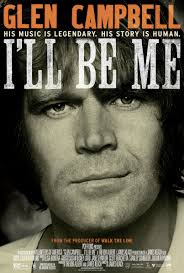
Glen Campbell - I'll Be Me
In the moments when it's not looking a little to uncomfortably like a reality TV family story or a little bit too much of an advertisement for fixing Alzheimer's, CNN's Glen Campbell documentary is good, down-home entertainment. And Campbell himself is such a great guy. His music, further, just makes any time spent at all with the country legend a joy.
4 out of 5 stars
Having spent part of the morning reading David Bowie tributes, it seemed only fitting that I assess my own feelings about the legend's music, which to me was far more important than all his other contributions to the fashion, movie, and TV ("I want my MTV") worlds.
I wasn't as hard hit by his death last week as I was by that of Lou Reed. But Bowie is definitely somewhere in my favorite 40 music artists of all time. Here are my favorite songs of his that make that case:
Honorable Mention: Velvet Goldmine, 1972; Lady Stardust, 1972; Diamond Dogs, 1974; Five Years, 1972; Quicksand, 1971; Hang On to Yourself, 1972
25. Moonage Daydream, 1972
24. Rock & Roll Suicide, 1972
23. Golden Years, 1976
22. Star, 1972
21. Kooks, 1971
20. The Jean Genie, 1973
19. Fame, 1975
18. Blue Jean, 1984
17. Space Oddity, 1969
16. Queen Bitch, 1971
15. Rebel Rebel, 1974
14. Life On Mars, 1971
13. All the Young Dudes, 1972 (written by Bowie, made famous by Moot the Hoople)
12. Suffragette City, 1972
11. China Girl, 1983
10. Let's Dance, 1983
09. Young Americans, 1975
08. Modern Love, 1983
07. Under Pressure, 1982
06. The Man Who Sold the World, 1970
05. Changes, 1971
04. Heroes, 1977
03. Sound and Vision, 1977
02. Ziggy Stardust, 1972
01. Starman, 1972
I'm far from the geekiest of Star Wars aficionados, but the universality of the characters many of us have known since as long as we can remember make the best of the series' episodes some of the greatest movie moments.
I imagine it will be hard to argue against Episode VII: The Force Awakens being the best movie of 2016, no matter what the codgers in The Academy have to say. I certainly didn't see anything as good in 2015, which seemed to be a pretty lean year for movies.
The movie moments I liked best in the new Star Wars? (Minor spoilers ahead.)
10. Finn's inexplicable lightsaber battle with Kylo Ren.
09. The Stormtrooper village raid and Finn's change of heart.
08. The family discussion between Leia and Han.
07. The meeting with cantina owner Maz Kanata, a big-eyed female version of Yoda.
06. The storylines of the three prominent droids.
05. Adam Driver's acting when unmasked as Kylo Ren.
04. Han and Chewbacca find the Millennium Falcon.
03. The extent to which Rey, a lowly scavenger, kicks butt.
02. Rey's trek to the top of an island mountain and what she discovers there.
and best of all ...
01. The death of my favorite Star Wars character of all time.