Friday, April 15, 2016

Storytelling has a direct result on building transit that could compete with cars


I recently wrote an article on Mobility Lab calling for transit agencies to launch a full-on effort to make commercials for transit that are as enticing as the many excellent car commercials that the auto industry has been pumping out for decades.

As a communications professional, it's often difficult to show exact influence and results of the blogs, videos, tweets, and other materials we create. But when The Rapidian, Grand Rapid's local citizen-run newspaper, published an article this week, Mobility Lab can be proud to see that our advocacy has had a direct success.

Brittany Schlacter leads off her article this way:
Paul Mackie, one of the nation’s foremost mass transit bloggers and the communications director of the Virginia-based nonprofit research organization Mobility Lab, recently posed this challenge to America’s public transportation industry’s leaders:
“Where are the Super Bowl-esque ads about public transportation? Where are all the transit ads representing freedom to explore and observe, safety, good health, cost savings, sustainability, community, patriotism, and happiness? Transit communications needs to catch up if transit and alternate modes ever hope to catch on.”
At The Rapid, we have embraced Mackie’s challenge. We are launching a new campaign that informs the Greater Grand Rapids region about the merits of public transportation through simple, powerful, consistent and, most importantly, positive messages about the experience.
Transit communications needs to catch up if transit ever hopes to catch on. The Rapid presents a start.

Thursday, April 7, 2016

R2D2-like robots are starting to deliver your mail

Wouldn't it be nice if service delivery vans and trucks weren't clogging up city streets, parking in bike lanes, and blasting through your neighborhood?

Not that the drivers aren't performing a great service and all. Who doesn't love to get an anticipated package in the mail?

But one way to solve a major source of traffic congestion may just be R2D2. Someone tweeted that the idea of using robots for mail delivery sounds "like a late April Fool's Day joke."

But it's no joke. The robots are on their way. A feature article on this topic appears on the front page of today's San Francisco Chronicle. The full article is here, and, representing Mobility Lab, I get the first and last quotes in the article:
“These R2D2-like drones ... make a lot of sense for particularly dense places, like city centers, where freight and delivery vehicles are simply running out of space on the roads during rush hours and lunchtimes,” said Paul Mackie, a spokesman for the Mobility Lab, which researches advanced transportation options.
“As cities reimagine themselves to become more walkable, livable places, sidewalks have a central role to play,” said Mackie, the transport futurist. “More and more, people are demanding outdoor living rooms like plazas, sidewalk benches, fountains, cafes and street trees. Frankly, these robots fit into such a landscape much better and much more attractively than the delivery vans and trucks of old.”

Monday, April 4, 2016

Belize's blue-green waters call us to them for the next week

San Pedro, Belize is said to be the island town that inspired Madonna to write the song "La Isla Bonita."

We are staying on "the beautiful island" at Nellie's Paradise Villas next to the Caribbean Ocean in four cozy and fun condos that are surrounded by palm trees, a great and not trashy pool for the kids right in front of our rooms, a fruit stand and much more on the city side, and sunny 80-degree days all around.

The four kids here are keeping each other occupied and were all easygoing on the long trip here. We woke at 3:45 Saturday morning to catch an American Airlines flight to Charlotte and then Belize City. After waiting in long immigration lines and for quite a while for a taxi (because a bicycle race had supposedly made it difficult for cars to get to the airport), we made it just in time to our boat. This was not a luxury liner. We piled into an enclosed and crowded float that powered us across the sea for a little over an hour to San Pedro.

When we arrived, the beach was jammed with Easter Holiday vacationers from all over Belize. There were massive speakers blaring on the beach as crowds pulsed around our luggage carts. I forced my way to our bags, threw them in a golf cart for some Nellie's workers to take for us, and walked along the beach to get to our new home for the week.

From that point on, which by now was about 12 hours from the time we woke up back in Takoma Park, it was all laid back ease. And still relatively early in our day because Belize is Central Standard Time and doesn't recognize daylight savings time, meaning we gained two hours from the East Coast.

We've been sitting by the pool, walking along the beach, and eating and drinking at the three places right next to Nellie's. Melt has very friendly waiters and a little bar that's nice to pull up a chair to and watch the surf and the American politics on the TV. Palaba is the bar with live music and delicious seafood that can be seen in all the Google Image searches because of its thatched roof at the end of a pier into the blue green waters and tubes to float in with your beers. And The Sandbar turns into a dance club at night where we can get 6-pack buckets of Belikin for $12.50US and where we watched North Carolina roll into the Final Four over Notre Dame (woo hoo).

I've had some amazing peel and eat shrimp at Palaba and last night's fancy dinner several blocks away at El Patio hit on all cylinders, included fresh seafood like conch and shrimp in a spicy white coconut curry, mouth-watering ceviche, and ice-cream-like key lime pie.

Now, why am I sitting here eating fresh papaya, pineapple, and tangerines?  The pool awaits.


Friday, March 25, 2016

People want to know about what the future of driving looks like

I've been working with my video-in-crime partner Will Chilton for the past couple of years and our latest production is definitely our best. I did a lot of the writing, co-produced it, and narrate it.

And I'm really happy how well it's doing. In its first three days since being released, it's gathered more than 5,000 views on YouTube and Facebook, as well as some nice press coverage in Vox, Inc. Magazine, and others.

Thursday, March 10, 2016

Friday Night Lights captures all that is America


Friday Night Lights isn't just a book, a movie, a TV series, and recently the focus of a captivating 25th-year anniversary article in Sports Illustrated (an excerpt from a full book) by author Buzz Bissinger.

It is an experience, an entire way of life. I think the reason it remains such a force in our culture is that just about everyone who grew up in the U.S. can identify, and it all forces us to reflect upon our high-school and post-high-school years, for better or worse.

Friday Night Lights isn't a story about high-school football. I mean, it is, but it's much more about friendships, youthful pettiness, leadership, love, race, alcoholism, hopelessness, hope, and the rare successful mix of comedy and drama.

In undergrad at Southern Illinois University, my sports-journalism professor, the formidable and legendary Bill Ward, assigned the book to us. And I loved it, even if I didn't realize at the time what a modern classic it would become. In fact, it still sells about 5,000 copies every month.

I certainly hyper-identified because these real-life kids (reality programming when it was still good) at Permian High in West Texas, like me, went to high school in the late 80s and experiencing growing up in the Midwest.

And it wasn't like I spent every Friday night at our football games. We had good teams, but to my mind, the soccer games (in which I was a player) under the lights on any night but Friday were every bit as entertaining, other than the fact that they didn't hold that Friday-night hope of an entire wild weekend ahead of us.

That's the feeling Friday Night Lights truly gives us. There was the excitement of the inevitable house-party that would happen over the weekend. Or one out on one of the big farms north of town. This after hanging out in McDonald's parking lot or cruising around for hours waiting to get the word of where everyone was that night.

There could be love or alcohol or fights or interesting conversations or dumb pranks or hiding something in a cabinet that the host's parents would eventually find and wonder about.

Everyone can identify with one of the main characters. Take the near-perfect TV series, which ran for five seasons and would clock in as my fifth-favorite show of all time, right behind Mad Men, Seinfeld, Saturday Night Live, and All in the Family.

With Tim Riggins (Taylor Kitsch), the rebel drinker with hidden talents but more troubles than a kid can be expected to handle. With Matt Saracen (Zach Gilford), the quiet quarterback who was idolized for his athleticism when he was probably just as talented at art, something not considered when it comes to high-school popularity. With Brian "Smash" Williams (Gaius Charles) and Vince Howard (Michael B. Jordan), the black superstars who were golden gods on the field but had endless worries off-field living in a place with deep-seated racism and inescapably hopeless environs. With Lyla Garrity (Minka Kelly) and Tyra Collette (Adrianne Palicki), the worshipped, wealthy cheerleader and the restless but smart trailer-trash girl.

Then there's Coach Eric Taylor, played by Kyle Chandler, and his wife Tami (Connie Britton). Almost every line Coach says throughout the series is mesmerizing or flat-out hilarious. Armed with amazing scripts, Chandler gives a performance that is every bit as nuanced and worthy of respect as Jon Hamm (Mad Men), Carroll O'Connor (All in the Family), or Bryan Cranston (Breaking Bad).

I now have the final piece of the Friday Night Lights puzzle queued up on my DVR to watch. It will be a miracle is Billy Bob Thornton's performance as the coach can compete with Chandler's.

Meanwhile, every time I encounter Friday Night Lights, I reflect on a different experience from high school. That is a powerful reminder of how pop culture mixes with and affects the way we make it through this weird and wonderful little amount of time we spend existing.

Monday, March 7, 2016

How to be an influencer with your stories


As I prepare to give a talk as part of a panel at tomorrow's National League of Cities Conference in Washington D.C., here are some of my thoughts about what I'll say.

Slide 1: Things like equity and making traffic bearable are things that government should be good at. That’s their rightful place and role. But something that the private sector, and increasingly businesses like Coke and Red Bull and Casper's Mattresses, to name a few, are good at and getting better at is what the mainstream media has been so good at for so long: telling stories.

Slide 2: Local governments can and should be: 1.) Their own media, and 2.) Hyper collaborative with their community.

Slide 3: Mobility Lab is based in Arlington, Virginia and is a project of Arlington County Commuter Services. This is just a small division that’s part of the transportation department, which is part of the environmental department. It doesn’t seem like there would be resources to have a media and research company, does it?

But, about five or six years ago, Arlington was smart. It wanted to get better at making its research about the incredible transportation work it had done be more accessible to the public. That home became Mobility Lab. A couple of years after that, about four years ago, Arlington wanted to start telling stories about the research, to make it even more accessible to the public. Those stories would be all about what makes Arlington special. Forty years ago, the county was an industrial, ugly, pass-through from the Virginia suburbs into Washington D.C. Arlington made important decisions to build Metro underground along a corridor that was not alongside Interstate 66. That gave the corridor room to breathe and grow for a completely walkable, bikeable five-mile stretch from the Potomac River at Rosslyn west to the Ballston neighborhood.

This corridor development has made Arlington famous, and Mobility Lab is a way to communicate that unique success to others around the world, while also bringing back the success of others so Arlington keeps informed, can learn, and can continue to become a better place.


Slide 4: So we built a media site because we identified that nobody else had a good website completely dedicated to the very specific topic that Arlington is great at. And the mainstream media was never going to give it the focus it deserves.


Yes, the corridor was built, but the key was getting people to continue using the transportation services offered. Tons of other non-profits, companies, and media are focused on transportation infrastructure and technology, but we wanted to focus on getting people to use transit.

Slide 5: We think we have been very successful, rapidly growing followers on Twitter, through our newsletters, and at our website.

There’s been a big media-relations push as part of it as well. We came up with our central messages and talking points, and have constantly worked to refine and update those. This work has led us to become national transportation experts, getting quoted everywhere from WIRED to USA Today to NPR to all kinds of transportation trade publications. We also focus when we can on other assets like podcasts and videos, while hopefully not hindering the growth our two or three top-level communications priorities.

One reason we've been able to do so much is because we have brought more than 100 contributors into our ranks. This is a topic that produces an endless stream of enthusiasts who want to get involved, and they are our army that spreads our message far and wide. Local governments have a duty to give these kinds of people a voice. We had to set our minds to not being afraid what people would say but to embrace what they say and try to learn from them.

Slide 6: And we’re not just aiming to influence the media, which of course in turn influences policymakers, business leaders, and the public. Our Transportation Techies group started from scratch less than a year-and-a-half ago and now has 1,400 members. This is a D.C.-only group. There are somehow 1,400 Transportation Techies in this town. I suspect other places would be similar. This group meets monthly to have a show-and-tell of the best hacking, big-data storytelling, and other innovations in this space.

Slide 7: And the Techies have influenced perhaps their biggest target: WMATA Metro, which runs buses and the subway here. The first Techies event ever held at WMATA headquarters just happened. The Washington Post wrote two features about it. And people are going to eventually benefit from the Techies’ work in helping agencies open data in order to tell better stories and get trains and buses running more dependably.

Slide 8: We also run a thing called TransportationCamp that happens every January in Arlington. About 400 attended this year, and these attendees consist of transit industry folks, but also of enthusiasts, and to see the two come together is heartening. People outside the inner circles of power have a chance to influence policy and planning, and they are doing it at this "unconference," which is now expanding to happen all over the country and world. You can organize them in your hometowns, and Mobility Lab will help.

Slide 9: Finally, don’t jump into all this without a plan, a vision, a strategy, and something you are sure you can do better than anyone else. Don’t give people reasons to leave you for your competitors. Be valuable and the rest will take care of itself. So how to do all of this? Take after Arlington and Mobility Lab.

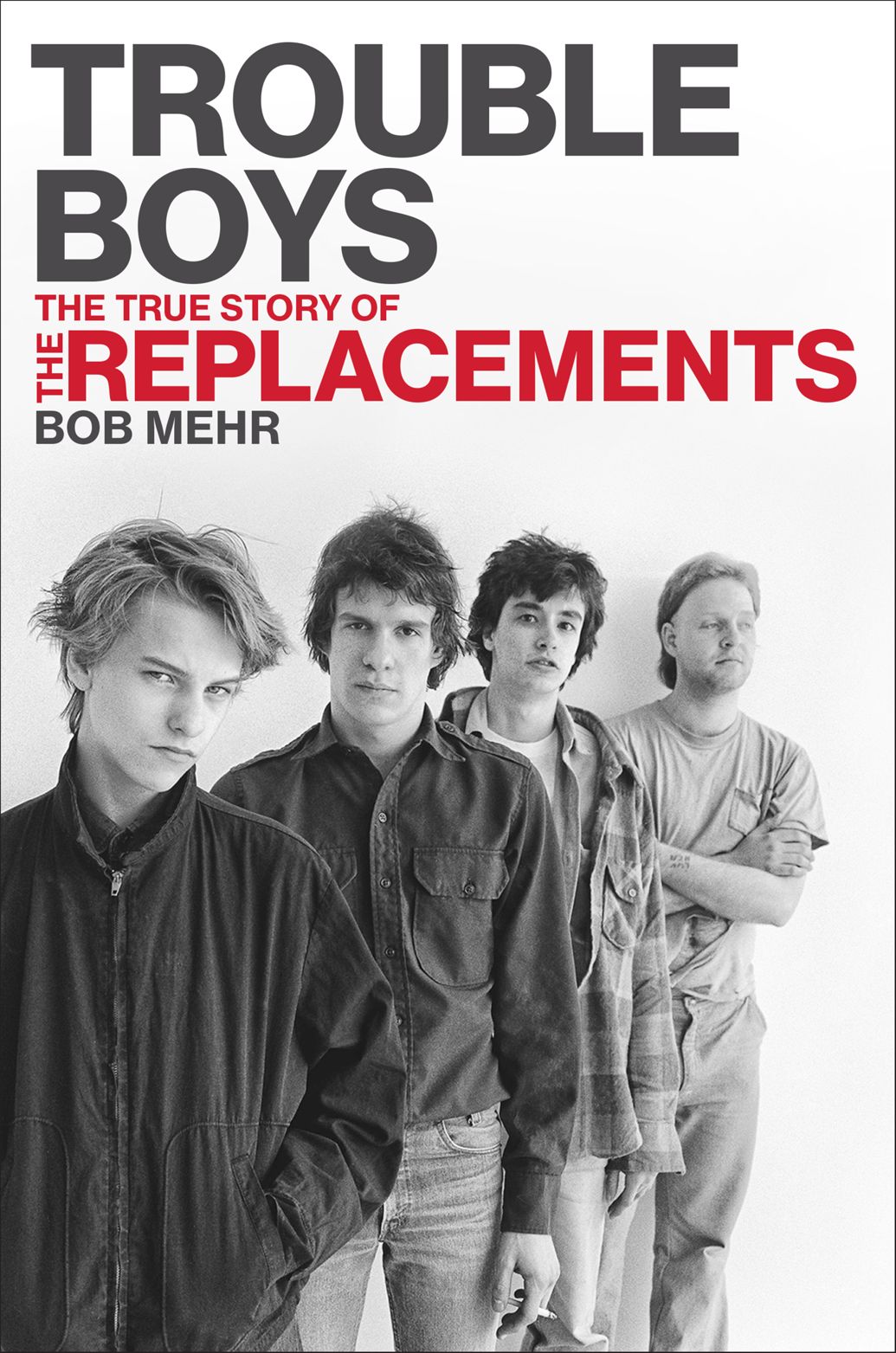
Trouble Boys is the latest (and greatest?) book documenting the wild Replacements

It's amazing how little documented material has come out so far about the legendary college rock band the Replacements.

I'm excited to dive into Trouble Boys: The True Story of the Replacements, which was just released. If the emotionally detailed introduction is any indication, telling us the sad tale of the day all the Replacements got back together to attend founding guitarist Bob Stinson's funeral, then this looks like perhaps the best Replacements book yet.

Rather than predictably starting with leader Paul Westerberg's backstory, the book transitions nicely into Bob's childhood. His problems are directly attributed to his awful dad and stepdad, who molested him as early as age 7 and wouldn't let him in the house most of the time. I also never knew that Bob's younger brother Tommy, the Mats bassist, had different fathers, and Tommy is a Stinson only because his mother Anita never technically divorced Bob's father.

Chapter 2 switches over to Paul's childhood. He was born on December 31, 1959, making him a "child of the 50s" and helping on the "income tax deduction," as would later be noted in the classic song Bastards of Young. His father and grandfather had fought in the world wars and his dad, Hal, had been assigned to pick dog tags and wedding rings off soldiers blasted to bits on the beach at Normandy. He had always dreamed of becoming a professional golfer, but ended up working at a car dealership most of his career, with a healthy bit of business skepticism built in that was clearly passed along to Paul.

Paul's friend Scotty was a bad influence who got Paul trying out cigarettes in kindergarten. At 13, he had his first swig of vodka and it flushed all his anxieties away. Alcohol immediately became his go-to for the next many many years. And perhaps some of the great lyrics and music that he has invented over the years can be attributed to a couple of whacks to the head he took as a child. When he was 20 months old, his sister accidentally hit him in the head with a baseball bat, and when he was 9, he fell off a rope in a junk yard and gave himself a permanently Spock-like pointed ear.

Years later, before going into the studio, Paul would scream at the top of his lungs to get his voice to sound hoarse, like in the Rod Stewart album he had absorbed when he first started buying records around 1972. I can definitely hear that influence, in hindsight. Same messy hairdos too.

Returning to the Stinson story in Chapter 3, they had moved back to Minneapolis after stints in California and Florida, and Bob was not doing well. He wanted to return to Florida to kill his stepdad, he cut himself with razors, and social-work reports from the time show that he may have been suicidal. As his mom's new fiancée threatens to send him to a boys home, his sister Lonnie tells Anita about the molestation and abuse Bob suffered from his stepdad and that this is the source of all Bob's problems. Bob still ends up spending a chunk of his teen years away at boys homes before returning to Anita's house when he was 18 and ready to start rocking in bands.

And speaking of Rod Stewart and his band The Faces, Westerberg saw their last concert ever and it changed his life, solidifying his aim to become a full-time rock n' roller.

Can't wait to receive this book in the mail so I can read beyond Amazon's free sample.

Saturday, March 5, 2016

Mad Max defies the odds to become a classic


For one, it's pretty crazy to think Star Wars: The Force Awakens won't even be considered the best sci-fi movie of 2015.

That much can be surmised by last week's bounty brought in by Mad Mad: Fury Road at the Academy Awards.

I wasn't excited to see Mad Max, but people kept talking it up so I watched it on the small screen. Even though it was billed as one long chase scene (and those are usually the least interesting parts of any movie too me, even if a bunch of cool stuff does happen), this is no doubt a stone-cold classic.

The cinematography from the deserts of Namibia, the amazing makeup of the unbelievably creative characters, and the action are all jaw droppingly entertaining. Even the story takes shape in what would seem like a lost cause of a film for plotting.

Mad Mad: Fury Road is like one of my favorite movies from the 1970s, The Warriors, in that the main gang tries to make it past a series of meaner and badder gangs on a path to survival. For a film that took Director George Miller (of Happy Feet fame, go figure) nearly a decade-and-a-half to complete, which is usually a very bad sign, this one defies all.

5 out of 5 stars


Friday, March 4, 2016

Federal agencies highlight the intersection of housing and transportation


This article was originally published by Mobility Lab.


People often consider the costs of owning or renting a home and getting to and from it as completely separate items in their budgets. They also likely consider these items as highly personal and local matters beyond the influence of the federal government.

But U.S. Transportation Secretary Anthony Foxx and Housing Secretary Julian Castro made the case last week at a Brookings Institution event that President Obama’s Cabinet is working across their respective fields to build creative tools that help local leaders improve their economies and communities based on this relationship.

An American household’s two biggest expenses are housing and transportation, yet transportation costs tend to be discounted when people are making decisions about where to live. As a result, transportation is often referred to as the “hidden cost” of housing.

To that end, the Departments of Transportation and Housing and Urban Development, in 2013, launched the Location Affordability Portal, which not only aggregates your total housing and transportation costs, but also creates an anonymous costs database for researchers and planners, who can now work to help improve transportation access for potentially millions of Americans.

With the new paradigm of considering housing and transportation costs together, the general rule is that the combined total should be no more than 45 percent of a household’s income. Mobility Lab’s Research Director Stephen Crim has noted that many areas of Arlington County, Va., for example, that are considered unaffordable following the old 30 percent housing rule in fact become affordable when applying the “housing and transportation” 45 percent rule. An otherwise expensive location, for example, may benefit from highly accessible rail and bus transit options, making car ownership (and its associated costs) unnecessary.

When many people think of the housing and transportation equation, they think it only directly affects lower-income households. But it is a factor of concern to middle class, and even fairly wealthy, people as well.


“Poverty is actually pretty expensive, both for the poor and for the country,” Secretary Foxx told the Brookings audience. “People end up becoming more isolated when they move to the suburbs and don’t have transit options.”

Secretary Castro added that the poorest people are affected disproportionately by the lack of investment in mobility options for some neighborhoods.

“We need to stop stacking and segregating poverty. Improving transportation and fair housing are keys to equality and opportunity,” he said.

Castro explained that these circumstances have far-reaching effects. “There are 14 neighborhoods in Baltimore, including the one where Freddie Gray lived, that have lower life expectancies than North Korea.”

Foxx agreed that transportation options can often be part of the answer, but that the lack of transportation has often exacerbated housing problems.

“We have a very ugly history of our transportation infrastructure being built,” Foxx said, but added, “Who would have thought we would have light rail in [Los Angeles’ poor] Crenshaw [neighborhood] 30 years ago. We’re starting to see businesses where there were deserts in the past.”

He cited how Rochester, N.Y., recently asked USDOT for a TIGER grant to tear down a highway as representative of how communities – after years and years of narrow-minded thinking that transportation only meant building highways – are rethinking their own designs.

Photo: Bus riders board a Metrobus in the Ballston neighborhood of Arlington, Virginia (Sam Kittner for Mobility Lab, www.kittner.com).

Wednesday, February 24, 2016

Mental Health Suffers When We Surrender to Car Culture

Here's my latest article, originally published in the first issue of the Urban Design and Mental Health Journal.


Maria Hernandez, from Montgomery County, Maryland was always afraid she wouldn’t know how to use public transportation. But since deciding to learn, she rejoices in being “able to relax, read a book, and enjoy the scenery – which you really can’t do when you’re driving.” No doubt Hernandez is onto something that has been very difficult for most throughout the U.S. to muster since the auto industry began seducing us into its lifestyle nearly a century ago.

Of all the many things we surrender when we commit to making most, or all, of our trips by car, the most important may be the most difficult to measure: our mental health. Mental health, our state of well-being in which every individual can realize his or her own potential, allows us to cope with the normal stresses of life, work productively and fruitfully, and make a contribution to our communities. When mental health suffers, the damage can manifest in many ways, from depression to eating disorders to suicide. But our transportation habits – formed long ago but with endless opportunities to change– is one of the greatest tools we have to make sure our mental health remains sharp into old age. We can walk or bike to places and – bingo – that officially counts as regular physical activity. That means these behaviors are associated with improved attention, memory, and cognitive speed across our lifetimes.

What does the research say?

While numerous studies have documented the effect of physical activity on academic performance, extensive research on the connections between transportation and mental health is more difficult to find. Some of the most intriguing evidence includes:

  • Danish study that intended to explore the effects on school children of the food they ate for breakfast and lunch ended up discovering that the way they traveled to school was far more crucial. Those who bicycled or walked performed much better on tests than those who rode in a car or on public transit.
  • British study found that physical exercise and “active leisure” of a person aged thirty six had a significant effect on the levels of memory decline for that same person later on between 43 and 53 years of age. 
  • In a study on walking and cognitive function, researchers found that older women who walked the equivalent of an easy pace at least 1.5 hours per week had significantly better knowledge, attention, memory, judgment, reasoning, problem solving, decision making, and comprehension, and less cognitive decline than women who walked less than 40 minutes per week.
  • Many studies have found that being a frequent user of transit can affect mental health, from reducing emotional stress by improving people’s access to education and employment to providing an option that many people consider less stressful than driving. “These mental-health benefits are difficult to quantify but potentially large,” said Todd Litman, a researcher for the Victoria Transport Policy Institute.
  • Italian researchers found that just simply living near transit lines could be good for the mental health of older residents in Turin.
  • Other studies have shown that bicycling helps ward off Alzheimer’s, depression, Parkinson’s, and attention deficit hyperactivity disorder (ADHD). Bicycling has also been proven to make people happier (and, one could assume smarter, since Albert Einstein supposedly came up with his theory of relativity while riding his bicycle).
  • Mobility Lab lists several other studies linking active transportation to improved mental health.
Picture
Photo credit: Sam Kittner, Mobility Lab
 What should we do about it?

There are many things we can do to become more active in our travels. And one positive sign that we may get help from high up is the recent announcement that the U.S. Department of Transportation will reward $40 million (with Paul Allen’s Vulcan company pitching in an additional $10 million) to the mid-sized city that figures out how best to fix its transportation system. After all, once our crumbling and disconnected infrastructure is improved, cities can get down to the business of making it easier for people to choose the healthier, sustainable, and more productive ways of getting around town. All of this would lead to not just wealthier individuals, but wealthier communities. Cornell University found that, for one, “unwalkable communities cost Americans $190 billion a year in health-care costs.”

It all starts – or should start – at the top. And the federal government has taken at least one positive recent step. As part of its massive new Every Student Succeeds Act, children will not be prohibited from “traveling to and from school on foot or by car, bus, or bike,” as long as the parents have given permission and it’s allowed by local law. It may be sad that we actually have to write that into federal law, but it also may help bring back the good old days when kids were much more active in getting to school.

At the local and regional levels, leaders need to do something completely different than what has been done for decades: prioritize people who walk, bike, and use transit over people in cars, according to Chris Hamilton of Active Transport for Cities. He recently wrote at Mobility Lab, “If we make our streets more people-centered, and if we help make it easy for more people to walk, bike, and take transit, our cities will be more green. More prosperous. More physically healthy. And yes, more mentally healthy.”