Monday, May 25, 2015

Classic Reads: The Old Man and the Sea Shines With Classic Man/Beast Symbolism


The Old Man and the Sea is where Ernest Hemingway's work begins and ends. Straightforward sentences and words easy enough for a child to understand, but the themes are deep.

The ocean is not just a money pit of fish to catch for Santiago. He looks at it with love and respect, for all its creatures. This is a battle between man and nature and Santiago understands that his chances are not good.

Eighty-four days have passed since Santiago has caught a fish. Despite the ridicule this brings from many younger fisherman, Manolin, a young boy, enjoys talking to him about American baseball. Santiago also tells Manolin about his days as a boy sailing to Africa and seeing lions on the beaches.

One day a huge marlin pulls Santiago's boat far out to sea. After it slashes his face with the fishing line and leaps out of the ocean, Santiago is stunned to see that it's the biggest fish he has ever laid eyes upon.

He becomes resigned to his eventual death and his thoughts return to baseball, lions, and Manolin. He wonders if the Yankees' DiMaggio would stay with the fish as long as he had. He thinks about the arm-wrestling match he engaged in over 24 hours as a young man and won.

On the third day, he harpoons the marlin perfectly and it dies. But he knows his problems are far from over, as he is still a long way from home, with the marlin's blood sure to attract sharks.

This is my 22nd favorite novel of all time.

***** out of ***** stars


Sunday, May 10, 2015

Catching Up With a Slew of HBO Movie Releases

Probably the reason my blog has been on a bit of a sabbatical lately is because I now have HBO for the first time in my life. I've been catching up on movies, including:

Kurt Cobain: Montage of Heck: The former Nirvana leader's life is told for the first time with the blessing of his family. Having access to the notebooks and audio and video recordings contained within supply a portrait that further humanizes Kurt and makes us more fully understand the hurt within his chronically pained stomach and from the betrayals he felt from family members and Courtney Love throughout his life. The animated cuts from his notebooks and from Charlotte's Web-like cartoon vignettes are powerful. An essential rock doc.
***** out of ***** stars

We're the Millers and The Interview: Two totally dumb comedies that shouldn't work but somehow do, quite enjoyably.
Both *** out of ***** stars


Nightcrawler: I really liked this creepy L.A. noir starring a scrawny Jake Gyllenhaal as a nowhere man who gets the sudden idea to become a paparazzi. His jerky ways cause all kinds of unnecessary pain.
****1/2 out of ***** stars

Birdman: Not nearly as good as Boyhood (which should have won bets picture instead of this), but still a tale of an actor once known for playing a superhero (the always-great Michael Keaton) who is losing his mind in a bit of a pretentious take on the power and aura of celebrity. Good in a way that it will probably be worth revisiting as a potential classic a few years after its release, ala films like Fight Club or The Big Lebowski.
**** out of ***** stars

Neighbors: Not as good as the other Seth Rogen comedy on this list, but still pretty funny as a latter day Animal House knockoff.
*** out of ***** stars

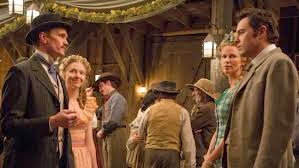
A Million Ways to Die in the West: This modern-day take on Blazing Saddles tries a little too hard for laughs. While its silliness works a lot of the time, it's vulgarity actually makes it a little less endearing. Charlize Theron is likable but Seth MacFarlane is a very poor man's Billy Crystal, or perhaps Donnie Osmond. By the time the big gunfight scene arrives at the end, it's tough to have much invested, especially during Neil Patrick Harris' poop scene.
*1/2 out of ***** stars


Friday, May 1, 2015

I Was Interviewed on NPR About Transportation Technology

You can hear my interview this week with WAMU 88.5 FM, the NPR station in Washington D.C. And read the accompanying article below.

New Commuter App Takes Holistic View: Money, Time, Health, Environment

Play associated audio
A screenshot of the Web version of the CarFreeAtoZ app.
Commuters’ options are multiplying. For those who can leave their cars at home, there’s Metrorail, the bus, taxicabs, or Capital Bikeshare. Or they can use their smartphones to order rides with Uber, Lyft, or Sidecar. A new on-demand bus system called Bridj is launching in D.C. There’s also ZipCar and Car2Go. And some apps, like RideScout, help you pick the best choice depending on where you are at the moment.
These options help commuters figure out the fastest way to get from A to B. But a new app is trying to get traffic-weary travelers to think more holistically about their trips.
It’s called CarFreeAtoZ.com, the creation of Arlington County Commuter Services, Mobility Lab, and the transit-tech firm Conveyal. The idea behind the website is that saving time and money are only two pieces of a successful commute. What about the effect on your health? On the environment?
“Say you want to think about what would be the best thing to do on Monday through Friday every day for your commute. You can sit down on Sunday and look at CarFreeAtoZ and put in your home address and your work address and it will tell you a list of options,” said Mobility Lab’s Paul Mackie.
“The best options won’t necessarily be the fastest ones. It will be the one that also factors how it will affect your health, how it will affect the environment, how much time will you save and how much money will you save,” Mackie said.
Expected to be available on smartphones by the fall, the program can be used in a Web browser now.
The first question you are asked at CarFreeAtoZ.com is how do you usually get around? The options are I drive alone; I carpool; I bike; I take public transit; I walk.
After making your choice a map of the Washington, D.C. metropolitan region appears. You then enter a starting point and your destination. Then click "Find my best option."
Each transit, biking, or driving option will list how much money you might save, weight you can lose from exercise, the percentage of CO2 emissions that can be reduced, and hours of productive time gained – all compared to making the same trip driving alone.
The website also helps commuters locate Bikeshare stations near Metro to finish the last legs of their trips on a bike.
“There are a lot of apps out there that show you how many bikes are at a station in the Bikeshare system. But with this you can take Bikeshare to bus or Bikeshare to train,” Mackie said.

Tuesday, April 21, 2015

How Capital Bikeshare Members Use System is Becoming Clearer

Here is my article published by Mobility Lab, and subsequently covered by CityLab, DCist, WTOP, and others.

Since Capital Bikeshare’s previous surveys in 2011 and 2012, members of the Washington D.C. region’s bikeshare program have grown a little older, become more widespread throughout the region (rather than simply being from the urban core), and become more prominently affluent white males.

This latest survey (see the full survey and executive summary here) – issued to Capital Bikeshare’s nearly 28,000 members, completed by 16 percent (4,314) in November 2014, and released publicly today – shows a lot of other interesting trends related to things like:

  • significantly contributing to the region’s economy and business
  • encouraging changes in commuting and general traveling behaviors, and
  • considerably increasing economic savings for members.

Who uses Capital Bikeshare?
In 2011, 14 percent of members were 45 years or older, but in the new survey, 20 percent fill that age range. Seventeen percent lived outside of D.C. in 2011, but now 25 percent do, perhaps not surprising, with recent expansions in Virginia and Maryland.

The most striking increase in the average member profile is that 39 percent claimed $100,000 or more in household income in 2011, while now a full 50 percent state that as their current household income.

Two other intriguing findings are that members increasingly have their own bicycle and are members of carshare programs. In 2011, only 29 percent of members had their own bicycle, but 52 percent have one now. And only 9 percent had car2go or Zipcar memberships. That number has increased to 39 percent.


How are people joining Capital Bikeshare?
“Growth in membership numbers has been steady since the program launched in August 2010,” said Lori Diggins, owner of LDA Consulting, who performed these surveys and conducts transportation research for Commuter ConnectionsgoDCgoCapital Bikeshare, Mobility Lab and others.

Simply having all the stations throughout the region has been the number-one marketing tool for attracting new members – 30 percent said that’s how they became aware of the multi-jurisdictional public program. Word-of-mouth referrals (26 percent) also play a key role.

Social media and news articles about Capital Bikeshare have played a decreasing role in raising awareness about the system. However, that is likely due to the sheer increase in stations and riders around the region that are doing the “heavy lifting” on promoting the benefits of bikeshare.

Why are people joining Capital Bikeshare?
This reasoning hasn’t really changed much for members over the years. Ninety-four percent were motivated to join because it’s important that they be able to get around “easily and faster,” 84 percent say it’s important they have a “new and one-way travel option,” and 77 percent say it’s important they have a “fun way to travel.”

It also is generally clear that younger members are motivated by the ease of getting around and saving money while older members tend to be more interested in exercise, health and helping the environment.

How are members using Capital Bikeshare?
On average, members take 13 rides per month on the system. Fifty-nine percent make six or more trips and 24 percent take Capital Bikeshare 20 or more times monthly.

Seventy-four percent of members use Capital Bikeshare to get to or from work at least once a month. However, the biggest use is for entertainment purposes or socializing with friends (85 percent).

“The longer people are Capital Bikeshare members, the more uses they are finding for it,” Diggins said.
It’s clear that bikeshare has entrenched itself as a key cog in the D.C. transportation network. Sixty-four percent of members use it at least once a month to access Metrorail as a first-mile, last-mile option. However, far fewer are finding it useful in linking to buses or commuter rail.


How is Capital Bikeshare impacting the local economy?
For starters, 49 percent of members said they made trips on Capital Bikeshare during the month prior to taking the survey that they would not have made otherwise – a phenomenon called “induced trips.”

Further, businesses are simply more attractive to Capital Bikeshare members when they are near bikeshare stations. A whopping 82 percent said they are either “somewhat more likely” or “much more likely” to patronize a business, restaurant, or shop if they are accessible by bikeshare.

“Some even said they would not go to these places – period – if there is no Capital Bikeshare station nearby,” Diggins added.

How is Capital Bikeshare impacting traffic in the region?
Eighty-four percent of members said they increased their bicycle use since joining the program. Eight percent sold a household vehicle and didn’t replace it, with 76 percent of those people saying Capital Bikeshare played an important role in the decision. More than half of the respondents who reduced their household vehicles now live in “car-free” households, having eliminated their only vehicle.

On average, members reduced 158 driving miles per year. That equates to 4.4 million miles of driving eliminated annually from the region’s roads.

Even when Capital Bikeshare members aren’t using the system to get to and from work, only 11 percent said their primary mode was driving alone. That’s pretty astounding compared to the regional average of 68 percent who primarily drive alone to work.

How much money do Capital Bikeshare members save by using the system?
On average, members save $13.65 per week on transportation costs. That equates to $710 per member per year. For members who make 11 or more trips per month, the average monthly savings ramps up to $1,002.
Collectively, members save $19.6 million per year on personal travel costs.

So, what’s next?
Ninety-one percent of members are interested in a single-card system that would allow them to check out bikes and ride public transit.

And a high percentage of members would like more docks at existing stations, more stations in residential neighborhoods, and expansion in areas where Capital Bikeshare is already operating.

To sum it up: yes, you are seeing more big red bikes these days. The expanding Capital Bikeshare system is helping people take notice that bikeshare is rapidly becoming a key element in building the transportation network of the future.

See more about the survey in Mobility Lab’s Research Catalog. Photo by Elvert Barnes. Charts courtesy of LDA Consulting.

Thursday, April 16, 2015

42 Tells Jackie Robinson's Rookie Story Very Well

Sixty-eight years ago today.

One of the most monumental days not just in baseball history, but in all of American history. Jackie Robinson made his Major League debut for the Brooklyn Dodgers.

And so I finally watched 42, the 2013 film that brings his rookie season to life. Unknown actor Chadwick Boseman gets his big break and plays the star who not only became the first black man in the league but also went on to play in six World Series - winning one, in 1955. Boseman is likable and was the right choice. Harrison Ford is also exceptional as Branch Rickey, the Dodgers' owner who was determined to do the right thing for society and baseball.

Some of the most powerful scenes include when Philadelphia Phillies manger Ben Chapman yells terrible obscenities from the dugout as Robinson stands in the batters box, teammate Pee Wee Reese's transition to being on Jackie's side, and some of the behind-the-scenes dealing of Rickey and others to make Robinson happen at that time.

There are several inaccuracies to make 42 a little more dramatic. But overall, this look at one slice (the biggest slice) of Robinson's career is depicted very well. It's a crucial story to be told and retold and 42 serves it well.

**** out of ***** stars

Friday, April 10, 2015

How the Science of Bicycle Ridership Needs to Be Improved

I was quoted extensively in this very-good article by a news service I've never heard of but nevertheless now respect because, I mean, you've got to be good with a name like Cronkite News.

-------------

Bike commuting slipped slightly in Valley, but advocates are hopeful

WASHINGTON – When the Census Bureau looked at commuting patterns in the nation’s 50 largest cities, only two showed a decline in the share of people commuting by bicycle – Phoenix and Mesa.
The bureau’s 2014 special report said that over a roughly 10-year period beginning in 2000, bicycle commuters fell from 0.9 percent to 0.7 percent of all commuters in Phoenix and from 1.2 percent to 0.9 percent in Mesa.
Tucson, the only other Arizona city in the top-50 list, saw its share of bike commuters rise from 2.2 to 2.4 percent during the same period, putting it in the top 10 of cities.
The report compared data from the 2000 census with an average of the five-year commuting estimate from the 2008-2012 American Community Survey.
Biking advocates were not overly concerned with the declines in Mesa and Phoenix, noting the small sample size of the survey and pointing out that the Census stopped counting before the launch last year of a bike-sharing system in Phoenix.
That system, Grid Bike Share, has said it plans to expand soon to Mesa and Tempe.
“The bottom line for Phoenix and Mesa is not to take these findings too hard,” Paul Mackie, a spokesman for the Mobility Lab, said in an email.
He noted drawbacks in the data that could have led to an underestimate of the number of people biking to work.
“We simply need better biking and walking data throughout the country to take these kinds of findings more seriously,” he wrote.
The League of American Bicyclists posted its own findings using Census numbers, but it looked at 70 cities instead of 50 and expanded the time frame back to 1990 and one year later, to 2013. Mesa and Phoenix also dropped in the league’s report, but they were among a handful of other cities – most in the South and Southwest – that posted declines.
Ken McLeod, the census data specialist at the League of American Bicyclists, said that could be a factor of suburban sprawl in those regions of the country.
“Most places in the top 70 cities probably have some version of it,” McLeod said of sprawl. “But it’s possible that in Phoenix and Mesa it just happened to create the conditions where they didn’t have a growth (in bike commuting) like all these other cities have seen.”
A report released last week by the Brookings Institution on the “growing distance between people and jobs” in metro areas said that job proximity in the Phoenix-Mesa-Scottsdale area dropped by 16.5 percent from 2000 to 2012.
Mackie cautioned against putting too much stock in the Census numbers, saying the survey wording can pose problems.
“There is one question the Census asks about commuting by bike or foot. It asks, ‘How did this person get to work last week?’ and includes biking and walking as potential answers,” he wrote. “Because work commutes only represent a small portion of all trips, the ACS tells us about a very small fraction of all of the transporting that Americans do.”
Another drawback with the data is that respondents can only chose one form of transportation that they used over the past week, even if they regularly combine biking with transit – as many do with the light rail.
“If a respondent walked to a bus stop in the last week, she’ll be counted as a transit-taker but not a walker. If she bicycled on two days and drove on the other three days, she’ll be counted as a driver but not a biker,” Mackie said.
A Census Bureau official conceded that there are shortcomings with the survey.
Brian McKenzie, a sociologist at the bureau, said that while commutes may involve several different types of transportation modes, people taking the survey “are restricted to indicating the single mode used for the longest distance.”
Because bicycling and walking often serve as secondary travel modes that supplement modes such as transit or driving, some commutes that involve bicycling and walking are not reflected as such in the American Community Survey because another mode is used for a longer distance,” McKenzie said through a spokeswoman at the bureau.
McLeod said another factor might be that initial surveys on bicycle commuting may have made the numbers “look better than they are” back when surveys were being taken less frequently.
“There’s often a lot of noise year to year in these estimates because you’re dealing with very relatively small numbers, small sample sizes,” he said.
Mackie looked to the future, noting Grid Bike Share and its plans for expansion.
“What tends to follow when these systems are introduced to cities is better bicycling infrastructure and more people walking as infrastructure becomes designed for people rather than cars,” he wrote. “Bike-share systems themselves become great advertisements for biking.”

Saturday, April 4, 2015

A Tennis and Swimming Spring Break in Scottsdale


It's so nice to be visiting Rachel's grandmother (one of PCLB's biggest fans!) in Scottsdale, Arizona for spring break this week. The temperatures are 90 in the day and 55 at night, which is refreshing after an awful D.C. winter.

We arrived yesterday and are staying with Rachel's sister's family and her parents in a rented house with a pool and orange and grapefruit trees. I've already squeezed about 20 fresh fruits for juice.

The last time I was in Arizona was in January 2000, when my St. Louis Rams won their only Super Bowl. I remember watching them take down the Tennessee Titans at the last minute 23-16.

Rachel's grandmother lives in a place called The Racquet Club, which is perfect since I love playing tennis. I played pickleball this morning (a cross of tennis and ping pong played on a tennis court) with Rachel's dad and have already found several people to play pickup tennis with for the week. Then came back for a swim.


Sunday, March 29, 2015

Handful of Old Movies Get a Look in My Queue


I've been catching up on some old movies lately. Some classic, some a little less than classic.

Funny Farm: This is a relatively terrible Chevy Chase flick from 1988, the downside of a time when he was arguably the funniest movie-comedian in America. Gene Siskel once called it Chase's funniest film, a serious stretch for one that has a few laughs but is pretty badly dated by now. I had never seen it. Must have been going to too many Boston and AC/DC concerts that year.
**1/2 out of ***** stars

Dazed and Confused: After my favorite movie of 2014, Boyhood, I had to go back and watch Richard Linklater's other great Texas epic. This one was named Quentin Tarantino's 10th favorite film of all time for good reason. Beyond star-cameos galore, this view of high-school life in Austin captures the ethos of an entire generation of kids growing up in the 1970s and 1980s.
***** out of ***** stars

Pee-Wee's Big Adventure: I somehow never saw this, although I recognized the numerous catchphrases that still hold strong today ("I know you are but what am I?"). It's pretty funny and even educational stuff, and, as my 7-year-old said, "Pee-Wee makes funny faces."
**** out of ***** stars

The Man With Two Brains: Steve Martin comes nowhere close to The Jerk or Dead Men Don't Wear Plaid in this completely wacky script. Playing a neurosurgeon with an unpronounceable name (in the grand tradition of Chase's Fletch), Martin is nevertheless still funny and this one is still worth watching.
***1/2 out of ***** stars

An Affair to Remember: Cary Grant and Deborah Kerr star in this exceedingly romantic film, which suffers just a bit because Grant's typical comedic touches are largely missing. Instead, he is very George Clooney, meaning suave and very handsome, as he becomes friends on a passenger ship with Kerr between Europe and New York before slowly falling in love even amidst some traumatic setbacks.
***1/2 out of ***** stars

The Object of My Affection: The acting talents of Jennifer Aniston and Paul Rudd are pretty raw in this 1998 film. But it's entertaining enough and is pretty important in bringing societal acceptability of gay relationships to a more mass audience.
*** out of ***** stars

Monday, March 9, 2015

The Flaming Lips' Journey From Long John Silvers to Madison Square Garden

As part of my ongoing series of highlights from my expansive personal rock'n roll library:

It's pretty cool that music-journalist Jim DeRogatis' Staring At Sound: The True Story of Oklahoma's Fabulous Flaming Lips opens on New Year's Eve 2004 when the band played Madison Square Garden with Sleater Kinney and Wilco. Because I was there too.

A teamster working backstage said he had never seen anything like the display the Lips put on that night, which included a giant inflatable sun, clouds of smoke, a barrage of lights and video, and a non-stop New Year's rain of confetti.

It was a long way from where leading Lip Wayne Coyne had come from since the 11-year stretch years ago he spent as a fry cook at a fast-food fish restaurant.

Turns out, Coyne grew up with five siblings and, when he was less than one-years-old, his family up and moved from Pittsburgh to Oklahoma City. When he was nine, his dad was accused of embezzling funds from his business, but was acquitted. Nevertheless, it was a trying time in the Coyne family history.

Organized sports in high school didn't really suit Coyne. Instead, he and his brothers and their friends formed to sandlot football team called the fearless freaks, a name that would later be associated with some of the Lips' musical output, some of which is my very favorite psychedelic pop ever produced. Anyway, Coyne says they would listen to Pink Floyd, smoke a joint, and then go play sandlot football.

Beginning his sophomore year, he worked as a fry cook at Long John Silver, which Coyne actually credits as being pretty productive in that it helped him think about his life. Although he has never done that many drugs, he did sell pot while he worked at Long John Silvers.

Next up: a look at part of the early years of the Velvet Underground.

Friday, March 6, 2015

Top 40 Albums of 2014

This may be the latest "year-end Top 40 Albums of 2014" list of all the countless others. But since you were so overwhelmed with these back in December and January, I figure you all must be just about ready to actually absorb this list and relive 2014 one last time.

  • Honorable Mention: The Whigs - Modern Creation: This isn't the best release by this band, but I still like their Athens style of garage rock. Foxygen - ... And Star Power: Still one of my very favorite new bands, but this release tips the scale way too much towards the "psych" instead of the the "pop." An unfortunate misstep.
  • 40. Band of Horses - Live at Ryman: Live and still beautiful.
  • 39. Pixies - Indie Cindy: Some catchy numbers are scattered throughout, but this should be higher on the list as a comeback release with so much anticipation.
  • 38. Broken Bells - After the Disco: Groovy little understated dance jammer.
  • 37. Taylor Swift - 1989: This has a couple of the most catchy tracks of the year on it, with it's main drawback that Swift sounds a little samey over much of this long-player.
  • 36. Bob Mould - Beauty & Ruin: Another high-quality solo effort that shifts effortlessly from rock of Husker Du to power-pop of Sugar.
  • 35. J. Mascis - Tied to a Star: Think of Dinosaur Jr. in quiet mode and that's what this solo release is all about. Great for background and would be higher if it didn't feel like Mascis has kind of already done this.
  • 34. The Both - The Both: It's really hard to argue against a partnership of songs by Ted Leo and Aimee Mann.
  • 33. Tom Petty and the Heartbreakers - Hypnotic Eye: If you like TP, there is absolutely nothing wrong with this collection, which only suffers from having no clear-cut mega-hits.
  • 32. Cheetahs - Cheatahs: Like the second (or third) coming of early Dinosaur Jr./My Bloody Valentine. Wailing guitar pop. Picking up where Yuck started the 1990s indie-noise-rock revival of a few years ago.
  • 31. The Pains of Being Pure at Heart - Days of Abandon: Not as good as their earlier albums all the way through, but some of the perfect rainy, Sunday-morning tunes at the start make it a keeper.
  • 30. JEFF the Brotherhood - Dig the Classics EP: This two-piece is really good at recording pop, punk, metal tracks, even if this collection is just a bunch of covers.
  • 29. Fugazi - First Demo: This gem is not a lot different than the eventual final products, but to have heard this lively and great-sounding demo must have blown the minds of all who heard it firsthand.
  • 28. The Hold Steady - Teeth Dreams: This might be the best HS release for simply putting on in the background and enjoying and grooving with all the way through.
  • 27. Against Me! - Transgender Dysphoria Blues: The amazing story behind this band and its transgender lead singer plays out in full punk glory throughout this disc.
  • 26. Sweet Apple - The Golden Age of Glitter: GBV meets Cobra Verde ... literally. And it sounds like it. Lead-off track "Wish You Could Stay (A Little Longer)" is one of the best pop-rockers of the year.
  • 25. Dean Wareham - Dean Wareham: In solo name only, this mellow release feels every bit as good as if it were a new Luna offering.
  • 24. Drive-By Truckers - English Oceans: After a few less-interesting albums, these alt-country shit-kickers make a great set of stompers and ballads.
  • 23. Stars - No One Is Lost: A bouncy soul-pop album that is probably the most dance-y thing on this list.
  • 22. Bishop Allen - Lights Out: This band continues to offer pleasant pop with a few standouts that could be big hits in a fair musical landscape.
  • 21. Parquet Courts - Sunbathing Animal/Content Nausea: Carrying the torch of Lou Reed and The Strokes. Rocking the NYC streets.
  • 20. Cymbals Eat Guitars - Lose: This is the best emo record of the past several years, and even descends into Archers of Loaf, psychedelic territory at times. A real surprise.
  • 19. Comet Gain - Paperback Ghosts: British indie rockers who go from Syd Barrett psych to beautiful Bell and Sebastian-like pop. The melodies really pick up in the second half.
  • 18. Jenny Lewis - The Voyager: Stevie Nicks for a new generation, this album by a former child TV star and Rilo Kiley leader is a Laurel Canyon, laid-back delight all the way through.
  • 17. The New Mendicants - Into the Lime: Joe Pernice and Norman Blake of Teenage Fanclub lead this new supergroup. It sounds just like what you would imagine, which is perfect.
  • 16. Nude Beach - 77: Tom Petty for a new generation, and one of my very favorite bands these days.
  • 15. The Vaselines - V For Vaselines: A second comeback album from one of Kurt Cobain's favorite bands continues to display how this band has basically never released a less-than-very-good song.
  • 14. Guided By Voices - Cool Planet: I don't care how many albums they've released. This is still better than 99% of the stuff out there. And possibly their last ever.
  • 13. Guided By Voices - Watch Me Jumpstart: Ditto. And possibly their second-to-last ever.
  • 12. Doug Gillard - Parade On: Three-in-a-row GBV-related releases. Former guitarist is a masterful power popper in his own right.
  • 11. Miniature Tigers - Cruel Runnings: This one took me by surprise. I've liked the Tigers for years, but this is a different kind of dance-pop joy (all about a breakup) from them.
  • 10. Bart Davenport - Physical World: This pop troubadour has been putting out great albums for more than a decade, with this slow grower verging into of Montreal and Ariel Pink meets 70s soft rock.
  • 09. Pink Mountaintops - Get Back: Punk classic-rockers continue their under appreciated run of great albums, this time with actual J. Mascis solos sprinkled liberally.
  • 08. King Tuff - Black Moon Spell: Chorus to song called "Headbanger:" "Bang a little head." Nuff said.
  • 07. Stephen Malkmus & The Jicks - Wigout At Jagbags: Even with a seemingly lesser Malkmus release, this one has enough weirdo detours and pop classics to chart pretty high on this list.
  • 06. Spoon - They Want My Soul: Typically great-all-the-way through Spoon record, spanning weirdo to mellow to rocking to good-mood, this is one of my favorite Spoon releases, which is saying a lot.
  • 05. New Pornographers - Brill Bruisers: Yet another near-perfect album from this supergroup. Leader A.C. Newman divvies out the song-writing credits nicely to his compatriots.
  • 04. Beck - Morning Phase: It's kind of no fair for all these other artists in these year-end lists whenever Beck decides to issue a release in a given year. Some complained that this was Sea Change Part 2. If that's the complaint, I hope 2015 brings Sea Change Part 3.
  • 03. Lydia Loveless - Somewhere Else: By far the best alt-country release of the year. Her third release puts her amongst the Ohio greats like Guided By Voices and The Pretenders.
  • 02. FREEMAN - Freeman: One-half of Ween returns with a new project that might just be the best thing Ween never released. Weird and beautiful pleasures.
  • 01. Ex Hex - Rips: I've always been a fan of leader Mary Timony, but nothing prepared me for how absolutely enjoyable this album is. It almost renders all other power pop punk before it unnecessary.