Thursday, May 18, 2023

TV Snide: April 2023

Novel of the Month: The Island by Adrian McKinty: This is one of two books I read this month by McKinty. If you like psychological suspense thrillers, you need to stop everything and read these two. I like The Island slightly more than The Chain, but it’s close. The author is a master of premise. In real life, he almost hit an old woman on a bicycle on an isolated island where only one extended family resided. His agent suggested he write a novel about what would have happened had he actually hit and killed a woman with his car in such a setting. In the fiction, Heather is the young bride of rich and successful surgeon Tom. They take Tom’s kids Owen and Olivia to an island that takes real Deliverance-like twists. 5 out of 5 stars

The Chain by Adrian McKinty: This Irish author weaves a tight, super gripping page turner about Rachel, whose daughter Kylie has been kidnapped. The kidnappers demand a ransom and that she kidnap another child in order to get Kylie back, hence “the chain” of the title. This may or may not be a criminal enterprise that has dated back to ancient times, but Rachel and her new boyfriend Pete are determined to find out and to crazily put an end to it once and for all. As she battles cancer and Pete battles a heroin addiction, can they really stop the core of evil genius? 5 out of 5 stars

Classic Novel of the Month: The Age of Innocence by Edith Wharton: Newland Archer is engaged to be married to May, who is a product of late 1800s European morals and standards. But when a relative and countess named Ellen moves to New York City, he is smitten and rethinking his approaching wedding. Ellen is vital and different, with adventurousness, while May is beautiful and sweet but incapable of thinking or discussing anything of importance in the world. Many years later, one of Archer’s three children with May, who has died in her last childbirth, takes him to Paris to visit Ellen and the tale ends with Archer unable to go up to her home. He walks back to his hotel, to be solitude forever after. 5 out of 5 stars

Documentary of the Month (tie): Can’t Stand Losing You: Surviving the Police (Amazon Prime): This is a powerful 80 minutes and it displays how similar The Police was to The Beatles in the late 1970s and early 1980s in terms of global phenoms. The film is based on guitarist Andy Summers’ book (on my shelf and unread so far) and is excellent at showing the underlying tension and stress in his relationship with Sting and drummer Stewart Copeland. A must watch for rock fans. 5 out of 5 stars

Documentary of the Month (tie): Boom Boom: The World vs. Boris Becker (Apple TV): Some of my greatest sports-watching memories as a kid were the days of McEnroe, Borg, Connors, Lendl, and Becker. The German kid dominated the 1990s, and while he has always been a positive fun-loving guy in his personal life, the wives and money have come and gone over and over again. He finally landed in prison near Wimbledon, and although he was released after eight months, part of the agreement is that he won’t be allowed into the UK again until late 2024. 5 out of 5 stars

Old Movie of the Month The Birds (Netflix): It had been many years since I’d last seen Alfred Hitchcock’s 1963 classic, and it is better than I ever remembered. While it’s a little preposterous to think of why someone thought it was a good idea to postulate what would happen if birds turned evil, at the same time the suspense, sound effects, and overall strange factor Hitch brings makes the whole shebang immensely compelling. It’s still probably no more than my seventh or eighth favorite film by the master, but that doesn’t mean it’s not one of the best ever. 5 out of 5 stars

New Movie of the Month: The Whale (Southwest Airlines): Brendan Fraser returned from the wilds to win best lead actor for this role as Charlie, an unhealthy online English professor who doesn't turn his camera on because he feels he's too disgusting for his students to take seriously. An ex-wife and daughter mix things up by visiting his small-town Idaho apartment in what appear to be his final days. 4.5 out of 5 stars

Bros (Amazon Prime): Billy Eichner’s Billy on the Street is one of my favorite comedy shows ever, so I’ve already bought into his snarky and a little stuck-up style. While this is not as flat-out hilarious as his old show, it definitely has its moments and tells a touching story of gay romance that is so badly underrepresented in Hollywood. 4.5 out of 5 stars

“Haircut,” by Ring Lardner: This author was a major influence for both Ernest Hemingway and F. Scott Fitzgerald. This 1925 short story is a bit messy because there are a lot of characters to keep track of, but it’s also a fun read because it details life in a small town with the kinds of colorful characters who occupy those spaces. Not to mention, there is drama since a main character is shot at the end, a married man tries to get another woman, and other hijinks ensue throughout. 4 out of 5 stars

Tiny Beautiful Things (Hulu): I have liked Katherine Hahn quite a bit in the past but this new show is pretty unbearably depressing through the first two episodes. I couldn’t keep going and therefore give it an “incomplete” rating.

Birnam Wood by Eleanor Catton is a novel that seems to be getting hyped on every critic’s best new novels list. But I got 20 pages in and couldn’t stand it anymore. Perhaps about some kind of cult or collective in New Zealand, the words are all over the place, with very little recognizable story being told and no signs of getting better soon. Star rating: Incomplete and abandoned.

Saturday, April 29, 2023

Led Zeppelin’s Houses of the Holy turns 50

Issue 312 of Classic Rock Magazine digs deep on the metal god’s fifth album, which is celebrating its 50th anniversary, and was the result of what singer Robert Plant called the band’s “buccaneer musician” spirit, “ready to try anything.”

While IV and II are typically cheered as Zop’s best, I consistently come back to Houses and Physical Graffiti as absolute perfection in rock ‘n roll. Of course, most critics at the time judged the band by how heavy it was and that this was a relatively lightweight affair. I’d say they were right about that last point, but they were wrong in claiming that because it was lighter, it was of little importance.

Here are some things about that time in 1973 you may not know:

Plant was 23 and in full golden-god mode. It probably goes without saying that he was “dripping in pussy.”

Drummer John Bonham was also 23, in full beast mode, and was said to be a family man off the road. “But Zeppelin were never off the road.”

Several of the songs recorded for Holy ended up on Physical Graffiti, and they had a brighter quality to them than their previous music - good reasons the two albums have a similar feel lodged in the middle of their catalog. Many of the songs were recorded at The Rolling Stones mobile studio in the English countryside.

The album was delayed from 1972 partly over the artwork. The naked children climbing a cratered hillside and a child sacrifice on the inside replaced the original art, which had been an electric green tennis court with a tennis racquet. Page hated that the art insinuated that the band’s music was some kind of racket, in business terms.

Over the Hills and Far Away and D’yer Maker (top 20) were released as singles in the U.S. and there were no singles released in the UK. But their chart popularity was clearly never the point, as Zep were breaking The Beatles’ records left and right for attendance at their shows across the U.S. 

A strong argument can be made nowadays that Led Zeppelin were the rock ‘n roll Beatles of the ‘70s. The band’s music is timeless and, like that of The Beatles, there are almost never times when I don’t want to hear it.

Saturday, April 22, 2023

How am I going to write just one song?

In my late 20s and 30s, I got pretty prolific as a songwriter. Lately I’ve had an unbelievably empty tank.

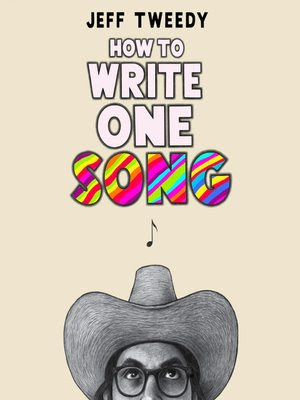
So it seemed like a good idea to finally pick up my copy of Jeff Tweedy’s How to Write One Song. I especially like chapter three, titled “Obstacles.” He starts off alluding to dreams, which, if written down soon after waking up, or even in the middle of the night, could provide source material. That made me think of a guy I recently played tennis (who also unfortunately made it into my subsequent dreams) who was way in over his head and in the totally wrong session based on his skill level. His tennis etiquette was the most horrible thing about him, so I started thinking about what kind of music would fit a song about tennis etiquette. For me, that always seems to be the tricky part for me; the words usually come easy.

Tweedy (the leader of one of my favorite bands Wilco) focuses on finding something in the day that isn’t totally necessary. For me, did I have to watch 90 minutes of the Beatles documentary Get Back? Tweedy recommends that replacing even three minutes of that time (the amount of time of a typical pop song) with banging on a guitar and screaming my head off (there, I’ve written a song) is acceptable and will make me feel better than watching three minutes of that movie.

Some of his good advice is that, once you start writing, if you are a little uncomfortable with and embarrassed by the words as you sing them, you are on the right track. Maybe that’s why so many people find that writing a song is difficult, because it is a little bit of a soul searching process, I’ve always found.

It's crucial to get into some kind of habit of writing songs, so make sure to write for 15 or 30 minutes every day, perhaps recording ideas or writing lyrics on a phone. Tweedy even records sounds, like birds chirping, that he would want to hear again and could be turned into something musical.

Try practicing harder guitar parts or progressions late at night while you’re still learning them, then wake up in the morning and play them again. You’ll often find them to be much easier to play in the morning.

Staying in good health is important. At the very least, “If you want to write a song, go for a walk.” I do try to capture snippets of song ideas I get while walking the dog, but I could still stand to do it more often.

It’s definitely ok to fail in writing songs, but the one thing that’s important to try to achieve - in order to achieve success - is finding the truth, or some truth, within the songwriting. Good comedy finds it. These truths can be often invisible in day-to-day activities but found when searching deeper, while sitting and thinking and turning that thinking into words on the page.

Pretend writing a song is just like when you were a kid and you sat on the floor drawing with crayons. You would be proud of your work when done because it was yours and so would your mom and she would hang it on the refrigerator even if it actually wasn't very good. It should work that same way for writing songs as an adult.

When Tweety begins writing about the ultimate question of "the lyrics or the music first," I came up with the idea to figure out what I want to write a song about and then jot down a list of words that would fit in well with a song about that subject. From there I can start working on the words and the music and the lyrics will stay on point towards telling the story I want to tell.

Tweedy will often “steal words from books.” If he has a melody in his head, he’ll grab any old book, open to a random page, and just start scanning for interesting words like catastrophe and hummingbird. He’ll then highlight those and other words before stringing an interesting story of his own out of those words.

He’s also not a big fan of overusing adjectives, prefers what I would call a more Hemingwayian directness in descriptions, such as “I was scared of the big guy behind the counter” or “I was drunk during the day.”

I love Tweedy’s idea of using our conversations (we do them all the time!) as inspiration for songs. I just gave a presentation to my work colleagues. Why not turn that into a song? Even better is his idea to have someone you can speak with at ease ask you about how your life is going. Record it or transcribe what you’ve said afterwards.

Don’t be yourself! I love this bit of advice. When Tweedy was having a bit of a crisis in trying to sing from his own perspective - or, as Woody Guthrie said, “write what you know” - back in the days of his band Uncle Tupelo, he realized most of the kids books he was reading were told from an animal or some other perspective. That allowed him to actually open up and be more emotional in his lyrics. What might the clock on the wall be thinking? Or a vacuum cleaner? Or Chaka Khan?

Experiment with things that are going to start with you not knowing what will happen. For instance, if you’re tired of putting your fingers in the same places, try messing with the tuning of your guitar so that you can get to some weird, distorted places you wouldn’t have thought about. It’s often easy from there to transpose the weird thing you’ve written back into something that is regularly tuned.

Steal! It would be ridiculous not to. Obviously give credit if credit is due, otherwise reappropriate chord progressions, use samples because they can be so cool, and insert your words into other people's created melodies.

For recording song ideas, Tweedy offers some very good tips, especially in light of how digital recording (unlike jamboxes and other methods of old) can be very unforgiving and often make people ultra conscious of how they may or may not like the sounds coming out of themselves. Record in the bathroom, where reverb works nicely and naturally on voices and guitars. Place your phone or microphone at the right spot between guitar and vocals and have it far enough from vocals that the room atmosphere will cushion some of the digital vocals. This one won’t be hard for me: try to focus on the song rather than all the effects and digital tech tricks you can play with.

Calling it writer’s “block” is giving the term too much weight and should be thought of more like a roadblock, hurdle, or challenge. You can try different tricks to get past or around block, such as playing the chords of a verse backwards to see if it works better, putting a great chorus first instead of in the middle, and making sure your best lyric is always the first line in the song. 

But at some point you have to just finish the song without giving up because giving up becomes a habit you don’t want to have.

Tuesday, April 18, 2023

Revisiting what it was like when Nirvana broke big

I’ve been revisiting Milk It by Jim DeRogatis, an opinionated, controversial journalist and the co-host of the very best rock podcast, Sound Opinions. It’s a compilation of his writing from the 1990s and is one of the definitive documents of the height of “alternative.” I’ll have more summaries over the book in due time, but here are the most interesting nuggets about Nirvana, which takes up a sizable portion of the start of Milk It.

  • DeRogatis opines that Nirvana drummer Dave Grohl's releases with Foo Fighters - except for the band's debut - are trash. But 1997's The Colour and the Shape and 1999's There Is Nothing Left to Lose are hand's-down power-pop classics. (At first I wasn’t crazy about the FFs’ first release but it has aged very well into one of my favorites.)
  • 1991's Nevermind was the first punk record to hit Number 1 and now stands as the 29th best selling album of all time.
  • Cobain liked how Steve Albini used lots of mics around the studio to try to capture the sound of the band being right next to the listener on In Utero. But the one thing he regrets about the recording was not double tracking more of his vocals like Butch Vig had done with him on Nevermind. I agree that would have made In Utero even better.
  • In Utero opener “Serve the Servants” has a guitar solo that sounds like Robert Quine but Cobain claimed to not know who that was. In actuality, his knowledge of punk was scattered because of his hard-earned music knowledge growing up in the sticks of Aberdeen, Washington.
  • If you’re looking for the ultimate book about Cobain, DeRogatis recommends Charles Cross’s Heavier Than Heaven.
  • Of all the riches Nevermind brought the band, Bassist Krist Novoselic was perhaps proudest of his two vinyl jukeboxes.
  • Of course DeRogatis always has to be controversial in his tastes, with disses against Paul Westerberg and Pavement (two of my very favorites) included in the Nirvana section of his book.
  • On Foo Fighters’ debut, Grohl played everything except for one guitar part on “X-Static” by Greg Dulli of Afghan Whigs.


Friday, April 7, 2023

Things I learned from McCartney’s book The Lyrics Volume 1

Paul McCartney’s massive self-penned 2021 book, The Lyrics: 1956 to the Present is an excellent read. My local library has the hard copies (it’s a thick, photo and image-heavy two-volume set) and so I’ll be reading the second book on paper rather than on my Kindle. That said, here are the most interesting things I learned about Sir Paul in the first volume:

  • Paul got the idea to have his band Wings after The Beatles because he still wanted to do music and also saw Johnny Cash playing with a band.
  • His daughter Stella was a rough birth and Paul saw a vision of angels with wings during that time, leading to his band’s name.
  • The night John Lennon and McCartney heard “God Only Knows,” their minds were so blown that it inspired them to write “Here There and Everywhere.”
  • Around the time of Sgt. Pepper’s, the band realized they had access to a sound-effects library and started using them a lot, in songs such as “Blackbird” and “A Day in the Life.”
  • He did a lot of painting in the ‘90s and always remembered his dad talking about “do it now.” He also thought about all the great painters who obsessed for long periods on individual works and Paul always wanted to keep it fun and get all his paintings powered through and done in one sitting.
  • Paul says the trick to songwriting is to write something that is easy to remember, because you also have to do that as a musician. His chauffeur said he’d been working eight days a week, and Paul knew that would be a memorable line when he and Lennon wrote it as soon as he hopped out of the car.
  • George Harrison was inspired by the short stabbing sounds in the music of the movie Psycho for Eleanor Rigby.
  • Paul says he was pretty “straight laced” and was the last Beatle to take LSD. One night he saw a blue hole in his eye and it formed the basis of “Fixing a Hole.”
  • Paul actually met Yoko before John and introduced her, in a way, to John.
  • Paul never could read music and he didn’t like piano lessons when he was young because they were restrictive and boring. And later on, he thinks he might have lost interest in making songs in a band if everyone was just counting out things based on a mathematical formula. I couldn’t agree more. Creating songs rather than writing music has always been what intrigued me and keeps me coming back for more.
  • “Got to Get You Into My Life” is about marijuana and was inspired by the Beatles’ first experience with the drug. It was in a back room with Bob Dylan and Paul remembers George trying to leave and he chased him around as the two of them giggled endlessly.
  • “Here There and Everywhere” was inspired by “God Only Knows” by The Beach Boys, which was inspired by Rubber Soul. Paul also says it’s his favorite song he’s ever written.
  • The Rolling Stones of course hung out with The Beatles in the early ‘60s. George told their record label they should sign the Stones and they did, but Mick and Keith told their friends the problem was they didn’t have a single. So The Beatles gave the Stones an album track from one of their records that couldn’t be a single for them because it was sung by Ringo. “I Wanna Be Your Man” went on to become the Stones’s “first big hit.”
  • When discussing “I Want to Hold Your Hand,” Paul notes that most of what drove him was eroticism.
  • The diversity and quantity of John and Paul’s writing together is legendary. And Paul notes that once he and John started a song in the studio, they always finished it before leaving the studio.
  • In the early days of the Quarry Men (named after where John attended, Quarry Bank High School), John, Paul, and George always pretty much knew they would be the core of the group. They always had trouble finding drummers, or even people with drum sets. A guy named Colin Hanton was their first drummer. At their first real recording session, they laid down Buddy Holly’s “That’ll Be the Day” and an original called “In Spite of All the Danger.” The latter is the only McCartney-Harrison writing credit in history.

Sunday, April 2, 2023

TV Snide: March 2023

TV Show of the Month: Winning Time: The Rise of the Lakers’ Dynasty - Season 1
(HBO Max): It was a mighty month of TV watching for me. And the undisputed champ is this one. How in the world have more shows not been made like this? Fictionalized documentaries of great sports teams. I would love a 1970s Steelers one. Or how about a 1980s Cardinals? The Chicago Bulls series at the start of the pandemic was close, but real actors would be better, even if the real people (like Jerry West) don't have kind words to say about the way their stories are told. John C. Reilly continues his master class of acting as owner Dr. Jerry Buss. The actors who play Magic Johnson, Kareem Abdul-Jabar, West, Jack McKinney, Paul Westhead, Jeanie Buss, and Spencer Haywood are all mesmerizing. I didn’t know who I wanted to watch most. But 1980 is an entertaining and eventful year for the Lakers. That’s all I’ll say. And hallelujah that a season 2 is on the way. It's Showtime! 5 out of 5 stars

Shrinking - Season 1
(Apple TV): Most months, this is my show of the month. Jason Segal kills it yet again (like he does in Winning Time). Harrison Ford is comedic brilliance. The Daily Show’s Jessica Williams is just awesome. With such a superstar likable cast, this show would have to really mess up to mess up. It’s about a psychology practice, but mostly it’s about how these three colleagues deal with the troubles in their personal lives, which include being a widow, having Parkinson’s and a case of the grumpies, and just having typical 30-something life problems. It all culminates in a big wedding, with so much fun along the way that it will be a crime if there’s not a second season. 5 out of 5 stars

Outer Banks - Season 3 (Netflix) The OBX crew continue their exploits to find the hidden treasure, as the show hits the mark somewhere between Indiana Jones and Beverly Hills 90210. It's a blast, and often of highly improbable proportions, to watch with my 15-year-old son. 5 out of 5 

The Last of Us - Season 1 (HBO Max): Yet another great show that I was able to binge digest this month. I wasn't really expecting to like it since I'm only mildly interested in zombies and almost not at all in video games anymore. But I do love some apocalypse, and this show has plenty. After the first episode I thought it was perhaps going to be really poorly acted, but then Pedro Pascal, Bella Ramsey, Anna Torv (from the highly recommended Mindhunter show), and Nick Offerman turn up the heat. 5 out of 5 stars

Novel of the Month: Hidden Pictures by Jason Rekulak: This is a tremendous yarn, the rare page turner that wraps every loose end up satisfyingly and clearly describes what happens to everyone at the end. Mallory is a late-teen recovering from addiction who gets hired by a yuppy couple named the Maxwells to take care of their kid Teddy for the summer. She meets old hippy psychic neighbor Mitzi and hot yard-keeper Adrian along the way. As her sponsor Russell gets more and more worried about Mallory’s seeming relapse, little Teddy appears to become more and more possessed. What is happening? Mallory and her new friends will have to figure it out before time runs out for them. 5 out of 5 stars

Beverly Hills Cop: Eddie Murphy was in his prime for this 1984 classic tale of wholly human cops chasing down very bad (and luckily bad shots) drug smugglers in Detroit and L.A. Mike from Breaking Bad and Paul Reiser make early acting appearances and the action is well worth checking back into if you haven’t seen it ever or in 39! years. 4 out of 5 stars

“The Gay Old Dog,” by Edna Ferber (1917): The author was known as sarcastic and this story flips the prejudice against women of the time on its head. Jo Hertz is a Chicago “Loop Hound” and a plump and lonely 50-year-old bachelor. When his mother died back when he was 27, her dying wish was that he not marry before his three sisters married. Jo fell in love with a little woman named Emily, who tried to matchmake the sisters but failed and eventually left to marry someone else. Eva finally married, then Babe, and finally Carrie didn’t marry but rather moved out to the West Side for work. Then World War I started and Jo got rich from his once-pedestrian leather business. He started being seen with a much-younger woman then bumps into Emily watching her son (also named Jo) leaving for war in a parade. He tells off his current parter, then his sisters, and is destined to live the life of an old maid (butler?) from then on. This drags in places but is definitely powerful and important in the march to women’s rights. 4 out of 5 stars

History of the World Part 2 (Hulu): This is a long-in-arriving sequel to Mel Brooks’s Part 1 movie, with the legend himself narrating. Highlights include the Russian Revolution with Nick Kroll selling mud pies and Danny DeVito leading the Kardashian-like Romanovs; Shakespeare in the writer’s room; a bumbling Lincoln and a drunk Grant leading the Civil War; Jack Black’s JoJo Stalin musical in 1918 Moscow; Seth Rogen’s Noah, who only brings dogs on the Ark; and The Beatles reimagined as Black Jesus and his apostles, in sessions and on the rooftop before being arrested, then many years later the Pope’s all-white-man council has a PR meeting that results in Jesus being rebranded as white. Kroll as usual stands out as the brightest light in this farce. 3.5 out of 5 stars

The Kings of Summer (Showtime): The indie 2013 movie is about three teens who decide to “become men” for the summer, running away from home and building a house and a life in the nearby forest. Nick Offerman, Megan Mullaley, and Alison Brie tag along as concerned family members back home. It’s weird and slight but also a touching coming-of-age tale that shows how strong the desire for independence can be. 3.5 out of 5 stars

“My Old Man, by Ernest Hemingway (1923): This story, told from the point of view of a young man named Joe, relates his relationship with his horse jockey father, who gambles on horses and drinks whiskey. The boy loves going to the races and sitting at a cafe in Paris with his dad, until one day he leaves the boy parent-less when he dies in a race. This is one of the master’s earliest stories and it shows promise of his approaching work, but is also a little bit of a mess. 3 out of 5 stars

“Brothers,” by Sherwood Anderson (1921): Anderson, often compared to Ernest Hemingway (I’m still not convinced), tells one of his typical tales of small-town isolation. One man, on his regular walks around his village outside of Chicago, often encounters an old man who people say has lost his mind, and always tells lies and that he is related to famous people. The man is nearly totally silent at night when he returns from his bicycle-factory foreman job. But he begins to fantasize about one woman at the factory and then for almost no reason stabs his pregnant wife to death. He is found guilty and later somehow encounters the old man again one day. The old man doesn’t know he’s the murderer but tells the man his brother is the murderer. One of these days I hope to find an Anderson story that clicks, but this doesn’t hold up over the past century. 2 out of 5 stars

Saturday, March 25, 2023

10 interesting things about Smog’s Bill Callahan

It’s hard to believe I’ve loved so many rock bands for so long. Forget the super classics like The Beatles and Led Zeppelin. All these later, 90s bands have imprinted themselves on my mind - heck, my life - for 30 some years. Bill Callahan of the one-man Smog is no exception. Famed Replacements' book writer Bob Mehr interviewed him in the December 2022 issue of MOJO Magazine. Here are 10 things I learned:

1. I rank Smog as my third-favorite band ever associated with the Drag City label, behind Pavement and Silver Jews/Purple Mountains and well ahead of King Kong.

2. He once dated Cat Power. Talk about a one-person-band power couple! He eventually married a filmmaker when he was nearly 50 in 2011.

3. Iggy Pop is a huge fan. So was Lou Reed.

4. One of his sisters got him into punk and new wave as a kid and the other sister has made about 10 albums.

5. Callahan was born in Silver Spring - where I lived for eight years - and moved to England before returning to spend his teen years in Maryland outside Washington DC. He loved WHFS and going to the 9:30 Club.

6. As a kid, he started a fanzine called Willpower dedicated to The Replacements.

7. The first show he ever did was opening for Pavement on Coney Island.

8. He feels like his songwriting touchstone is Lou Reed and his playing one is John Lee Hooker. He also identified with country songs by the likes of Willie Nelson and Johnny Cash and felt - rightly - that he could sing in those storytelling, voice-up-front styles.

9. He did an early interview with the legendary and defunct Magnet Magazine and felt they totally got his quotes wrong. When he complained, the magazine said he should be grateful anyone was writing about him.

10. This was the point he made in the article that I found most profound, and it even inspired me to get the basics down on my own, in-the-works Smog-inspired new song. Callahan said he thinks people write books and songs because each one is like another life they are getting to live. He said, “I want 500 lives, but I can’t have them. But I can write 500 songs.” I really like that thought.

Sunday, March 5, 2023

TV Snide: February 2023

TV Show of the Month: Sex Education - Season 1 (Netflix): This is one funny British ensemble high-school comedy. Asa Butterfield leads the way with his Mr. Bean-like awkward boy who seems to be following in the footsteps of his sex-therapist mother played by Gillian Anderson of X Files renown. Emma Mackey stands out as smart bad girl Maeve, as does Ncuti Gatwa as Eric and Connor Swindells as the stern schoolmaster's son Adam. Even the kids you're not supposed to like grow on you over time and seep into your caring conscious. All you could ask for in a TV show. 5 out of 5 stars

Movie of the Month: Avatar: Way of the Water 3D (Wheaton AMC 9): This is no letdown from the epically classic first movie. I tend to favor dialogue and plot over action, but the war and adventure scenes are among the very best in cinema history. Jake and family have to move from the forest to the reef because the Colonel wants revenge for Jake’s desertion from his military and species. There are definite growing pains. Director James Cameron leans heavily on precedent, as this is a mash up of Star Wars, Titanic, Moana, Jaws, Free Willy, and more. 5 out of 5 stars

Better Off Dead (Showtime): I have to stand by my pick on this blog a few years back of this classic as the greatest rom-com of all time. John Cusack’s Lane, Little Ricky, Monique, the guy elsewhere known as Booger, and the whole gang juggle high school, love, and the K12 monster ski hill. The non-stop, and as my 15-year-old son says “random,” laughs never stop rolling. So wacky and funny. 5 out of 5 stars

Documentary of the Month: 1971 (Apple TV): This 8-parter is essential viewing for anyone interested in music, politics, and history. The focus is placed on the Rolling Stones, The Who, Marvin Gaye, Aretha Franklin, David Bowie, and a few others, but the story is so much bigger, placing the viewer smack dab into 1971. 5 out of 5 stars

Everything Everywhere All At Once (Showtime): This may be the most wildly creative movie I have ever seen. While 2.5 hours is a lot to take in terms of mind spinning-ness, every 5 seconds presents another amazing idea packed into the ride of a laundry-owning family that can shift into other universes at will. 4.5 out of 5 stars

Cunk on Earth (Netflix): An hilarious and beautiful BBC 5-part production that takes us in spoof form of history documentaries from the cavemen to infinite time loops we may be headed towards. This is really funny and well worth a movie length’s amount of your time. 9 out of every 10 jokes land chucklingly at the expense of all humans. 4.5 out of 5 stars

Novel of the Month: No One Left to Come Looking for You by Sam Lipsyte: When lead singer Earl goes missing, Jack Shit of the Clinton-era band The Shits goes looking for his bass that has gone missing with him. Thus unfolds a series of Coen Brothers-like vignettes across Manhattan that include menstrual-blood-stained art shows, stitch-ripping-heroin-filled concerts, humbling visits back home, and some very bad thugs employed by Donald Trump. The baby-step progressions of late youth are well documented in a story that sags a little at times but has a rip-roaring last third. 4 out of 5 stars

The Greatest Beer Run Ever (Apple TV): Peter Farrell directs what starts as just a goofy (but somehow true) premise of a bonehead who wants to take beers to his childhood friends fighting in the Vietnam War. Zac Efron turns in his usual terrific performance, with great bit players all around, including Russell Crowe as a photographer and Bill Murray as a bartender. The horrors of the war are on full display, as we watch Efron’s “Chickie” transform into a significantly more critical thinker about how the world truly works. 4 out of 5 stars

Short Story of the Month: “The Reencounter,” by Isaac Beshevis Singer (1979): A doctor is called early one morning and told an ex of his has died and the funeral is that day. He goes, and when he arrives, he realizes he too has died. The two meet again in the funeral parlor as floating souls and realize that the intellectual pursuits each had chased throughout their lives were complete nonsense. The thing they despised the most - immortality - was in the process of happening to them. 4 out of 5 stars

“Taking Care,” by Joy Williams (1982): The American writer keeps with her theme of downward spiraling and loss in this short story about Jones, a preacher who stays afloat despite his wife dying in the hospital and his daughter leaving him with his baby daughter while she goes to have a nervous breakdown in Mexico. 3.5 out of 5 stars

The Kids in the Hall 2012 (Amazon Prime):The Lorne Michaels-produced comedy troupe never did it for me back in its original 1990s run. I don’t think anyone would ever describe me as a prude, but the gratuitous sex humor too frequently falls flat. I couldn’t make it all the way through two episodes. 2 out of 5 stars

Sunday, February 26, 2023

R.E.M.'s Murmur gets a mix of academic and popular dissection in the 33 1/3 series

Even after all these years, I have yet to decide whether Murmur or Reckoning is my favorite R.E.M. record. But here are my favorite tidbits learned about Murmur by reading J. Niimi’s entry into the 33 1/3 book series:

  • Michael Stipe saw the word “murmur” on a list of the seven easiest words to pronounce.
  • It was produced by Mitch Easter in Charlotte, N.C. Easter also produced Reckoning, Pavement’s Brighten the Corners, and many others.
  • The studio where it was recorded was named Reflection and was mostly home to Southern gospel and soul recording projects. It had a certain church-like quality.
  • Guitars “were kind of out at the time” but the band wanted to have very clean sounding guitars, not fuzzy. Each band member recorded in different rooms and Stipe set up under the stairs because he didn’t want anyone to see him singing.
  • The second part of the book is the slog part for me, as Niimi mostly settles into a techie talk of what was happening with the gear and intricacies of each cut’s creation, with not nearly enough information about where these songs were originating from in the band member’s brains, which would have been more interesting to me.
  • Next, the author ruminates about the times of Murmur. Precisely, 1983. He bought the cassette at a suburban John Hughes-like Chicago mall and later bought it on CD.
  • The compelling and mysterious album cover art seemed perfect for R.E.M. Kudzu, a Japanese plant, had been placed throughout the South in the 1930s as part of the New Deal to get people working. The thought was that the plant would improve the soil throughout the region, but by the time of the album’s release, it had basically eaten the South.
  • Niimi then takes a sidetrack to explore if Murmur truly fits the alleged categorization of “Southern Gothic,” and he makes a good case that the album artwork certainly fits that genre. But I’m less convinced that it's an adequate description of the music itself. Stipe’s obscure lyrical style does feel at times in the tradition of Edgar Allen Poe and post-Civil War. However, the music, for me, has always hit more accurately as jangle pop - nothing much gothic at all. R.E.M. also became a major foundation of “college rock,” which I'm defining as the kind of music one listens to while investigating one’s self much more independently for the first time as an early adult more removed from the influence of parents (and their old Crosby, Stills, Nash, and Young albums).
  • A fairly long examination of Stipe’s “bad grammar” lyrics concludes that the words of the band’s songs helps the listener create their own narratives for what is happening. In that sense, I agree that abstract lyrics by bands like R.E.M., Pavement, and Wilco may very much be a plus towards the levels of how much i appreciate them.
  • While he may have earlier been influenced by the likes of the New York Dolls, by the time of Murmur, the singer was moving away from their “brand of punk nihilism.”
Murmur only topped out at #36 on the U.S. album charts but was tops or among the tops for 1983 on most critic lists. While this is far from a definitive work on Murmur, it is a worthy read for R.E.M. fans.

Sunday, February 12, 2023

Chuck Klosterman takes us back to what the 1990s means, Part 1

Chuck Klosterman has become one of the icons of contemporary pop-culture commentary. His latest, The Nineties, is an essential and fairly massive tome to a decade worth remembering through his eyes. Here are some of my favorite takes from the first half of the book. To be continued here after I read the rest ...
  • It was perhaps the last decade in history “when personal and political engagement was still viewed as optional.”
  • The worst thing you could be was a sellout and you needed to be some kind of your own brand of cool.
  • Richard Linklater’s Slacker, Douglas Coupland’s Generation X, and Nirvana's Nevermind came together to form the general representation of young people in the 90s.
  • “It was a confusing time to care about things.” In Reality Bites, Gen Xers mostly wanted Winona Ryder to pick toxically masculine Ethan Hawke over beta male Ben Stiller, a choice that would have been reversed just about any other time in history. This was again a product of this time-specific fear of selling out.
  • Every generation is assigned a character. A difference for young people of the 90s is that it bothered them less than other generations.
  • Writers of their decade David Foster Wallace of Infinite Jest, Elizabeth Wirtzel of Prozac Nation, and Jon Leyner have mixed bodies of work, “as is the memory of why it mattered.”
  • Grunge was the most morbid genre in pop history, with too-early deaths by Kurt Cobain, Andrew Wood of Mother Love Bone, Mia Zapatista of the Gits, Layne Staley of Alice In Chains, Scott Weiland of Stone Temple Pilots, Chris Cornell, and now Mark Lanegan and Van Conner of Screaming Trees.
  • While the movie Kids introduced a way of looking at teens as they possibly actually are and In the Company of Men looked at toxic males as they possibly are, Pulp Fiction kicked Natural Born Killers’ butt in helping define where the movies were at (the result of video store nerd and movie expert Quentin Tarantino) in the decade.
  • In the lengthy section (fittingly) on the rise of the Internet and the dawn of portable phones, it's interesting to note that area codes originated in a way so the densest areas had the lowest numerical area codes so all those people situated in the region wouldn't get such sore fingers from dialing high numbers on the rotary phone dial.
  • People were always findable before the internet. In fact, phone customers were charged a monthly fee if they didn’t want their home numbers listed in the phone book.
  • The X Files in the ‘90s truly mainstreamed conspiracy theories, with many viewers identifying with Mulder’s want and need to believe. Conspiracy theorists began to think of themselves as curious, open-minded, and normal.
  • Michael Jordan’s habit of sticking his tongue out was because his father’s tongue used to stick out when he was at work fixing car engines.
  • In the 90s, there were some who thought dumbness was smart, like the creators of Zima and Pepsi Crystal.
  • The 90s ushered in “new country” music when Billy Ray Cyrus hit big with the awful “Achy Breaky Heart.” Then Garth Brooks ruled the decade and had completely inoffensive stadium tunes that championed working class and gay people and never talked down to anyone or irritated anyone. Think of how far Top 40 has come since then, when it’s ruled by divisive racists like Morgan Wallen.
  • The reason Seinfeld’s characters could pitch a show (within their own show, very meta) about nothing was very insightful. Think of all the shows, like Room for Two and Major Dad, that pulled in millions of viewers but have completely and rightfully been forgotten. George Costanza was correct, people would watch their show because it was “on TV.” By the 90s, TV was an appliance designed to waste peoples’ time and distract. Much of pop culture, like Garth Brooks from music, was working the same. The popular stuff doesn’t even merit an historical footnote. The same can almost be said about Friends. The characters weren’t particularly cool, and maybe not even that memorable, but the show was obviously monumentally popular.
  • Part of the country’s obsession with the O.J. Simpson trial was that he was obviously guilty but we wanted to see if his Dream Team of lawyers could get him off the hook.
  • MSNBC and FOX News launched a mere 12 months after the Simpson debacle. Nobody much took FOX seriously because it was clearly partisan from the start. MSNBC, on the other hand, was taken seriously, as a new kind of news that merged Microsoft’s grasp of the internet with NBC’s expertise in broadcast news. It was only later that MSNBC became the polar opposite of FOX, as the home of Democrat talking points. We were slowly learning that viewers of these channels watched purely for entertainment and emotional reassurance and didn’t want to hear things that were different from their own beliefs.