Friday, November 6, 2015

Easton, Pennsylvania: Beautiful and Great for Kids and Hopelessness

Easton, Pennsylvania is not the first place a family typically picks to visit for an overnight vacation, but it provided a fun little getaway this week when Jackson had Monday off of school.


We left on Sunday to get there (about 3.5 hours from Washington D.C. and not far from New York and Philadelphia, in the Lehigh Valley) in time to check in to an amazing 2-bedroom suite that we way underpaid for downtown at the Grand Eastonian Hotel and Suites. Our massive layout on the eighth floor overlooked the confluence of the Lehigh and Delaware rivers and out across to New Jersey. Then we had a swim in the pool to ourselves before going to sleep to get ready for the Crayola Experience on Monday.

Crayola is actually based in nearby Forks Township, but the Experience (which features some elements of the making of the colorful toys but mostly provides interactive activities for kids to get even more enamored of crayons) gives the town a real boost. It's oddly located in the middle of downtown, which is only odd because downtown is filled mostly with cigarette stores and a vape bar, and almost everybody walking around looks strung out on meth or general hopelessness. Walk out of the Experience and you're enveloped in cigarette smoke.


That said, the walkway a few blocks down back past our hotel and along the river was gorgeous. We spent the morning playing at the playgrounds and Rachel took a run.


There's also a sushi restaurant that the family enjoyed, on the other side of Easton, called KOJA Cuisine. Halfway through our meal, the sushi chef came over and asked us if we wanted anything else. He proceeded to make us a special roll that wasn't on the menu and topped an unexpectedly perfect meal.

Easton, it should be noted, is the hometown of boxer Larry Holmes, Sally Jessy Raphael, and actor Daniel Dae Kim of Lost fame.

Monday, October 12, 2015

To Take Back Our Streets, Remember How We Lost Them to Cars

This article originally appeared at Mobility Lab.

Children may again someday walk or bike to their schools and their friends’ houses, but to get to that point historian and author Peter Norton says we’ll have to unlearn much of what the auto industry has taught us over the past century.

“Children’s mobility has been neglected. We have seen the future GM and Ford fed us in the 1950s. To change the future, we have to recover versions of the past we have forgotten,” he told an audience this week at George Mason University in Arlington, Virginia.

Norton presented some of the stories from his long-admired book Fighting Traffic: The Dawn of the Motor Age in the American City to illustrate just how brainwashed we’ve become in regards to how we want to design and move through our public spaces.

“People are pretty smart about how to share space optimally,” he said, noting how pedestrians originally became irritated with cars encroaching on their streets in the 1910s.

In that era, the public blamed drivers for all the child pedestrian deaths, whereas now Norton says we would blame the parents. Even as early as the 1920s, the messages began changing to “keep the kiddies off the streets.” Before autos and the notion of speed were common, kids, pedestrians, horses, bicycles, and others jostled through the streets just fine.

“Democracy, free markets, and American culture did not decree the motor-age city,” Norton said. “Before [auto-industry groups] could build the motor-age city, they had to redefine the city.”

And Norton says they did a tremendous job of it. Streets are now thoroughly car-centric, and the idea of people-centered streets remains a difficult concept for most people to grasp. These groups recognized they needed to shift the perceived cause of collisions away from drivers and onto pedestrians. Under the name Motordom, the interest groups were quoted in a 1922 edition of Engineering News-Record that they would lead the effort in a “revision of our concept of what a city street is for.”

A major part of this effort was to make walking in the street unacceptable, essentially inventing the idea of “jaywalking.” Centrally coordinated from Detroit, Motordom would enlist Boy Scouts there and in other cities to hand out cards to pedestrians to “quit jaywalking” and would hire jaywalking clowns to look like they were hit by a Model T.

Other parts of the successful effort included producing coloring books for kids, complete with language about how streets were designated for cars, and opening a new program at Harvard: teaching the first generation of traffic engineers to prioritize traffic lights for faster driving and more difficult walking.

Ultimately, Norton uses a Wizard of Oz analogy to describe the public’s perception:
“The Emerald City doesn’t solve Dorothy’s problems. It was a bogus utopia. In the book [but not the movie], it was an illusion created by green glasses that Dorothy had to wear to make the city look like emeralds. It was really made of paper mache or something. ‘There’s no place like home,’ and we have to go back to understanding our multimodal past.”
Decades later, we have never gotten the city of easy parking and effortless thoroughfares that the auto industry and its interest groups have promised us again and again, notably at the 1939 Futurama Exhibit of the World’s Fair (pictured at the top). And, Norton adds, while driverless cars would be spatially efficient, would eliminate the process of parking, and could be shared vehicles, we should be cautious in viewing them as providing a promised utopia.

Norton believes storytelling and public relations are the keys to building a future that more accurately incorporates what we have learned from our past. He said a possible blueprint is to make sure messages like “biking is normal,” “walkability,” and “good transportation choices” become better understood and more widely accepted over the next decade.

Top: Ford Motor’s “Road of Tomorrow” from the 1939 World Fair

Wednesday, October 7, 2015

D.C. Metro Officials Would Be Wise to Encourage Bikeshare Connections to Their Service

I'm quoted throughout an article published today in The Washingtonian Magazine. It's a good article and highlights how the leaders of D.C.'s Metrorail and Metrobus are struggling to understand how they fit into the fast-changing transportation network of the city. If they think this way about Capital Bikeshare, what must they think about Uber and Lyft?

Here's the full article, and here are a few of my quotes:

Metro Can Blame Bikeshare for Lost Passengers, but Bikeshare Is Just Going to Get Bigger

“You’re going to start seeing Bikeshare in places where Bikeshare stations were too far apart,” says Paul Mackie, the spokesman for Mobility Lab, the Arlington-based transportation think tank. “There are going to be stations every three or four blocks.”

That kind of Bikeshare concentration, along with additional bike infrastructure like marked lanes or protected cycle tracks, could actually put a big dent in Metro’s ridership. But instead of pushing back on bikes, Metro should working with Bikeshare to attract people who might actually rely on both modes of transportation for their commutes.

“They have got to allow Bikeshare stations on all their property,” Mackie says. “It would make bike-riding so much better, it would make riding Metro so much better.”

----------

Deficit or no, though, Bikeshare is not going to back off just because it’ll make things easier for a struggling mass-transit system, and Mackie says Metro discourages Bikeshare membership at its peril.

“For Metro to be discouraging any kinds of trips to its stations is real backward thinking,” he says. “That should be common sense.”

Tuesday, September 29, 2015

Jennifer Egan's Goon Squad Rocks, Until It Stumbles to a Close

I loved Jennifer Egan's The Keep and wrote about it back in 2010. It's amazing how the same strengths and weaknesses of that novel are repeated in her recent Pulitzer winner A Visit From the Goon Squad.

The strengths are that it involves a storyline that really interests me. The Keep was a dark gothic tale, in the style of Poe about a mysterious castle. The Goon Squad is about a bunch of people mixed up somehow or another in the music and publicity businesses.

The weaknesses are that my favorite characters get really established and then go away for long periods in favor of less-interesting players and storylines. It bugs me a lot more in this book because it had happened before.

In fact, I'm beginning to think Egan's short stories, which have been some of the best pieces in the past decade in The New Yorker, represent a much better path for readers.

Regardless, the story starts strong with the relationship between music executive Bennie Salazar and his young assistant and petty-thief Sasha. The part of their story that takes place on safari in Kenya, and was featured as an excerpt in The New Yorker, is intriguing, as are a lot of the early scenes in New York. But detours to Naples and with the story of a kid obsessed with the pauses in rock 'n' roll songs are missteps that never resolve themselves or reveal why they are there in the first place.

We never really find out what happens to most of the characters. We're left to assume that the pursuit of fame and living in what Egan portrays as a toxic industry simply swallows up people like Scotty (who finally and kind of inexplicably becomes a successful musician when he gets old), Stephanie (Benny's first wife, who likes to play tennis at the country club), Dolly and Lulu (a failed publicist and her daughter, who eventually replaces Sasha as Bennie's assistant), and Alex and his whole family (Alex is apparently haunted by a one-night stand with Sasha that he had initially forgotten for many years).

I just don't know what this all adds up to. Much of it doesn't seem to mean anything or provide morals to the story. The Goon Squad is no doubt a page turner up until about the page-250 mark, but the last 100 pages are a letdown and even make it puzzling why the Pulitzer committee made this choice (other than they simply picked the book for the fiction prize because it uses some interesting techniques, notably in those last 100 pages).

***1/2 out of ***** stars

Monday, September 28, 2015

Carsharing Growing Around the World with More User-Friendly Options

This article was originally published at Mobility Lab.
Carsharing, which is projected in a new report to grow globally by about sixfold by 2024, is beginning to look like a reliable transportation option in places like the Washington D.C. region and beyond.
“The U.S. has fewer cities than Europe with comprehensive public transit services, which is usually – but not always – a condition for successful carsharing,” said Lisa Jerram, a co-author of Navigant Research’s latest global market analysis and forecast for carsharing.
Why is carsharing growing?
As the cost of a private car, along with the societal costs of endless traffic jams and smog-filled cities, continue to mount, there are new factors that carsharing companies could capitalize on to take even fuller advantage of greater paths to revenue and profitablility, including:
  • Making carsharing more like one-way services that have already succeeded, such as ride-hailers Uber and Lyft and bikesharing. In Paris, Autolib’ gained 200,000 members in just three years. And Daimler’s car2go and BMW’s DriveNow have adopted the one-way model.
  • Auto companies like Daimler and BMW are helping the carsharing industry in a big way, as their members make up about 1.3 million of the 2.4 million total global carsharing members. They are succeeding because they have deep pockets, which is needed to build comprehensive and reliable coverage and, in turn, membership.
  • The rise in plug-in electric vehicles presents a way for carsharing services to differentiate themselves from competitors, allowing the companies to secure tax breaks in the form of zero-emission vehicle credits and helping city officials promote green initiatives like low-emission zones.
Jerram, who co-wrote Navigant’s report with John Gartner, said carsharing “needs visionary city mayors that see the benefits of all these types of new mobility offerings and work to bring them to their cities.”
The authors project that North America will have about 1.78 million carshare members at the end of 2015, Europe will have 1.77 million, and the Asia-Pacific region 1.15 million.
Why would people use carsharing?
There are increasingly more options in the Washington D.C. region, for instance, for people who, in the past, might have asked how they could possibly benefit from carsharing. For example:
  • Car2go has hundreds of gas and electric smart cars around the city and was just recently introduced in neighboring Arlington, Virginia. Perhaps the biggest attraction is that car2go vehicles don’t need to pay for parking in metered spaces.
  • Zipcar spots are easy to find everywhere either by simply looking into the street or using their mobile app or website. Gas, insurance, and roadside assistance are all taken care of by the company, so using the vehicles is a breeze.
  • Enterprise Carshare has a wide variety of models within its fleet and several plans available for infrequent to regular customers.
  • Hertz 24/7 appeals to the techies in the crowd, with NeverLost GPS systems and its use of Bluetooth. They allow one-way rentals and even offer truck and van rentals at all Lowe’s home improvement stores.
How are people using carsharing around the world?
From the Navigant report’s executive summary:
“Carsharing as a service has been around since the 1980s, and it began to become a big business roughly 15 years ago. As of 2014, there were well over 40 carsharing companies throughout the world with more than 2.4 million members.
“Global carsharing services revenue is expected to reach $1.1 billion in 2015. The two largest markets will be North America and Europe, which are projected to constitute 83 percent of this revenue. Japan and South Korea constitute a large portion of the Asia Pacific market today and are anticipated to see continued growth. Yet, China is projected to be the largest Asia Pacific market by 2024, driven by concerns over heavy congestion and pollution in urban areas.
“Total global revenue for carsharing services is forecast to reach $6.5 billion by 2024, with the Asia Pacific region taking the largest share at 34 percent. Europe will continue to be a very strong market with an estimated 32 percent of the total. Carsharing services revenue in North America is expected to drop to just 23 percent of the global total by 2024. Latin America and the Middle East and Africa will continue to lag behind in this industry.”
So do these findings mean that people in the U.S. are less thirsty than people in other countries for multiple on-demand transportation options?
Jerram said, “The U.S. has been a good market for carsharing and is a very strong market for ride-hailing services. But I do see Europe and Asia Pacific increasing carshare membership more rapidly than North America through 2024.” She added, “Europe is ahead of the U.S. in adopting a range of smart mobility solutions to minimize pollution and congestion in urban centers and to address climate change.
“The Asia Pacific market simply has more room for growth, especially in China. Although that market is not yet fully embracing this new, on-demand mobility concept, I think it will do so more over time as congestion and pollution problems worsen.”
Jerram did, however, praise the U.S. for doing well already in adopting carsharing and vehicle-sharing overall, “so there is real potential for this market to keep growing.”
This week, the Shared-Use Moblity Center and North American Bikeshare Association are hosting the Shared Use Mobility Summit in Chicago, where policy leaders are discussing these and other new developments in shared transportation options. Check out the hashtag #MoveTogether on Twitter to follow along.
Photo credit: car2go in Seattle, by Flickr user Atomic Taco, Creative Commons

Saturday, September 26, 2015

Will Ferrell Has Not Hit the Ball Out of the Park in a Long Time


Will Ferrell stretches the limits of comedy just a little bit with Ferrell Takes the Field, currently airing on HBO. 
It's a mockumentary that succeeds on some levels but is not very good on most. The premise of Farrell taking his legendary comedic talents to the baseball field is pretty original, as he gets traded and plays for a bunch of different teams in the Arizona cactus league before the 2015 season. 
The tone, however, is off, with Farrell over-acting the supposed seriousness of his endeavor. He did the same thing recently in his role as disillusioned Eric Jonrosh in The Spoils of Babylon, which was equally bad (even if Ferrell's bit parts were the best thing about it). 
Farrell is no doubt slipping (ala Sandler) since his heyday with Saturday Night Live. In fact, he hasn't been in anything really compelling at all since his run of Blades of Glory, Semi-Pro, and Step Brothers back in 2007-2008. 
I'm not sure if he'll ever recover any past glory at this point. And even if Farrell Takes the Field is far from his worst work, it's just not worth wasting your time with when there's so much other great stuff out there to be watched these days. 
Even the fact that this is thankfully raising funds for cancer doesn't redeem it as entertainment worth watching. 
**1/2 out of ***** stars 
Bonus: In longing for better days, Ferrell's best movies are: 
6. Wedding Crashers
5. Elf
4. Zoolander
3. Old School
2. Anchorman: The Legend of Ron Burgundy
1. Austin Powers: International man of Mystery (even though it's Farrell's first move and he just plays a bit part in Mike Myers' masterpiece) 

Tuesday, September 8, 2015

Bicycling in Cleveland is Easy, Fun, and Something Everyone Should Try

What do General Motors, Samsung, and Duke and Ohio State universities all have in common?

They have each launched bikeshare systems in the past year brought to them by Zagster, a private, venture-funded startup that launched as CityRyde back in 2007 in Philadelphia.

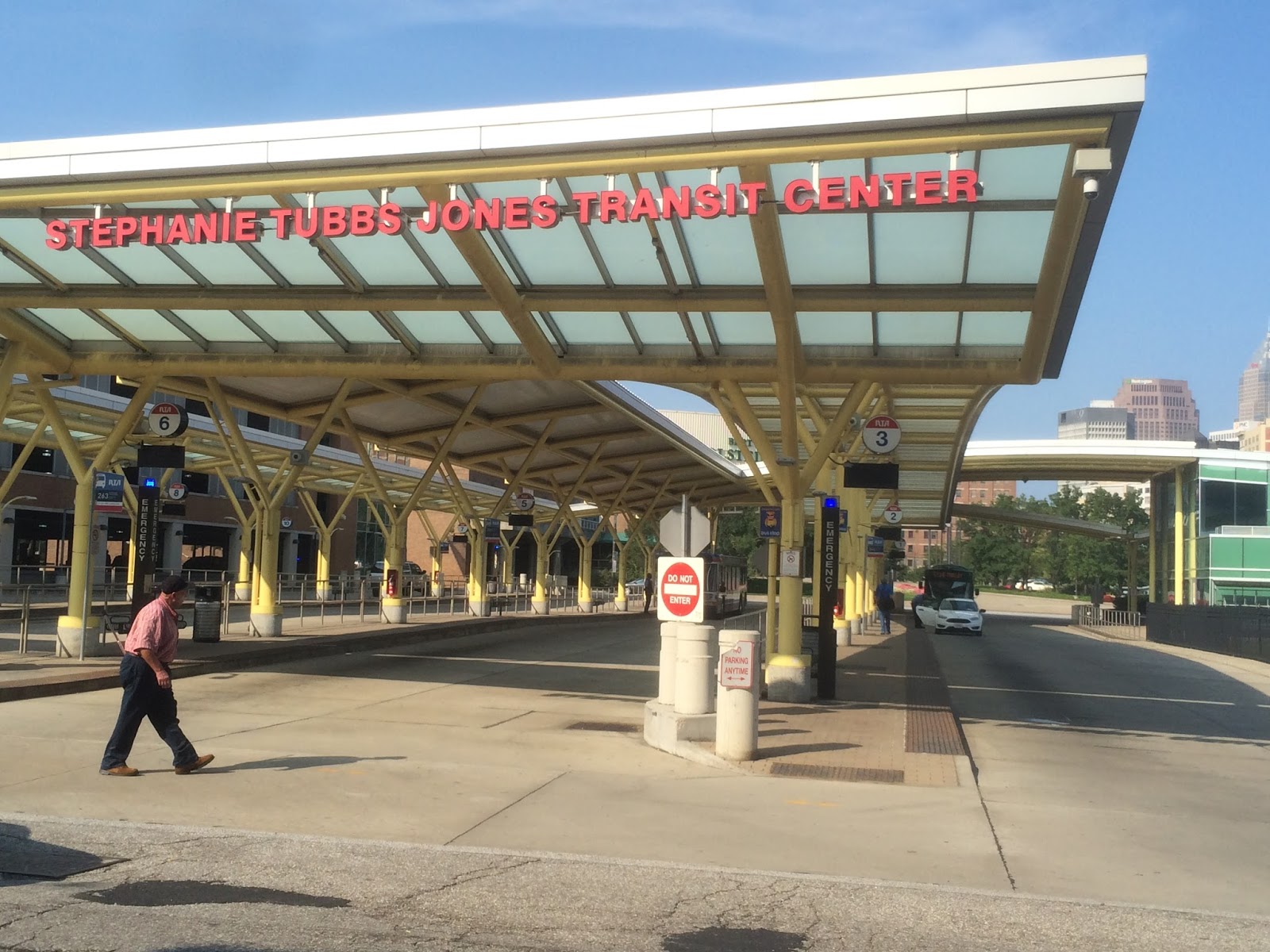
Visiting Cleveland, Ohio this week for the Content Marketing World conference, I got my first taste of Zagster, which opened last summer in the city. I knew nothing about this company or that Cleveland had a bikesharing network. I simply stumbled upon a small stand of white bikes as I wandered around the city’s Warehouse District to the west of downtown, where my hotel and the conference are happening.

It couldn’t have been easier to download the app and sign up for Zagster on my phone. I didn’t even know if there were any other stations than the one I had seen, but it seemed worth the minor effort.

(I had planned to rent from The Bike Rack, which is also a very cool effort from the Downtown Cleveland Alliance. It welcomes downtown bicycling “with the convenience of secure bicycle parking and fulfilling everyday commuting needs with individual shower/changing facilities, lockers, bicycle rentals, and minor bicycle repairs.” And the rental prices are great at $5 per hour or $25 per day. But frankly, it is tough to compete with Zagster’s price of $3 an hour.)

Turns out there aren’t that many stations yet in Cleveland (according to the app, it looks like there are eight total). In fact, I didn’t see any other ones on my two-hour ride, but I wasn’t actively looking for them.

I wanted to know whether Cleveland is a bikeable city. And what I found, which is what I find everywhere, is that people should get over their irrational fears of this amazing form of travel. Cleveland is highly bikeable, even though it lacks much of any kind of truly progressive bike infrastructure.


The wind was in my hair. The sun was on my arms and face. The roads and sidewalks are ridiculously large through most of downtown, which makes riding feel spacious and extremely safe. (On the other hand, more importantly, the spaciousness makes the over-paved city ripe for the construction of protected bike lanes, sharrows, cycle tracks, and other bike infrastructure.)


In two hours on a bike, I saw a handful of sites it would take two days for others to explore. My route out of the Warehouse District took me through Tower City-Public Square east along Euclid Avenue through the Playhouse Square theater district and Cleveland State University’s campus, then back west through Erie Street Cemetary and around the baseball Indians’ Progressive Field and basketball Cavaliers’ Quicken Loans Arena.


The Bob Hope Memorial Bridge has wide bike and walk access and beautiful views of the city and Cuyahoga River below. After biking through the Tremont neighborhood, I had lunch at Town Hall, a very popular and tasty restaurant on West 25th Street near the West Side Market.


In Washington D.C., there are so many Capital Bikeshare stations that riders always quickly return the bikes to a station before having lunch or going to their meetings. But here, I simply opened my Zagster’s lockbox to get the key for the U-lock that comes with each rental. I locked the bike to a parking meter in front of Town Hall and ate my lunch.

I finished my ride by biking north on 25th, which has the nicest bike lane (although not protected) that I witnessed anywhere in the city, and east across the Detroit-Superior Bridge back into the Warehouse District. Upon returning where I had started, there were only four bikes at the station. One had a bad flat tire and another was not locked.

Time will tell if Zagster will be a success in Cleveland. But there is no doubt that this system is about as easy as it gets for anyone to use. In the brave new world of on-demand-shared transportation, Cleveland and Zagster appear to be working out the kinks in what appears to be a major can’t-lose societal trend.

Monday, September 7, 2015

Cleveland Conference Week Begins With Rock Hall City

"In my waxed up hair and my painted shoes," in the words of The Replacements, who remain a major glaring omission from the Rock and Roll Hall of Fame and whom I proudly sported on my shirt, I was ready for my Labor Day visit to the museum here near my Westin hotel in Cleveland.

I knew the three-hour opening-night reception at Content Marketing World, the conference I'm here to attend (featuring John Cleese, Nick Offerman, and Barenaked Ladies, I might add), would not be enough time to tour what is pretty much my ultimate museum. And I was right. I spent six hours there, mostly on the bottom floor and also watching films about American Bandstand, the Hall's inductees, and how "video killed the radio star."

The tour begins with odds and ends like Joan Jett's first car (a sweet black Jaguar), the Fender bass of Mike Mills of R.E.M., and Alex Van Halen's ridiculous mega-bass drums.

I think I realized that music from the Midwest might actually be my favorite rock geography. I stood in awe viewing a collage of Replacements flyers, a contract to play CBGB's under the band name Gary and the Boners, a bill for damages they caused at a 1985 UC-Davis gig, and penned lyrics to "Bastards of Young" and "Here Comes a Regular."


The reason a case could be made for the Midwest (despite my obvious bias, being from St. Louis): along with the Mats in this exhibit are Soul Asylum, Husker Du, the Jayhawks, Prince, Uncle Tupelo, Wilco, Son Volt, Violent Femmes, Liz Phair, Smashing Pumpkins, Cheap Trick, Afghan Whigs, and Guided By Voices (criminally absent from even having a piece in the museum unlike all these bands that are not inducted but at least represented).

The facility gives plenty of space to Jimi Hendrix, the Rolling Stones, and the Beatles.

Run D.M.C.'s Adidas, Madonna's trend-setting jewelry, the school-boy suit of AC/DC's Angus Young, Elvis' military jacket, Stevie Wonder's sunglasses, Joey Ramone's leather jacket, Kurt Cobain's guitar, a piece of Pink Floyd's Wall, and Michael Jackson's glove are just some of the iconic artifacts not to be missed.


Also, I found the note from Charles Manson to Rolling Stone's Jann Wenner offering interview material in exchange for a jailhouse subscription to be charming.


If you love rock music as much as I do, buy yourself a ticket to Cleveland. I can't believe the place has been open here on the shore of Lake Erie since 1986 and this was my maiden landing.


Tuesday, August 25, 2015

Classic Reads: A Web of Strange Happiness From George Eliot

George Eliot, whose real name was Mary Ann Evans, loved rural society more than the urban areas of the time that she saw as pushed aside by the Industrial Revolution.

She wrote with a pen name because of fear of rejection. And she wrote the book Silas Marner in a flood of feelings from an unhappy childhood. It is still considered a radical vision of the world, and it teaches the values of honesty, kindness, and courage in an entertaining way.

Silas was a linen weaver who, 15 years earlier, had come to a rural area after being falsely convicted for stealing money back in the city where he was a respected elder in a small fundamentalist sect. His life grew more and more empty and he hated that no one cared for him or loved him.

Meanwhile, Squire Cass was known as the greatest man in town, although he went to parties every night and pubs every day. One of his sons, Dunstan, who was also a drunk, heard that Silas Marner collected gold and one night broke into the weaver's house and stole it.

Time passed, until on New Year's Eve, a little girl came to Silas's cottage. When Silas retraced her footsteps out into the night, she found the little girl's mother dead. Silas announced that he would keep the child as a replacement for his lost gold.

Godfrey, the Squire's other son, had known all along that the dead woman and her daughter were his child and wife. But he had been interested in potentially marrying another woman. Nevertheless, Godfrey grew more and more sullen because of this secret. He often left money at Silas's cottage to help support the growing girl. Godfrey and his wife could not have children and his wife would not hear of adoption, so he continued to spiral into disappointment and feeling he was being punished.

One day, Dunstan's skeleton is unearthed along with Silas's stolen coins from the bottom of a quarry. This inspires Godfrey to reveal the truth to his wife that the girl was his. She surprisingly expresses the desire to adopt her. Silas was thrilled that his lost gold was returned to him. Godfrey and his wife showed up at Silas's door proposing to take his daughter from Silas. But his daughter, named Eppie, would have none of it.

Despite the complications of the characters' webs, the story ends with Godfrey and his wife and Silas all living their lives out in acceptance and love. Godfrey supplied the funds to enlarge Silas's tiny cabin and also host Eppie's marriage feast. She ends the story by saying that nobody could've been happier than she and Silas.

Sunday, August 16, 2015

Revisiting D.C.'s Newseum After Several Years Away

Being a passionate journalist and communications professional, it's flat-out crazy that I don't visit the Newseum in Washington DC, where I live, as frequently as at least once a year.

It has probably been five years since I set foot in there, when I helped run a press conference for the World Resources Institute. Even though it's one of the only museums in D.C. that you have to pay for, and it's a fairly steep $25 entrance fee, it's well worth it.

Unless you read all the front-page spreads of many of the newspapers from around the world, it's actually a relatively quick museum to make your way through. There are so many interesting and diverse things to see, always told with an element of how journalism or journalists fit into the larger story.

The first thing on display right now when walking in is a piece of the Berlin Wall, and also a tower from near one of the Checkpoint Charlie sites.

Next up our displays of the funny pages, the counterculture of the 1960s, and Vietnam coverage from that same era. Those each could actually be much larger exhibits, or exhibits of their own filling the entire museum.

Also of note is a display from the civil rights era featuring a jail cell door that held Martin Luther King Jr. and a lunch counter from Nashville, Tennessee where protesters sat before fights and riots broke out. There's a long theater-seating area that displaying many screens of live TV news. When I walked through, Hillary Clinton was stumping in Iowa.

There is amazing display of the RCA tower that fell from one of the Twin Towers on September 11, 2001. Accompanying that is a spellbinding video of the one and only working journalist (amazingly) who died in the catastrophe, as he rushed towards the towers to take photos.

Joined by my dad and brother Tim, we didn't expect to sit in a room for nearly an hour watching a documentary, but that's exactly what we did, as the movie on the history of sports journalism was two fascinating to stop watching.

Finally, We stopped in to view the Washington Nationals baseball exhibit, which was quite a bit more interesting than actually watching the team on the field these days.
Final verdict: don't miss the Newseum when you visit Washington DC. It's a little bit of an under-looked gem.