Sunday, March 3, 2024

One Love entertains, but isn't the place to start with Bob Marley

I was so inspired by Bob Marley that I journeyed to Jamaica to retrace his footsteps after high school. Admittedly, on that trip, I wasn’t very successful at going very far beyond the beach hotel I stayed at in Montego Bay (far from Trench Town) with two life-long buddies.

Likewise, the new movie Bob Marley: One Love doesn't go too far into telling the full story of the reggae legend. Perhaps I’ve read too much about him and expect too much, because when my son and I checked it out Saturday night, I felt a little let down. It drags in a few spots, but mainly it seems to tie together a bunch of events in Marley's life (his life-long love with his wife Rita, the gangs that keep coming after him for half-explained reasons, a European tour, debates about the direction of his album artwork with record execs) along a path that leads up to a big concert aimed at reunifying a divided Jamaica.

There are a lot of parts left out. The movie glosses the surface of Marley's Rastafarian beliefs, which eventually kill him too early since they keep him from getting his toe amputated. The filmmakers don't explain why he decides to leave the toe and let cancer spread through his body. They really don't explain why the gangs are after him. They don't explain the affairs that kept the tension so high between Rita and Bob.

I like the performances from Kingsley Ben-Adair as Bob (he was also in Barbie and the 2020 remake of High Fidelty) and Lashana Lynch as Rita. However, I don't think Ben-Adair is great in the music scenes. Perhaps it's too difficult to match Marley's vibrancy, but the actor didn't look that comfortable playing guitar and almost all of the music looked obviously lip synched and was also just pulled straight from the albums, so when a live performance would be happening on stage, it oddly would sound like a studio effort. Very sloppy.

When I could get past some of those distractions, I was able to enjoy much of the movie. It would be pretty difficult to completely destroy such a great life story. But still, much of that life remains a mystery in this version. If you really want to learn about Bob Marley, go with either the 2012 documentary Marley or Catch a Fire: The Life of Bob Marley by Timothy White. While you're at it, see my top 30 Marley songs.

3 out of 5 stars

Saturday, March 2, 2024

Ann Napolitano's Hello Beautiful shows how love flows through basketball, family, depression, and sorrow

Hello Beautiful is Ann Napolitano’s fourth novel (I haven't read the others, but the third one, Dear Edward, is now a show on Apple TV+) and it's a gorgeous epic told from the various perspectives of an interesting family living in Chicago and New York City from the 1960s through the 1980s.

William Waters is born in 1960 and we learn immediately that his sister dies when he is six days old. His parents never recover and William is left to grow up with almost no love at home. This childhood will haunt him throughout his life in the form of depression and sadness. It's gripping to watch him battle through that as he does indeed find love - through basketball and also through a group of four Chicago sisters named Padavano.

Spoilers from here: William is strikingly tall and he attends Northwestern on a hoops scholarship. His career is derailed by injury but he remains friends with some of his teammates after departing the team. During this time he falls in love with Julia, the eldest Padavano sister, but her perfectionism leads to him feeling like he'll never be able to do the things she's set out for him to accomplish. They get married and have a baby, but then William inexplicably decides he has to leave the family. He walks into Lake Michigan to kill himself but is saved by his basketball friends and Julia's more idealistic and romantic younger sister Sylvie. They then fall in love and get married. William becomes an expert on helping players avoid injuries and works for the Chicago Bulls. Julia moves with her baby to New York to become a striving, hard-working single mother. Despite their lifelong closeness, she doesn't talk to her sisters for the next 25 years and she tells her daughter Alice that her father is dead.

Alice's story takes center stage at the back of the novel. She is tall like her dad and the book leads up to Sylvie's death, which makes William tremendously sad but at the same time has the potential to make him and the Padavano family whole again. I loved the book, which is a deep character story, even if William is difficult to fully understand and the ability of the Padavanos to love him through much of his shifting allegiance to Julia and then Sylvie is bordeline unbelievable.

4.5 out of 5 stars

Friday, March 1, 2024

RIP Ali Hassan Mwinyi and remembering the good life in Tanzania

Mwinyi with Michael Jackson
Tanzania became independent from Great Britain in 1961 and Ali Hassan Mwinyi became the East African nation's second president, serving from 1985 to 1995. It was during that time that Tanzania made many of the reforms and economic leaps that made it possible for me to honeymoon for three weeks there in Fall 2005. For that, I'm thankful to Mwinyi, who has passed away from lung cancer at the age of 98 in Dar es Salaam.

He also led the effort to bring sanctions again South Africa for its apartheid and he called out the U.S. for being so weak on South Africa's dictatorial government of that time. Mwinyi had been president of Zanzibar and helped transition that island to be more fully integrated into the country. Before becoming the president of all of Tanzania, he had also serves as minister of tourism and helped transition the country into being a tourist destination His death got me thinking about that amazing 24-day trip-of-a-lifetime I got to take to Tanzania. Here are some excerpts from what I wrote about it nearly 20 years ago.

We landed at Kilimanjaro International Airport in northern Tanzania three days after our wedding. We had a welcome chance to recover from the weekend of festivities at Camp Greenkill, New York and the long flight with a three-night stay at Moivaro Coffee Lodge outside of Arusha, a town of about 300,000 residents that serves as the launching point of nearly all safari expeditions. We lounged by day at the lodge's pool and enjoyed Tanzania's fine selection of beers by night on the deck of the lodge, gazing out at the dark night and brilliant stars. When we weren't battling the huge brown spider that took up residence in our room, we were ingesting what would become the staples of our diet for the next three weeks: excellent coffee, rice and curries, eggs, and fruit. We also took a walk in a local village that is located in a crater and supplies fairly fertile ground for terrace farming of crops such as coffee and banana trees. Then we took a taxi into Arusha and walked around the markets, which sell items ranging from spices to Masaii medicine to crafts and carvings to dried fish.

After finally being rested up, we got picked up and traveled by Land Rover through many dusty villages and over bumpy roads to Kibo Hotel, at the base of Mt. Kilimanjaro. We met the eight people who would join us on the climb: Thomas from Switzerland, Eva from Germany, Jen from Nottingham (UK), Mike and Steve from Manchester (UK), Jeremy from Scotland, Matt from Portsmouth (UK), and Claire from Dublin (Ireland). Kili is 19,800 feet tall, is Africa's highest point, and is the tallest free-standing mountain in the world, so we knew it wouldn't be easy. And it wasn't. Kili also features five different ecosystems, so each day, the views and terrain were very different. We started our six-day climb in the tropical rainforest, and we hadn't been hiking for 10 minutes when we spotted several blueface monkeys (similar to baboons) in the trees above the trail. Even though we carried our own daypacks, there were 33 porters, guides and cooks to carry our supplies, such as tents, water, outhouse-cleaning supplies, and buckets of meat. The food was really good and plentiful. The porters set up our mess tent each morning and evening, and the 10 of us enjoyed instant coffee, fruits, bacon and eggs, soup, breads, fish, potatoes, meat curries, and veggie curries. Our three main guides were great – Pashion, Danny, and Strato. Their four rules for a successful climb into the high altitude: be positive, acclimatize by hiking further up the mountain before going back down to sleep each night, walk slowly slowly ("poley poley") behind the guides, and drink at least five liters of water each day. The climb was more or less an easy hike each day, until the summit day. After a five-hour walk across alpine desert (very Star Wars-like), we ate and had three hours to sleep. We woke at 11 p.m. and started the 5,000-foot ascent straight up Kili's peak. At 6 a.m., we reached Gilman's Point to watch the sunrise, and continued on around the volcano's crater rim for another two-plus hours to Uhuru Peak, the top of Africa. It was beautiful and well worth it, despite the rapidly growing blisters on my feet and my sunburned, windswept, frosted-over face. Rachel was dehydrated and hearing echoes every time I spoke, but we made it back down the summit in one piece at noon. We napped for an hour, then ate and hiked back across the desert for six more hours to camp. We took a different route down on the last day, a rapid and sublime hike through the mountain's lush eastern rainforest, where we saw monkeys, a dik dik (mini deer), and a civet (wild cat). Eight of the 10 of us made it to the peak, and we celebrated with lots of Safari and Tusker beer the night we returned to Kibo Hotel, not to mention some long, hot showers.

The next morning, the two of us said farewell to our crew and rode with our driver back to Arusha to meet up with our safari guide. Cyst, a member of the Barabiac tribe, must be the most knowledgeable and friendly guide in all of Tanzania. He supplied us with endless knowledge about the dozens of animals we viewed during our six-day safari. We saw two very rare animals: the black rhino and two leopards. However, we probably enjoyed the elephants, giraffes, and lions the most. They were plentiful and would often walk right past our Land Rover. The bush of the Serengeti and the vast wildlife of the Ngorongoro Crater were endlessly fascinating and emotion-stirring. For example, one group of elephants had some fun with us by pretending to charge our vehicle and moments later, we spotted an elephant that had hurt itself and was dying in a pond with a crocodile circling it ready for some lunch. The animals we saw included ostriches, baboons, vervet monkeys, jackals, badgers, hyenas, genets, mongoose, hyraxes, zebras, warthogs, hippos, cape buffaloes, hartebeests, wildebeests, topis, Grant's gazelles, Thomson's gazelles, impalas, waterbucks, and bushbucks. The only major animals we didn't see were the cheetah and the python. The lodgings were great too. We knew we were staying in tents, but we had no idea tents could be so nice. The Masaii warriors were our hosts each night. They wear all red, have big piercings in their ears, and have a strict diet of milk, blood, and meat from the cows and goats that they herd. Another nice treat: our company booked a really couple from L.A., Jill and Aaron, in nearly all the same lodgings each night for the last two weeks of our honeymoon. Not only were they also on their honeymoon, but Aaron plays in a rock band that I know and like. Small world.

The last seven nights of our trip were spent on the island of Zanzibar, right off the coast of Tanzania. Considering that the guidebooks noted how this is one of the most exotic places on Earth, it was pretty surprising to leave the airport and see trash everywhere for miles and miles. On the other hand, we got to the east side of the island and stayed for four nights in the thatched-roof huts of Matemwe Beach, a gorgeous stretch of white sand, blue/green water surrounded by coral reefs along the Indian Ocean. One day we snorkeled with a group of scuba divers next to "Tom Cruise and Brad Pitt's private island" and saw plenty of striking and unusually colored and shaped fish among the reefs. After three nights of beach bumming, we headed back across the island to Stone Town, a small touristy area along the Zanzibar Sound in the 400,000-population (and 95 percent Muslim) Zanzibar Town. We saw a house that Dr. Livingston "I presume" lived in, and we visited a spice farm. We spent most days wandering through the markets in the narrow alleyways of Stone Town, which Rachel said reminded her of the Arab Quarter of the Old City in Jerusalem. Each night, we met up with our honeymooning friends and even dared to eat at the risky fish market along the water one evening. The hotel workers had told us to stay away. They had a point. After a couple of bites of my shrimp and lobster on skewers, I set the food down and watched as the street kids of the area made a beeline to my plate. This was certainly the low-point of the African meals, the rest was pretty good, but we were still more than happy to find a couple of pizza places in Stone Town. That's all we ate for the last two days of our time there. There was also a nice coffee shop that afforded us a view of the water and the dangerous road crossing at the center of town. We ended our trip with 30-plus-hours of flights. And, more importantly, we were malaria and yellow fever and typhoid free, and more happily married than ever!

Thursday, February 29, 2024

RIP Golden Richards and more

For me, Golden Richards was the epitome of the pretty-boy Dallas Cowboys of the 1970s. I also think Richards, the talented wide receiver who passed away in Utah this week at the age of 73, played a role in helping my beloved Pittsburgh Steelers become the team of that decade.

Seems like a funny thing to say, right, about someone who caught a total of zero catches in the four Super Bowls the Steelers won, and the Cowboys were the victims in two of those championships? 

Let me explain. Richards' best years were 1974 through 1976, when he consistently averaged about 450 yards and four touchdowns per season. Not bad for the pre-fantasy, pre-pass-happy NFL. But even though the Cowboys made the playoffs all four seasons from 1974 to 1977, he didn't catch any passes in two of those four playoff runs. 

Richards had a good playoff stretch in the 1975 season, but didn't have any catches in the loss to the Steelers in Super Bowl X. His Cowboys won Super Bowl XII against Denver, and Richards had his career highlight in that game, catching a fourth-quarter, 29-yard touchdown pass from fullback Robert Newhouse. 

Early the next season, Tony Hill essentially took Richards' job and the golden one was traded to the Chicago Bears. A few months later, the Cowboys lost Super Bowl XIII to the Steelers.

Hence, Golden Richards played a bit of a role in helping the Steelers become so dominant. For that, I will always be grateful.

It's been a tough week in the obituary department:

Comedian Richard Lewis, who has been a valuable contributor to Curb Your Enthusiasm, died at age 76 of a heart attack.


Jose DeLeón was one of my favorite St. Louis Cardinals for a while, especially in 1999 when he led the National League with 201 strikeouts. He finished with a career record of 86-119, but he was an electric and entertaining performer much of the time. He passed away from cancer at age 63 in his native Dominican Republic.

Wednesday, February 28, 2024

A short and fascinating history of the Caribbean through the eyes of the tremendously wordy James Michener

James Michener’s novels are of a time before the Internet, when people could still absorb themselves in 1,000-page tales with hundreds of characters. His typical format was to start from the very beginning of existence and travel chronologically through until the present. (Memorably, his novel Hawaii begins with a bird pooping on the land, which gives rise to life there.) 

I’ve always been in awe of the writer - who I’m distantly related to through my mom’s dad’s sister’s husband Guy Michener - and the legendary amount of words he wrote. Without summing up the massive novel Caribbean, here are 10 really interesting things we should all know from the book, which was written in 1989. (Michener died on October 16, 1997). It should be noted that Michener mostly used historical facts to color the background of his stories of people, who he fictionalized.

  • Technically, Florida and the Bahamas are not part of the Caribbean, but all the countries that border the sea in South and Central America are.
  • Warriors from South America arrived on the islands in the 1300s and ended the long peace that had flourished with the Arawak people, who were skilled farmers and fishermen with an advanced social structure.
  • These warriors were cannibals and often ate the men they captured and would steal the women for procreation. This goal of exterminating other types of people was happening all over the world at this time. 
  • These “Caribs” were not unlike the Spartans in Greece, and they believed eating the most powerful male enemies gave them particular skills and bravery in battle, while mating with the most beautiful women enhanced their own race for the future.
  • Christopher Columbus accidentally landed in the Caribbean in 1492 and began a long campaign of European colonization and exploitation of gold and many other resources. Columbus and Spain introduced slaves from Africa there.
  • James Michener
    England's Sir Francis Drake became legendary for raiding Spanish ships and settlements and essentially entering the region into the golden age of pirates.
  • Barbados and other countries became major sources of sugar, which became a heavyweight economic driver, making many European colonists exceptionally wealthy through their morally and ethically corrupt explotation of slave labor.
  • Later, the French would also swoop in and their colonization style contrasted in significant ways from the Spanish colonizers. Generally, while the Spanish were interested in wealth and power, the French - and also the British - wanted to build settlements and create trading networks.
  • The Haitian Revolution was the first successful slave revolt and became the first Black-led country in the Western Hemisphere.
  • During World War II, the islands would again become strategic spots for both the Allies and the Axis nations as locations where they all wanted to place their military warships and subs. Leading into modern times, the Caribbean countries continue to evolve their cultural identities as they all still struggle for freedom and self-determination. They are fascinating places far beyond their basic island sand-filled beauty.

Tuesday, February 27, 2024

Pop Culture Presidents: #3 Thomas Jefferson

Thomas Jefferson was elected in 1801 as the third U.S. president, and this marked the first time the press played a major role in persuading the public, transforming what had been a polite affair during the elections of George Washington and John Adams into a bitter partisan fight. Much like today's Republicans, Jefferson believed executive powers were excessive and promised to dismantle the federal government he would be leading.

He would be the first president in the new capital city, Washington, D.C. - a "mosquito-infested swamp with ... stumps still protruding" all down the main street, Pennsylvania Avenue.

Sex

This would probably be considered the "doozy" section when it comes to Jefferson. His wife, Martha Jefferson, had died way back in 1782, which means Thomas had been widowed for a long time before he took office. Being taller than even George Washington might have made him attractive to suiters; however, Jefferson negated some of that handsomeness by his often slouched way of sitting and his tendency to greet ambassadors in his "slippers and shirtsleeves." His wife had been described as pretty before dying from childbirth complications. The daughter they had would also die at the age of three. 

It gets, believe it or not, far rougher here. Jefferson would take up with Sally Hemings, one of his slaves, who happened to be a half-sister of Martha's. Sally was the child a Martha's father and one of his own slaves. Back to Thomas, he had six children with Sally and maintained their relationship for decades. There is some debate as to whether this was a consensual relationship. But that's ridiculous because Jefferson owned her, which qualifies him as one of the few U.S. presidents who can qualify for the title rapist. Despite his own complicated relationship with slavery, Jefferson succeeded in getting Congress to ban the importation of slaves in 1807.

Drugs

Throughout his adult life, Jefferson spent lavishly on wine and beer, and even attempted to cultivate wine grapes at Monticello. But it doesn't appear he did drugs very much, at least until very late in his life when he acquired chronic diarrhea. Although those poops may have been the cause of his ultimate demise, he used laudanum to ease the pain. He noted in his letters that the drug had become a habit, and he appears to have had more success growing opium at Monticello than he had earlier with wine grapes.

Rock n' Roll

Jefferson loved playing music and listening to it, he liked to draw, and he was also a huge Shakespeare fan, but there isn't much other evidence that he was a true rock n' roll president. Unless you consider that he had one of his slaves apprentice with a top French chef, which resulted in Jefferson being able to claim that he introduced macaroni and cheese and french fries to the U.S.

Policy

Jefferson followed through as a governmental minimalist by writing, rather than presenting in person, his legislative proposals to Congress. He rarely appeared publicly - making only two speeches (his inaugurations) over eight years - other than on his horseback rides in D.C.’s Rock Creek Park.

His main goal was to eliminate the national debt, which he calculated he could do in seven years if the federal government operated on a budget of $2 million annually over that span. He even cut the city’s 130 federal employees by nearly half, partly as a way to "drain the swamp" of holdovers from opposition parties. His dream to eliminate the rest was stymied when Napoleon, in 1803, busy focusing on the Anglo-French War, sold the Louisiana Territory to the Union for $12 million. Jefferson recognized the possibilities of nearly doubling the country’s land mass. When his advisors told him it would take a constitutional amendment to proceed with such a large land deal, Jefferson decided to skip that process and cut the deal before Napoleon could withdraw the sale offer. This also meant that Jefferson's planned debt elimination would not happen, but the big blue skies of the west were calling. He got Lewis and Clark to begin their exploration even before the deal was done, which, even under the pretense of science and as "a literary pursuit," was illegal according to international law.

In other land-use news and accomplishments, in 1806, during the 8-year Jefferson presidency, Congress authorized the building of the first public road, from Cumberland, Maryland to Wheeling, West Virginia.

His second term was marred by the ongoing Anglo-French War, which caused troubles in the Caribbean and forced Jefferson to halt trade, giving the federal government a huge role in enforcing his Embargo Act - like the Louisiana Purchase, a contradiction to his limited-government principles - and severely crippling the economy.

See the rest of this series on Pop Culture Presidents.

Monday, February 26, 2024

Exploring our Hawaii obsession with comedian Sarah Vowell

I've written quite a bit on my obsession with getting to Hawaii someday. And I've started (but never finished) many times reading James Michener's epic Hawaii. Well, I finally found a better option than spending three months on that tome: hilarious comedian Sarah Vowell's 2011 book Unfamiliar Fishes. Along with being funny, she is a true history scholar with an impressive collection of books authored, including this one on how Hawaii came to be a mishmashed U.S. state. Along with the "lunch plates" that contain a little bit of many cultures, there are plenty of other things imported to Hawaii that make Hawaii Hawaii, such as their famous Banyan trees, which came from India.

It’s only two pages in before Vowell mentions the Brady Bunch, which I firmly believe gives the place a good bit of its allure, after the classic multipart series when the TV family visits Hawaii. What a tourism initiative that was! Vowell says the concrete high rises that starting springing up after 1959 give downtown Honolulu a “Very Brady brutalism.”

Hawaii really became what it is now when the 25th U.S. President William McKinley invaded Spanish-speaking colonies Cuba, Puerto Rico, Guam, the Philippines, and acquired Hawaii, mainly so they could all become bases for attacking other parts of the world when deemed necessary.

Hawaii, after having been annexed to the U.S. in 1898 became a state in 1959, even though there are still many native Hawaiians who think it’s ridiculous to call them Americans, as it kind of is.

Going back to 1776, Vowell details how Hawaiians killed British explorer Captain Cook, who had tried to kidnap the high chief, but not before Cook’s sailors spread venereal diseases left and right to the islanders.

From all this at the promising start of the book, Vowell veers down some arguably uninteresting and sidewinding paths on the early colonizing missionaries. That said, to the credit of and with the help of the missionaries, between 1822 and the end of their operations in 1863, the Hawaiian people … went from having no written language to 75 percent of all Hawaiians learning to read and write in the native language.” It had become one of the most literate places in the world.

Another element of this time had to do with the whale ships based out of New England and elsewhere that were killing thousands of whales for the many resources, including ship oil, that could be harbored from them. Luckily for the whales, they were able to not go completely extinct because “the whole world was about to go ape for fossil fuels” and the “Pennsylvania petroleum boom of the 1860s slowed down sperm whales’ extinction.” This wouldn’t hurt Hawaii’s economy much because sugar cane was filling the gaps.

I’ve only made it through the first half of Unfamiliar Fishes, but I’ll likely return to it because I’m intrigued to see what Vowell finds in Hawaii’s more modern history.

So far, I give the book 3.5 out of 5 stars. 

Sunday, February 25, 2024

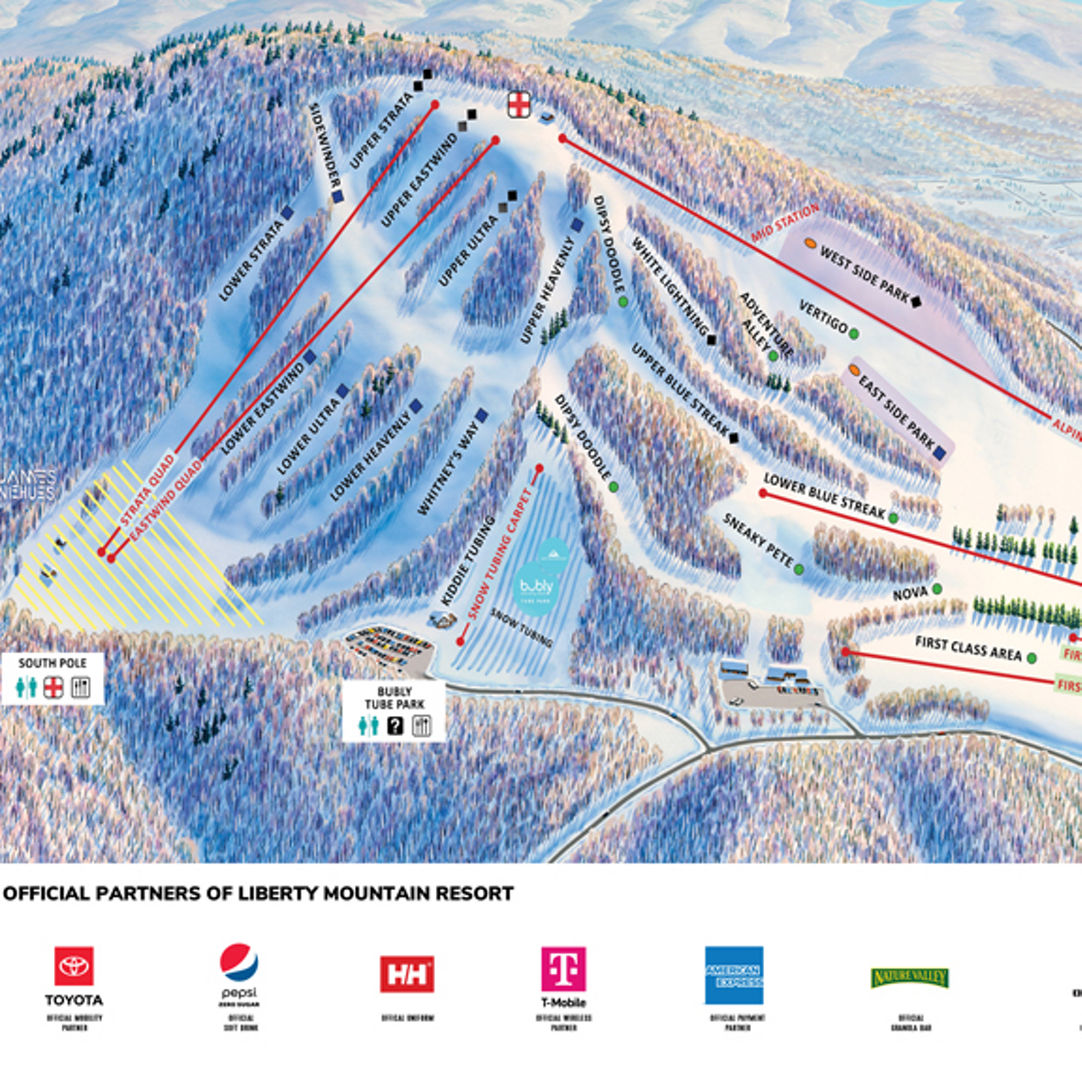
Liberty offers a nice semi-local ski option

Yesterday, I enjoyed my first trip this season to Liberty Mountain Resort for a day of skiing with my son and two of his friends. Despite temperatures in the mid-40s, the snow was slushy in the morning but pretty nice and powdery (by East Coast standards) all afternoon. 

It feels like a small miracle to get any skiing in nowadays with such noticeably short winters, but at least I’ve been to Copper Mountain in Colorado for five days, Whitetail also in Pennsylvania for one, now Liberty, and have another Copper trip planned in the coming weeks.

Liberty is just past the northern Maryland border in Pennsylvania and is typically packed on the front side with little tots learning to ski and all kinds of other people seemingly risking life and limb. I stay away from there but the kids like to ride the rails in the terrain park. There used to be a half pipe but it was difficult to cover it with main-made snow and wasn't open much, so it was removed. 

On the back side, there are two fun double black diamonds and a good handful of moguls. It’s amazing to see the amount of people taking brutal falls on those. No wonder there was an army of ski patrol lining some of the runs. There seems to be far more crashes than out west, with people falling left and right. One girl took a total face plant into the snow next to me. That might be ok in Colorado, where the powder could even feel refreshing to the face, but not at Liberty with this harder snow.

The East Coast resorts are definitely don't offer the same workout as ones in the Rockies. By comparison, the longest run is about a mile downhill at Liberty, with the longest one at Copper being three miles.

Also, Liberty's history is interesting. Itb was developed in the 1960s with big hopes to become a pretty massive destination. But it was bankrupt in the 1970s, purchased by a new owner and renamed Ski Liberty, which it remained until taking its current name in the 1990s. It has a 100+-room lodge and is a popular golfing spot in the summer, and it's now owned by Vail Resorts. The way the weather looks - warming up over the next couple of weeks - people may be golfing soon and not skiing much more at all this season. 

It's a very close call, but I like Whitetail just a little more than Liberty. Either way, it's nice to have ski options within a couple hours from home.

Friday, February 23, 2024

Learning some keytar songs for my local music collective

Hopefully nobody in my regular "Songs from a Hat" music collective sees this because we're supposed to arrive each time with a musical surprise, playing a song or a few songs from a category that we have previously selected. Tonight's category is "keytar," meaning songs that were played with a guitar-looking keyboard around someone in the band's neck. It's looking like "Don't You Want Me" from The Human League will be my spotlight number. I remember loving the boy-girl vocals and super-80s electro vibe all the way back to when it spent three weeks at #1 on the Billboard Hot 100 in the summer of 1982.


I think I'll also play: 
  • "Sister Christian" by Night Ranger. It's unbearably long at 4 minutes so maybe I'll find a way to do a three-minute version. 
  • "Sunglasses at Night" by Corey Hart. The toughest thing to learn about this song is getting Corey Hart's Night at the Roxbury head-pumping right. Watch the video for this one; it's hilarious. The song surprisingly climbed all the way to #7 in 1984. It's at the same time oddly surprising it didn't go to #1.
  • A mellow version of "Jump" by Van Halen would be a good choice if it were more original, but what I've worked up sounds a lot like the Aztec Camera cover version. We'll see how the night goes. If it gets late and we've been drinking too much, this could be a good sing-along candidate.
Other songs I worked on a little but will probably save for another day:
  • "Tempted" by Squeeze
  • "Angie" by The Rolling Stones
  • "Just What I Needed" by The Cars
  • "Home Sweet Home" by Motley Crue

Thursday, February 22, 2024

MAD Magazine takes a look at classic TV sitcoms of the 1970s

MAD About TV is a top-notch 1999 collection of TV spoofs from MAD Magazine. Here I’m reviewing the takeoffs on All in the Family, Columbo (side note: I just re-watched an episode and it very much stands the test of time, tons of suspense and great 1970s acting), The Mary Tyler Moore Show, and M*A*S*H.

“Gall in the Family Fare” riffs on how offensive and vulgar Starchie Bunkerhill is, and MAD pushes the envelope in terms of racist, offensive words used in the bit to portray the lead character in this, from the magazine’s “Little Bigot Man Dept.” Starchie’s old war buddy, Dolf, visits and it goes so well that network executives show up to offer him his own spinoff show. Instead of Edith, her name is Meathead. And she offers the same zany dingbat observations as usual, blind to Starchie's bigotry, and simply wanting to go out for a movie date. Gloriosky and Meek are the liberal kids who wonder why they live with such a racist. The Brady Bunch kids also stop by briefly, asking if anyone is up for a pillow fight before realizing they’re at the wrong house. 5 out of 5 stars (like the offensive and important show itself).

“Clodumbo” focuses on the 1970s TV detective’s knack for wearing his tan coat no matter how hot it may be and also his rambling lack of focus. He badgers an innocent doctor so relentlessly that the doc finally admits to the murder in order to get locked up, get some peace and quiet, and get away from the badgering Clodumbo. Like with all these stories, the artwork is nothing short of amazing and the story is pretty hilarious too. 4.5 out of 5 stars.

“The Mary Tailor-Made Show” riffs on the fact that, despite the program being about the workings at a TV news organization, there never seemed to be any reporters (other than anchor Ted Baxter, played by Ted Knight) reporting the news. Mr. Grunt bosses Mary around to do lots of important jobs like dusting off his bottle so he can start drinking in between her frequent wardrobe changes that might be a little unrealistic for a “$92-per-week office flunky.” The men of the newsroom gawk at Mary’s looks in super creepy ways that make me want to go back and rewatch some episodes to see if it was really that perverted. 5 out of 5 stars.

“M*A*S*H*UGA” is what it might mean in Yiddish to think something so foolish as “war is a heck of a lot of fun.” Spoofing this classic sitcom is tough to do and this is the weakest of these four. Cockeye and Crapper joke their way through operating on their patients and act even more reprehensible to women than in the actual show. They are both miserable and want out of their TV contract even more than out of the Korean War itself. 4 out of 5 stars.